English
 عربى
عربى русский
 Español
What are the Primary Chemical Composition and Crystal Structure of Pigment Red 101?
Content
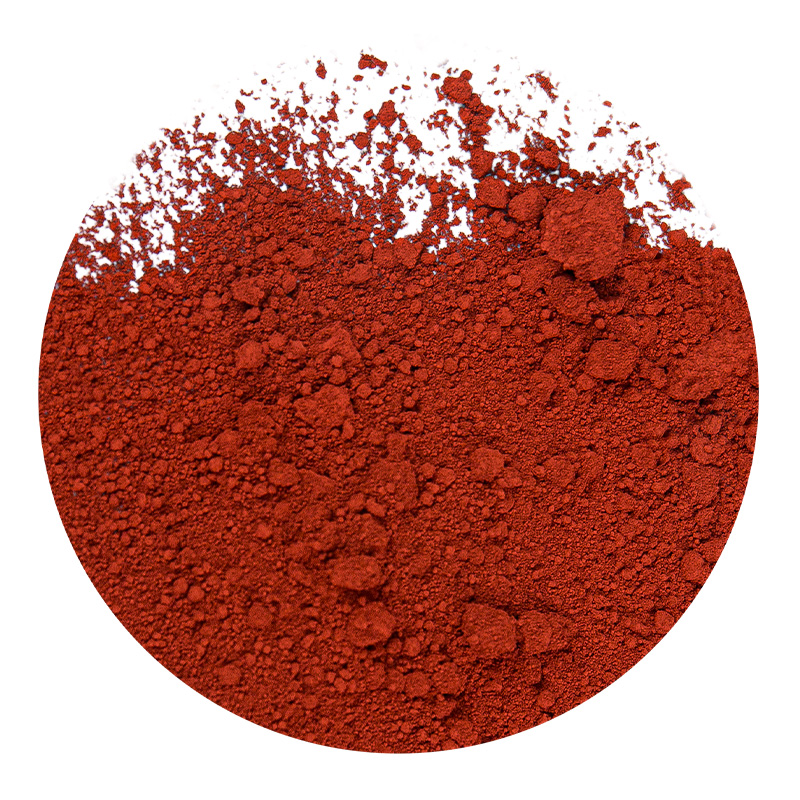
In the world of industrial colorants, Pigment Red 101 (Color Index No. 77491) stands as the gold standard for durability and opacity. Known scientifically as anhydrous ferric oxide (Fe2O3), it is the primary inorganic pigment used in high-performance coatings, construction materials, and plastics. At Deqing Demi Pigment Technology Co., Ltd., we specialize in the research and production of high-stability synthetic red iron oxide properties, offering specialized series including standard, micronized, and low heavy metal content grades. Understanding the molecular foundation and lattice arrangement of this pigment is essential for engineers aiming to optimize dispersion and UV stability in their formulations.
1. Chemical Composition and Purity Standards
The chemical essence of Pigment Red 101 is Alpha-Ferric Oxide (α-Fe2O3). High-quality synthetic variants typically achieve a purity level exceeding 95-97%, with the remainder consisting of trace moisture and water-soluble salts. Unlike natural iron oxides, which may contain silicates or manganese, high purity iron oxide red for coatings produced via calcination or precipitation ensures consistent coloristic properties. According to the 2024 updated standards for inorganic pigments, the industry is increasingly focusing on heavy metal restriction, moving toward "low lead" and "low arsenic" specifications to meet global environmental regulations. Demi Pigment addresses this through rigorous purification and monitored production via our trade entity, Deqing Hele New Material Technology Co Ltd.
Source: ISO 1248:2024 - Iron Oxide Pigments - Specifications and Methods of Test
Comparison: Natural vs. Synthetic Red Iron Oxide Composition
Synthetic red iron oxides provide a much higher iron content and lower impurity profile compared to natural ores, which directly impacts their tinting strength and chemical resistance.
| Parameter | Natural Iron Oxide (Hematite) | Synthetic Pigment Red 101 |
| Fe2O3 Content (%) | 70% - 90% (Variable) | 95% - 99% (Controlled) |
| Impurity Profile | Contains silicates, clay, and Mn | Trace salts and moisture only |
| Tinting Strength | Moderate | High and reproducible |
2. Crystal Structure: The Hematite Lattice
The crystal structure of Pigment Red 101 is defined as rhombohedral (corundum-type), often referred to as the hematite structure. In this arrangement, the oxygen ions form a hexagonal close-packed (HCP) array, with trivalent iron ions (Fe3+) occupying two-thirds of the octahedral interstices. This specific hexagonal symmetry is the root cause of the pigment's exceptional thermal stability, allowing it to withstand temperatures up to 800°C without color shift. For specialized applications, using a micronized iron oxide red pigment ensures that these rhombohedral crystals are uniform in size, enhancing the specular reflection and reducing oil absorption.
Technical breakthroughs in 2025 regarding nanotechnology have allowed for better control over the "aspect ratio" of these crystals. Research from the American Chemical Society suggests that manipulating the rhombohedral facets can improve the infrared (IR) reflective properties of the pigment, contributing to "cool roof" technologies and energy-efficient building materials.
3. Particle Morphology and its Impact on Performance
While the crystal structure is rhombohedral at the atomic level, the aggregate morphology can be spherical, rhombohedral, or acicular depending on the production method. Industrial grade red iron oxide 77491 utilized in plastic masterbatches requires spherical particles for better flow, whereas needle-like structures might be preferred in specific primer applications for reinforcement. Demi Pigment's heat resistant iron oxide red for plastics series leverages morphology control to prevent warping in polymer crystallization. Furthermore, the micronized iron oxide red pigment series undergoes intensive grinding to ensure a narrow particle size distribution (PSD), which is critical for achieving a high Hegman grind in liquid coatings.
Comparison: Impact of Particle Size on Pigment Behavior
Smaller, micronized particles significantly improve gloss and transparency, while larger particles are often used for their superior opacity and weathering resistance in bulk construction materials.
| Metric | Standard Pigment Red 101 | Micronized Pigment Red 101 |
| Average Particle Size (µm) | 0.3 - 0.8 | < 0.2 |
| Oil Absorption (g/100g) | 15 - 25 | 25 - 35 |
| Gloss in Coatings | Moderate | High |
4. Conclusion: Engineering the Future of Color
The stability and versatility of Pigment Red 101 are inseparable from its Fe2O3 chemical purity and rhombohedral crystal structure. As a national high-tech enterprise, Deqing Demi Pigment Technology Co., Ltd. continues to push the boundaries of synthetic red iron oxide properties, ensuring that our pigments fulfill social responsibilities through eco-friendly production while meeting the technical demands of the B2B sector. From construction to high-end plastics, the fusion of advanced R&D and strict quality control ensures our pigments remain a reliable choice for the global market.
Frequently Asked Questions (FAQ)
- What is the difference between Pigment Red 101 and 102? Pigment Red 101 refers to synthetic iron oxide, while Pigment Red 102 refers to natural iron oxide. Synthetic versions offer much higher purity and color consistency.
- Can Pigment Red 101 be used in high-heat plastics? Yes, because of its stable anhydrous crystal structure, it can withstand temperatures exceeding 300°C in polymer processing without degrading.
- Why is micronized iron oxide red pigment preferred in coatings? Micronization reduces the particle size, leading to easier dispersion, higher gloss, and better color development in the final paint film.
- How does Pigment Red 101 resist UV light? The Fe2O3 crystal is an exceptional UV absorber, protecting the binder of the paint or plastic from photodegradation.
- Is this pigment environmentally friendly? Yes, iron oxide is naturally occurring and non-toxic. Demi Pigment specifically offers low heavy metal versions to comply with food-contact and toy safety standards.