English
 عربى
عربى русский
 Español
How Does Iron Oxide Green 5605 Perform in Concrete and Pavement Applications Compared to Other Green Pigments?
Content
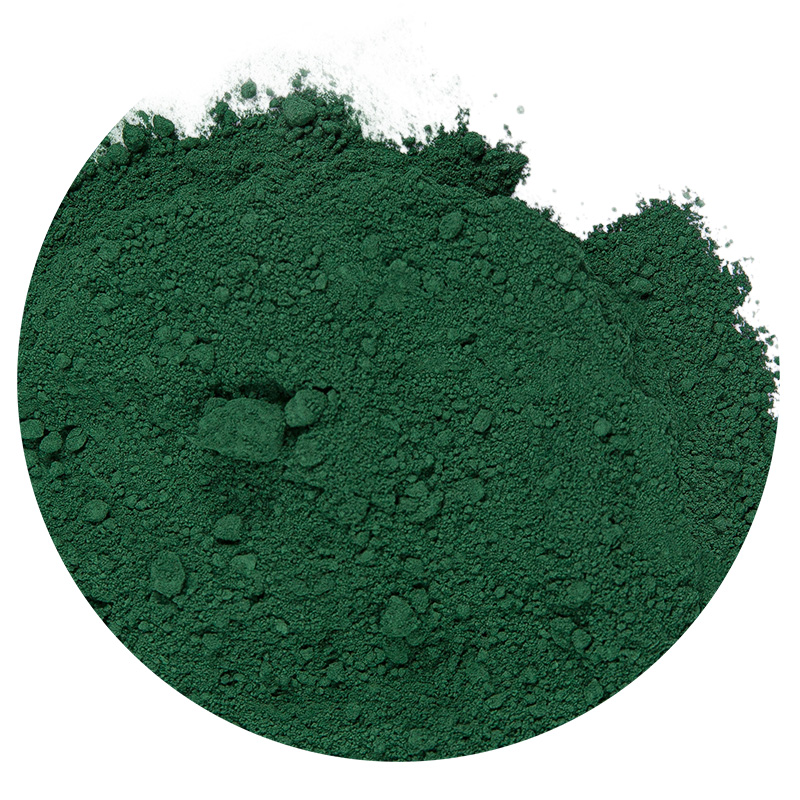
In the realm of architectural colorants, achieving a vibrant yet durable green in cementitious matrices has historically been a challenge for engineers. The emergence of iron oxide green 5605 has provided a high-performance solution that balances aesthetic brilliance with structural integrity. Deqing Demi Pigment Technology Co., Ltd. (and our trading arm, Deqing Hele New Material Technology Co Ltd.) specializes in the R&D and production of inorganic pigments. Our iron oxide green 5605 is a high-stability composite pigment designed to meet the rigorous demands of the high-end market, offering standard, micronized, and low heavy metal content levels to suit diverse industrial requirements.
1. Chemical Composition and Stability in Alkaline Matrices
Concrete is a highly alkaline environment (pH 12-13), which can cause many organic pigments to degrade or fade rapidly. Iron oxide green 5605 is an inorganic composite pigment that maintains exceptional chemical stability when mixed with Portland cement. Unlike Phthalocyanine Green, which, while vibrant, can sometimes affect the setting time or air-entrainment of concrete if not properly dispersed, the iron oxide green pigment for concrete remains inert, ensuring the mechanical properties of the pavement are not compromised.
While organic greens offer higher initial saturation, iron oxide green 5605 provides superior resistance to the alkali-silica reaction (ASR), ensuring the color remains locked within the crystalline structure of the concrete for decades.
| Property | Iron Oxide Green 5605 | Organic Green Pigments |
| Alkali Resistance | Excellent (Inert) | Variable (May degrade) |
| Impact on Concrete Strength | Negligible | Can interfere with hydration |
| Long-term Color Retention | High (20+ years) | Moderate (Prone to fading) |
Source: ISO 1248:2024 Iron oxide pigments — Specifications and methods of test
2. UV Stability and Weathering in Pavement Applications
Pavements are subjected to intense solar radiation and fluctuating weather conditions. A weather resistant green pavement pigment must resist photo-oxidation. Iron oxide green 5605 excels in this regard because its inorganic molecular structure does not break down under ultraviolet light. When used as a pigment for green interlocking tiles, it ensures that the walkway maintains its hue even in equatorial climates. Many chromium oxide alternatives are also stable but may not offer the same cost-efficiency or specific shade versatility found in composite 5605 blends.
Technical data from 2024 reveals that composite iron oxides are increasingly preferred for "Cool Pavement" technologies due to their ability to reflect a portion of the near-infrared (NIR) spectrum, thereby reducing the Urban Heat Island effect.
Source: ASTM C979/C979M-24 Standard Specification for Pigments for Integrally Colored Concrete
3. Dispersion and Tinting Strength
For B2B manufacturers, the ease of integration into a production line is as important as the final color. Iron oxide green 5605 is available in a micronized iron oxide green 5605 grade, which features a smaller particle size for rapid and uniform dispersion. This prevents the formation of "color spots" or streaks in the concrete. Compared to standard raw pigments, micronized versions require less energy for mixing and provide higher tinting strength, allowing for a lower dosage to achieve the desired saturation.
In contrast to liquid dispersions which can settle over time, high tinting strength green oxide 5605 in powder form offers a longer shelf life and more precise weight-based dosing for large-scale batching plants.
| Feature | Standard Grade 5605 | Micronized Grade 5605 |
| Particle Size | Standard (~0.5-1.0 microns) | Ultra-fine (<0.3 microns) |
| Dispersion Speed | Moderate | Fast / High-efficiency |
| Color Intensity | Baseline | 10-15% Higher saturation |
4. Environmental Responsibility and Safety
Modern construction standards emphasize sustainability. Deqing Demi Pigment Technology Co., Ltd. is committed to fulfilling social responsibilities by producing pigments with low heavy metal content levels. This makes iron oxide green 5605 suitable for public infrastructure projects, including parks and residential pavements, where environmental leaching is a concern. Our production processes are strictly monitored to protect the ecological environment and care for employee health.
Conclusion: The Optimized Choice for Infrastructure
When comparing iron oxide green 5605 to other green colorants, it stands out as the superior choice for concrete and pavement due to its alkaline stability, UV resistance, and excellent dispersion properties. Whether you are producing green interlocking tiles or large-scale architectural facades, our composite pigments provide the stability and performance required for the most demanding high-end markets.
Frequently Asked Questions (FAQ)
- Is iron oxide green 5605 a pure chromium oxide?
No, 5605 is typically a high-performance composite iron oxide pigment designed to provide a specific green hue with enhanced stability and cost-effectiveness compared to pure chromium oxide. - What is the recommended dosage for concrete?
For integral coloring, a dosage of 3% to 6% based on the weight of the cement is usually sufficient to achieve deep, lasting colors with high tinting strength green oxide 5605. - Will the color wash off with rain?
No. Because it is an inorganic iron oxide green pigment for concrete, it becomes a permanent part of the concrete matrix and is insoluble in water. - Does the micronized grade offer better UV protection?
The UV protection is inherent to the chemical structure; however, micronized iron oxide green 5605 provides a more uniform protective layer on the surface due to better particle distribution. - Can it be used in asphalt pavement?
Yes, it is highly heat-stable and can withstand the temperatures required for hot-mix asphalt, making it an excellent weather resistant green pavement pigment.