English
 عربى
عربى русский
 Español
Future Trends of Iron Oxide Powder Applications: What Buyers Need to Know
Content
- 1 Tighter Performance Specifications Are Reshaping Product Selection
- 2 Low-Heavy-Metal Grades Expand Beyond the Cosmetics Sector
- 3 Durable Infrastructure and Low-Carbon Construction Drive Stable Oxide Demand
- 4 Application-Specific Pigment Lines Replace One-Size-Fits-All Products
- 5 Sustainability and Supply Chain Transparency Enter the Procurement Conversation
Contractors and formulators have traditionally judged iron oxide pigment by two things: color depth and price per kilogram. That checklist is changing. Recent inquiries from coating makers, concrete producers, and masterbatch manufacturers now include particle size distribution curves, heavy-metal certificates, and Delta-E color-difference limits alongside the usual shade references. The conclusion is direct: iron oxide powder is moving from a commodity colorant toward a performance-tuned raw material with application-specific specifications.
Tighter Performance Specifications Are Reshaping Product Selection
The first and most visible trend is the tightening of technical specifications. Buyers no longer accept a color card and a price quote as sufficient documentation. They want to know how a pigment behaves once it is dispersed into a binder, compounded into a masterbatch, or mixed into a concrete matrix.
Three properties matter more than they did five years ago:
- Particle size distribution, because finer and more consistent particles improve hiding power and reduce the amount of pigment needed per batch.
- Dispersibility, because automated production lines struggle with pigments that form agglomerates or require long milling cycles.
- Batch-to-batch stability, because a Delta-E shift of even half a unit becomes visible in large-format architectural panels or long production runs.
Micronization moves from option to default
These requirements are pushing pigment producers toward micronized grades. Micronization reduces particle agglomeration, improves color development, and makes dosing more predictable. The change is particularly noticeable in black pigment, where the balance between jetness, viscosity, and dispersion stability depends heavily on particle refinement. For formulators who need consistent results in high-speed dispersion equipment, the control of particle size in micronized iron oxide black has become a decisive factor.
Manufacturers that offer dedicated micronized grades give compounders a practical advantage: shorter mixing cycles, cleaner color matching, and lower overall pigment consumption. When performance data is available before trial, the selection process becomes a routine verification step rather than a troubleshooting project.
Micronized iron oxide black powder is one example of how grind fineness and surface treatment can be tailored to modern dispersion requirements.
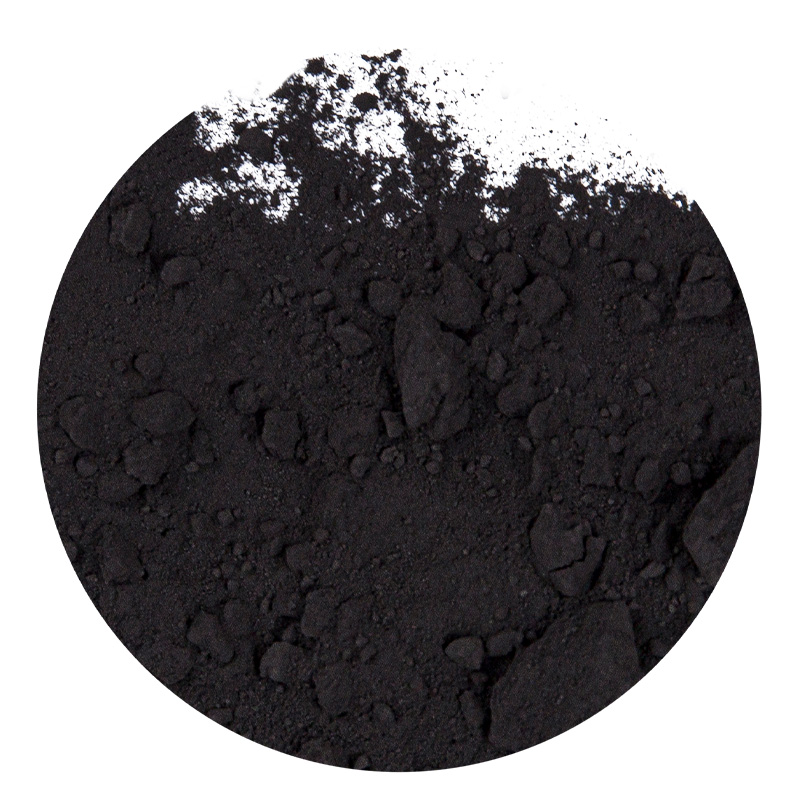 Custom Black Oxide Powder, Black Iron Oxide Pigment SuppliersDeqing Demi: China Black Oxide Powder, Black Iron Oxide Pigment Manufacturers, Suppliers, Factory, We Wholesale Custom Iron Oxide Black E...View Product →
Low-Heavy-Metal Grades Expand Beyond the Cosmetics Sector
Low-heavy-metal iron oxide pigments were once associated mainly with cosmetics and food-contact applications. That boundary has moved. Packaging inks, children’s toys, drinking-water pipe coatings, and interior architectural paints are all being held to stricter heavy-metal limits than they were even two years ago.
Several forces are behind this shift. Regulatory frameworks in the EU and China continue to lower permissible limits for lead, cadmium, arsenic, and mercury in consumer-adjacent materials. Large brand owners are applying their own restricted-substance lists, which are often more stringent than local laws. And third-party certification has turned the heavy-metal statement from a marketing claim into a contracted requirement.
What the new compliance pressure means for pigment buyers
For buyers, the practical implication is simple: ask for a heavy-metal test report before approving a pigment, not during the annual audit. The conversation around heavy-metal safety standards for iron oxide powder now determines whether a material can be used in export-oriented products at all.
In the yellow pigment segment, the shift is especially visible because iron oxide yellow is widely used in plastics, wood coatings, and decorative paints where consumer contact is likely. A low-heavy-metal iron oxide yellow grade removes a layer of compliance risk before formulation work even begins.
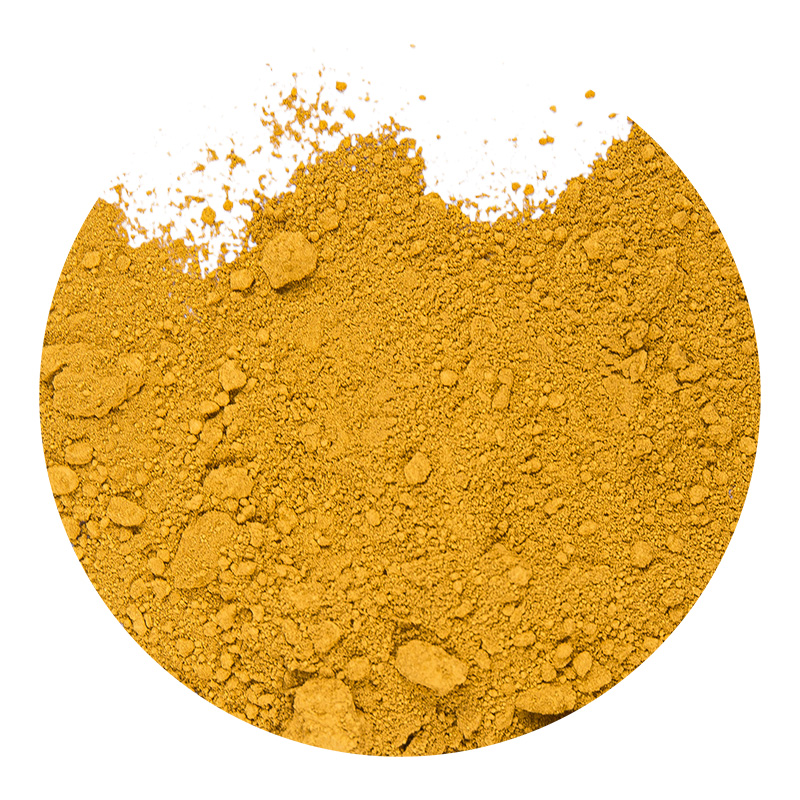 Custom Yellow Oxide Powder, Iron Oxide Yellow Pigment SuppliersDeqing Demi: China Yellow Oxide Powder, Iron Oxide Yellow Pigment Manufacturers, Suppliers, Factory, We Wholesale Custom Iron Oxide Yello...View Product →
Durable Infrastructure and Low-Carbon Construction Drive Stable Oxide Demand
Infrastructure spending is not just growing; it is being rebuilt around longer service-life targets. Roads, bridges, precast elements, and architectural concrete are specified for 50 or 100 years, and that changes the colorant requirements. A pigment that fades, bleeds, or shifts hue after repeated weathering is no longer acceptable in premium projects.
Synthetic iron oxide pigments perform better than natural mineral pigments in this context because their crystal structure, particle shape, and chemical purity are controlled during production. The gap between synthetic and natural material becomes measurable after a few years of UV exposure, freeze-thaw cycling, and alkali contact. Builders in hot, coastal, or high-UV regions have started to specify synthetic grades explicitly in tender documents. The reliability difference between the two sources is one reason synthetic-versus-natural stability data keeps appearing in technical due-diligence reviews for construction projects.
Concrete coloring, in particular, rewards pigments that offer high tinting strength and stable dispersion in a highly alkaline environment. Red oxides are the most common choice for pavers, roof tiles, and exposed architectural concrete because their color acceptance and weatherability have been proven over decades of large-scale use. A dependable iron oxide red pigment for concrete applications remains one of the most practical investments for a building-material producer.
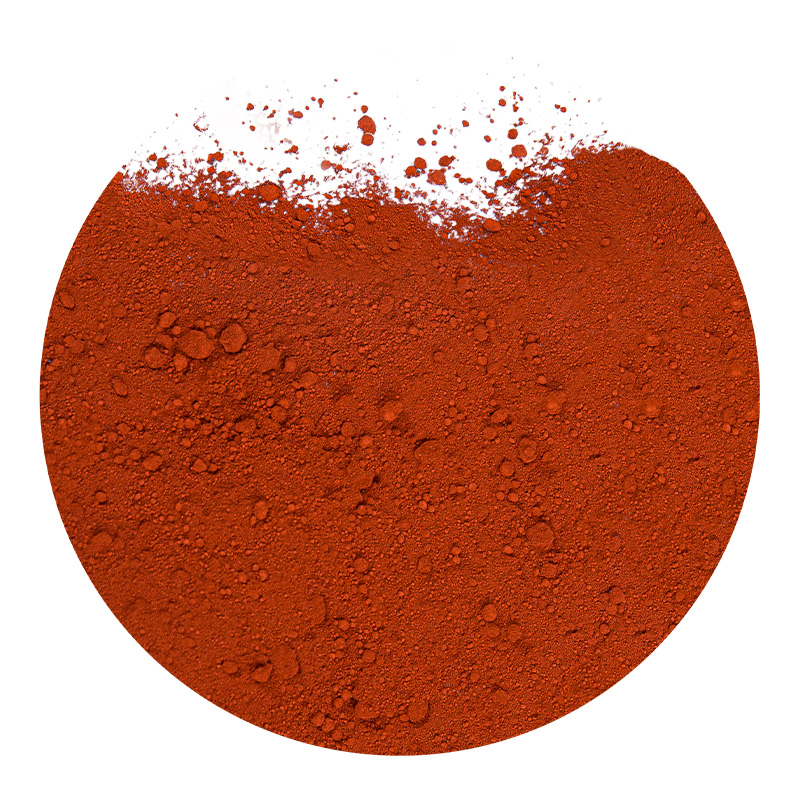 Red Iron Oxide Suppliers, Custom Red Oxide Pigment PowderDeqing Demi: China Red Iron Oxide, Red Oxide Pigment Powder Manufacturers, Suppliers, Factory, We Wholesale Custom Iron Oxide Red Powder ...View Product →
Application-Specific Pigment Lines Replace One-Size-Fits-All Products
The second major direction in the market is the fragmentation of the pigment portfolio itself. Producers that once shipped a single red oxide to every customer now offer different grades for paints, plastics, ceramics, cosmetics, and construction materials. The chemical family is the same; the surface treatment, particle size, impurity control, and quality documentation are not.
This distinction has practical consequences. A pigment that performs well in a solvent-borne coating can fail in a polyethylene masterbatch because of heat sensitivity or poor wetting. A shade that meets cosmetic purity requirements may be unnecessary for concrete pavers. The trend toward application-specific grades is therefore not a marketing gesture; it reflects the fact that downstream processes have become too specialized for a universal product.
How the same pigment family divides by end use
| Application segment | Most-watched property | Common iron oxide choices | Typical procurement concern |
|---|---|---|---|
| Architectural coatings | Weather resistance and tinting strength | Red, yellow, brown | Batch-to-batch color consistency |
| Plastics and masterbatch | Heat stability and dispersibility | Yellow, red, black | Agglomeration after compounding |
| Ceramics and glass | Crystal-form stability and purity | Red, black | Heavy-metal behavior at high temperature |
| Cosmetics and personal care | Heavy-metal limits and skin safety | Black, brown, orange | Certification documentation |
Formulators who want to understand these differences before committing to a material should start with the manufacturer’s iron oxide pigment application guidance, which maps product families to end-use conditions rather than treating all pigments as interchangeable.
Sustainability and Supply Chain Transparency Enter the Procurement Conversation
Environmental claims in the pigment industry used to be limited to a sentence in the company brochure. That is no longer enough. Downstream buyers are asking where the iron oxide feedstock comes from, how much energy the synthesis process consumes, whether waste water is recovered, and whether the factory can document its environmental controls.
This is not purely a marketing issue. Construction clients, coating brands, and plastic compounders that sell into regulated markets need to pass their own sustainability audits. A pigment supplier that can demonstrate clean manufacturing, consistent quality management, and stable production capacity becomes part of the customer’s own compliance chain.
Expect three developments to accelerate in the next three to five years:
- More producers will offer recycled-iron feedstock routes, using recovered steel-processing by-products rather than primary raw iron sources.
- Buyers will request energy-use and carbon-footprint summaries for each pigment lot, not just a generic corporate statement.
- Independent audits of pigment factories will become a standard part of supplier qualification for infrastructure-scale projects.
The suppliers that treat these requirements as a product specification rather than an administrative burden will be the ones listed on approved vendor lists as the decade progresses.
Looking at the broader direction of the market, the future of iron oxide powder applications is not defined by a single new color or an entirely different chemistry. It is defined by measurable performance: finer and more stable particles, controlled heavy-metal content, application-specific product lines, and manufacturing processes that can be audited and verified. Each of these shifts makes the pigment supply chain more demanding but also more predictable for serious buyers.
The practical takeaway for procurement and formulation teams is the same: define the performance data you actually need, check whether the supplier can provide it, and test the pigment under the same conditions you use in production. That approach has always worked. What has changed is that the market now expects it as standard practice.