English
 عربى
عربى русский
 Español
The Micronization Mandate: Particle Size Control in Iron Oxide Black Pigment Dispersion
Content
- 1 The Science of Dispersion: Size and Stability
- 2 Particle Size vs. Aesthetic Performance Metrics
- 3 Quantifying Dispersion Quality: Technical Standards
- 4 Demei Pigment Technology: Precision in Inorganic Color
- 5 Frequently Asked Questions (FAQ)
- 5.1 1. Why is a narrow Controlling particle size distribution of iron oxide black pigment preferred?
- 5.2 2. How does particle size affect the Effect of particle size on pigment opacity and gloss?
- 5.3 3. What makes Optimizing iron oxide black dispersion in waterborne systems particularly challenging?
- 5.4 4. What standard is used to test the quality of dispersion, relating to the Hegman gauge standard for iron oxide pigment dispersion?
- 5.5 5. What is Micronized iron oxide black for high gloss coatings and why is it used?
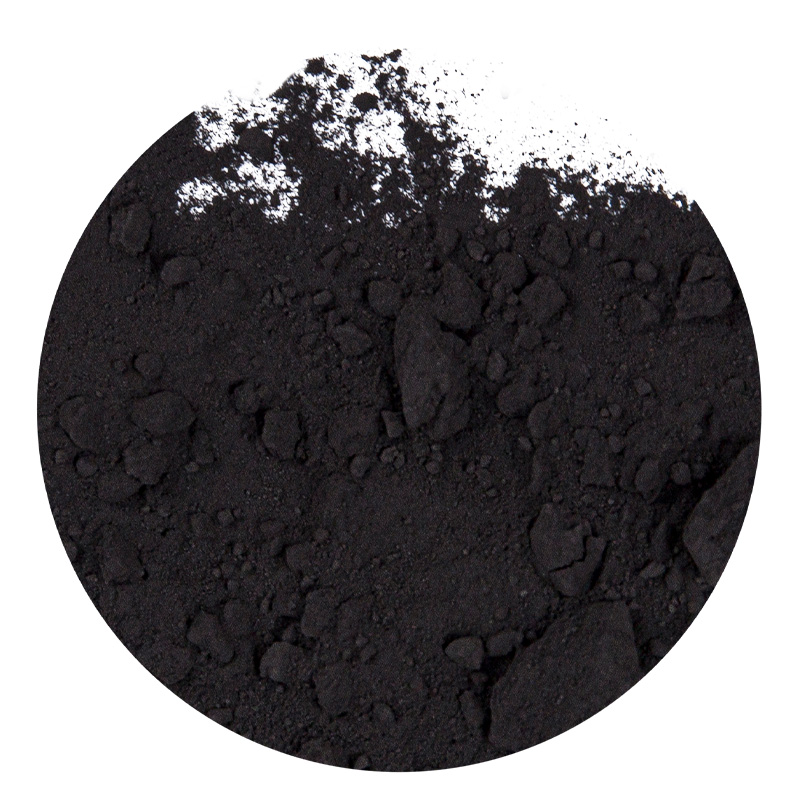
For formulators in the coatings and plastics industries, the efficacy of **iron oxide black pigment** is determined less by its chemical composition and more by its physical state—specifically, the control of its primary particle size and distribution. Proper dispersion is the prerequisite for achieving maximum color strength, jetness, and the desired aesthetic properties in the final product. Addressing the challenges of deagglomeration and particle stabilization is crucial for high-performance applications.
The Science of Dispersion: Size and Stability
The performance of any pigment begins with its successful incorporation into the liquid medium, moving from dry agglomerates to stabilized primary particles.
Controlling particle size distribution of iron oxide black pigment
- **Primary Particle Size:** The fundamental size of the synthesized **iron oxide black pigment** particles typically ranges from 0.1μm to 1.0μm. Smaller primary particles generally yield higher color strength but present greater challenges during dispersion due to increased surface area and strong attractive forces.
- **Distribution (PSD):** Tight control over the PSD is essential. A broad distribution indicates the presence of both very fine and very coarse particles, which leads to inconsistent color development and structural weaknesses in the cured film. Manufacturers must focus on Controlling particle size distribution of iron oxide black pigment to ensure uniform coating performance.
Challenges of Optimizing iron oxide black dispersion in waterborne systems
Waterborne systems pose a unique challenge compared to solvent-borne systems. The high polarity of water requires specialized dispersants to effectively wet and stabilize the typically hydrophobic **iron oxide black pigment** surface. Successful stabilization is vital for Optimizing iron oxide black dispersion in waterborne systems and preventing flocculation, which would otherwise lead to color shift and gloss reduction over time.
Particle Size vs. Aesthetic Performance Metrics
The physical size of the pigment particle directly dictates how light interacts with the final film, influencing two critical aesthetic outcomes: gloss and opacity.
Effect of particle size on pigment opacity and gloss
- **Gloss:** Larger, poorly dispersed agglomerates disrupt the smoothness of the dried coating surface, leading to diffuse light reflection and a significant reduction in gloss. Conversely, smaller, well-dispersed particles allow the resin to form a level, reflective film.
- **Opacity:** Opacity (covering power) is maximized when the particle size approaches half the wavelength of visible light. Thus, extremely fine or very coarse pigments both lead to reduced scattering and diminished opacity. Understanding the Effect of particle size on pigment opacity and gloss is key to meeting end-user specifications.
Utilizing Micronized iron oxide black for high gloss coatings
For demanding applications like automotive finishes or industrial coatings, the use of Micronized iron oxide black for high gloss coatings is necessary. Micronized grades undergo mechanical post-treatment to further reduce the size of the primary particles and break down persistent agglomerates. While more expensive, these grades achieve the high surface smoothness and excellent blackness required for superior gloss finishes.
Particle Size Effect on Coating Properties Table
| Particle Size Status | Dispersion Requirement | Resulting Gloss and Opacity |
|---|---|---|
| Coarse Agglomerates | Low (Difficult to break) | Low Gloss, Low Opacity (Poor Appearance) |
| Optimally Dispersed Primary Particles | High (Requires energy/surfactants) | High Gloss, Maximum Opacity |
Quantifying Dispersion Quality: Technical Standards
Objective measurement tools are indispensable for confirming the quality of the dispersion before final application.
Applying the Hegman gauge standard for iron oxide pigment dispersion
- **Hegman Gauge:** The Hegman gauge (or Fineness of Grind gauge) is a standardized tool used in the coatings industry to measure the degree of dispersion and identify the largest persistent agglomerates. It measures particle size in micrometers μm and Hegman units.
- **Specification:** For high-gloss coatings utilizing **iron oxide black pigment**, a typical Hegman rating of 6 to 7 (or 12.5μm to 25μm maximum particle size) is often required. This specification directly ensures the success of Hegman gauge standard for iron oxide pigment dispersion testing and prevents surface defects.
Dispersion Defects and Mitigation Strategies
Common defects include "seeding" (visible coarse particles) and "floating/flooding" (non-uniform color distribution). Mitigation involves selecting appropriate pigment wetting agents, optimizing the mill base formula (pigment-to-binder ratio), and using high-shear mixing equipment (e.g., bead mills) to provide the necessary mechanical energy for deagglomeration.
Demei Pigment Technology: Precision in Inorganic Color
Deqing Demi Pigment Technology Co., Ltd. focuses intensively on the research, development, and production of high-stability inorganic **iron oxide black pigment** and other iron oxide colors. Through our commitment to advanced processes, we offer products in three specialized series: standard, micronized, and low heavy metal content levels. Our micronized grades are specifically engineered to meet the stringent technical requirements for Micronized iron oxide black for high gloss coatings, demonstrating superior flow and easy dispersion. We understand the technical necessity of Controlling particle size distribution of iron oxide black pigment to maximize color performance and adhere to the Hegman gauge standard for iron oxide pigment dispersion. Deqing Hele New Material Technology Co Ltd., our trade company, ensures that our high-performance pigments, designed for both solvent and waterborne applications, reach formulators globally.

Frequently Asked Questions (FAQ)
1. Why is a narrow Controlling particle size distribution of iron oxide black pigment preferred?
A narrow particle size distribution ensures greater consistency in color, tinting strength, and stability, as it eliminates large agglomerates that negatively affect gloss and very small particles that can increase oil absorption and handling difficulty.
2. How does particle size affect the Effect of particle size on pigment opacity and gloss?
For gloss, smaller, well-dispersed particles promote a smoother surface finish. For opacity, particles sized near half the wavelength of visible light maximize light scattering, thus optimizing covering power.
3. What makes Optimizing iron oxide black dispersion in waterborne systems particularly challenging?
Waterborne systems are challenging because water is highly polar, while the typical iron oxide pigment surface is relatively non-polar (hydrophobic). This requires the use of specialized, high-performance wetting and dispersing agents to bridge the polarity gap and maintain stability.
4. What standard is used to test the quality of dispersion, relating to the Hegman gauge standard for iron oxide pigment dispersion?
The Hegman gauge (or Fineness of Grind gauge) is used. It measures the size of the largest persistent agglomerates in the dispersion, ensuring that the fineness meets the required specification for a given coating type (e.g., high gloss vs. matte).
5. What is Micronized iron oxide black for high gloss coatings and why is it used?
Micronized black iron oxide is a post-processed grade featuring very small primary particles and low levels of agglomerates. It is used in high-gloss coatings because its extremely fine particles allow for the creation of a very smooth surface film, maximizing specular reflection and jetness.