English
 عربى
عربى русский
 Español
Natural Red Oxide: How to Evaluate Raw Material Quality for Industrial Use
Content
- 1 What Natural Red Oxide Is and Why the Evaluation Baseline Matters
- 2 Five Parameters That Decide Raw Material Quality
- 3 Five Tests to Verify Natural Red Oxide in 48 Hours
- 4 Three Supply-Chain Red Flags in Natural Red Oxide
- 5 Building an Acceptance Plan You Can Enforce
- 6 Straight Answers for Procurement Teams
A procurement manager at an industrial coatings plant recently received two 20-tonne lots of natural red oxide from the same supplier, both certified at 90% Fe2O3 minimum. The first batch performed flawlessly in a solvent-borne primer; the second produced a visibly lighter shade and 17% lower tinting strength. Nothing on the certificate was false. The failure was systemic: the buyer had no raw material evaluation standard beyond the iron oxide content printed on a Certificate of Analysis. This article defines what natural red oxide is, which five parameters decide its quality, how to verify them with standard test methods, and how to convert those checks into an enforceable acceptance plan.
What Natural Red Oxide Is and Why the Evaluation Baseline Matters
Natural red oxide is a mineral pigment produced from mined hematite ore (α-Fe2O3) by crushing, grinding, air classification, and optional calcination; pigment-grade lots contain between 75% and 96% Fe2O3 depending on the ore body and processing depth.
Core definition: Natural red oxide (Colour Index Pigment Red 102) is a pigment-grade iron oxide concentrate obtained from naturally occurring hematite by mechanical processing, without chemical conversion of the iron oxide phase. ISO 1248 classifies it separately from synthetic red iron oxide (Pigment Red 101).
The commercial distinction is direct. Synthetic red iron oxide (PR 101) delivers 96–99% Fe2O3, clean color, and tight lot control at a higher price. Natural red oxide carries residual silica and alumina, higher oil absorption, and a muted earth-tone shade. Buyers choose it for cost-driven formulations where a brick-red or rust-brown color is acceptable: primers, concrete colorants, masonry paints, and non-slip floor systems. For these industrial applications such as architectural coatings and concrete colorants, lower chroma is an acceptable trade for price stability.
Because the material is mined, no two ore bodies are chemically identical. Deposits in India, Turkey, Brazil, and inland China differ in iron grade, quartz content, and trace heavy metals; within one mine, the ore face can shift over a six-month campaign. Producers that close the loop between mining-side grading, milling, and lot release — such as Deqing Demei Pigment Technology Co., Ltd., a China-based inorganic iron oxide pigment manufacturer — publish lot-specific data on their iron oxide red line so buyers can freeze an evaluation baseline.
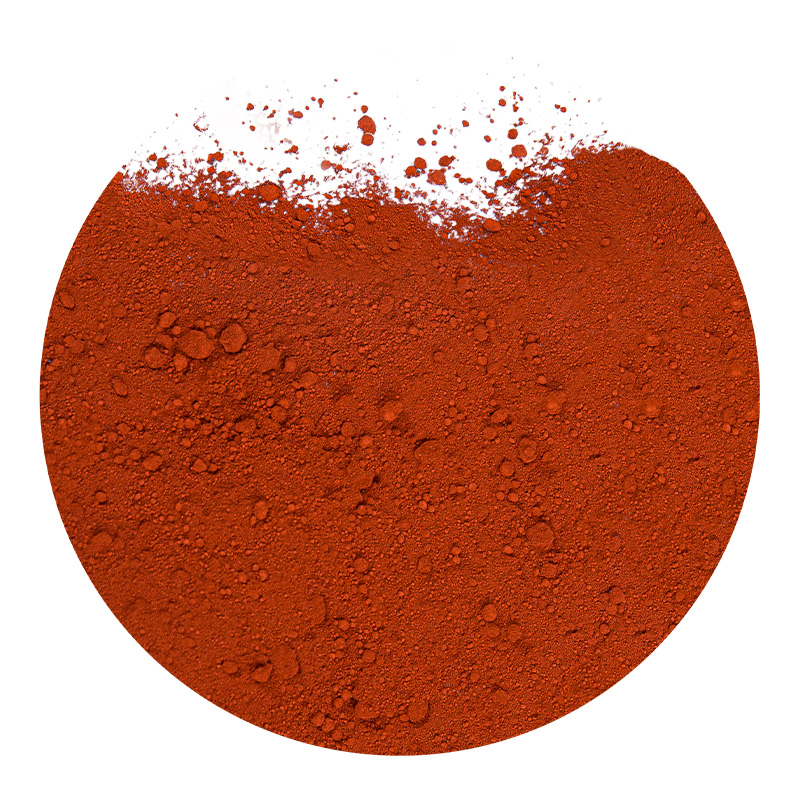 Natural Iron Oxide Red Pigment Powder with Lot-Specific DataThis mineral-based red iron oxide powder offers uniform particle size and stable composition, with grades for building materials and coatings. The surrounding text highlights how lot-specific data helps buyers freeze an evaluation baseline.View Product →
Five Parameters That Decide Raw Material Quality
Five parameters decide whether a natural red oxide lot performs consistently in an industrial formulation: total Fe2O3 content, particle size distribution, tinting strength, oil absorption, and heavy metal concentration. Together they predict color, dispersion, dosing, and regulatory risk better than any single certificate value.
| Parameter | Standard test method | Typical acceptance range | Production impact |
| Fe2O3 content | ISO 1248 with XRF confirmation | 85–96% (pigment grade); 70–80% (construction grade) | Color yield and batch economy |
| Particle size (D50) | Laser diffraction, ISO 13320 | 3–8 µm for coatings | Tinting strength, dispersion, gloss |
| Tinting strength | ISO 787-16 against an agreed reference | 95–105% of reference | Formula stability, pigment dosing |
| Oil absorption | ISO 787-5 | 18–28 g/100 g for natural grades | Resin demand, mill base rheology |
| Heavy metals (Pb, Cd, As, Hg) | ICP-OES after EPA 3050B digestion | Pb ≤ 1000 ppm, Cd ≤ 100 ppm, As ≤ 50 ppm, Hg ≤ 10 ppm (typical buyer specs) | Certification and end-use compliance |
Read these numbers as a set, not singly. Fe2O3 content is a mass figure; tinting strength is a performance figure. Two lots at 90% Fe2O3 can differ by 15% in tinting strength when crystal habit and pore structure differ.
Natural red oxide (PR 102)
- Mined hematite, mechanically processed
- Fe2O3 75–96% typical
- Muted brick-red with brown undertone
- Oil absorption 18–28 g/100 g
- Irregular particle geometry
- Lower price per kilogram; drift possible without blending
Synthetic red oxide (PR 101)
- Chemically precipitated or Penniman process
- Fe2O3 96–99%
- Clean, bright red hue
- Oil absorption 15–20 g/100 g
- Uniform particle shape
- Price premium; tight process control
Five Tests to Verify Natural Red Oxide in 48 Hours
Five standard tests — moisture, sieve residue, tinting strength, elemental analysis, and particle size — confirm roughly 80% of natural red oxide quality within 48 hours of sample receipt; three of them need only basic laboratory equipment.
Hour 0–1, moisture (ISO 787-3): dry at 105 °C to constant mass; accept below 0.5% for bagged pigment.
Hour 1–3, sieve residue (ISO 787-7): wash through a 45 µm sieve; accept below 0.5% by mass.
Hour 3–6, tinting strength (ISO 787-16): make a fixed-ratio paste with white base, compare against the agreed reference, and record ΔE.
Hour 6–24, XRF elemental scan: verify Fe, Si, Al, Ca, and the heavy metal panel on a pressed pellet.
Hour 24–48, laser diffraction (ISO 13320): report D50, D90, and the sub-1 µm fraction.
If volumes do not justify a benchtop XRF unit, outsource elemental analysis to a third-party laboratory and run the three same-day tests in-house. Procurement teams can also shorten the supplier list before sampling by reviewing the manufacturer’s published product portfolio and data sheets.
China Iron Oxide Pigment Manufacturer and Product RangeDemei is a Chinese producer of synthetic and natural iron oxide pigments, offering red, yellow, brown, black, and other shades across standard, micronized, and low-heavy-metal series. Useful for procurement teams reviewing supplier portfolios before sampling.View Product →
Three Supply-Chain Red Flags in Natural Red Oxide
Three supply-chain signals account for most quality failures with natural red oxide: adulteration, batch-to-batch drift, and documentation too generic to verify.
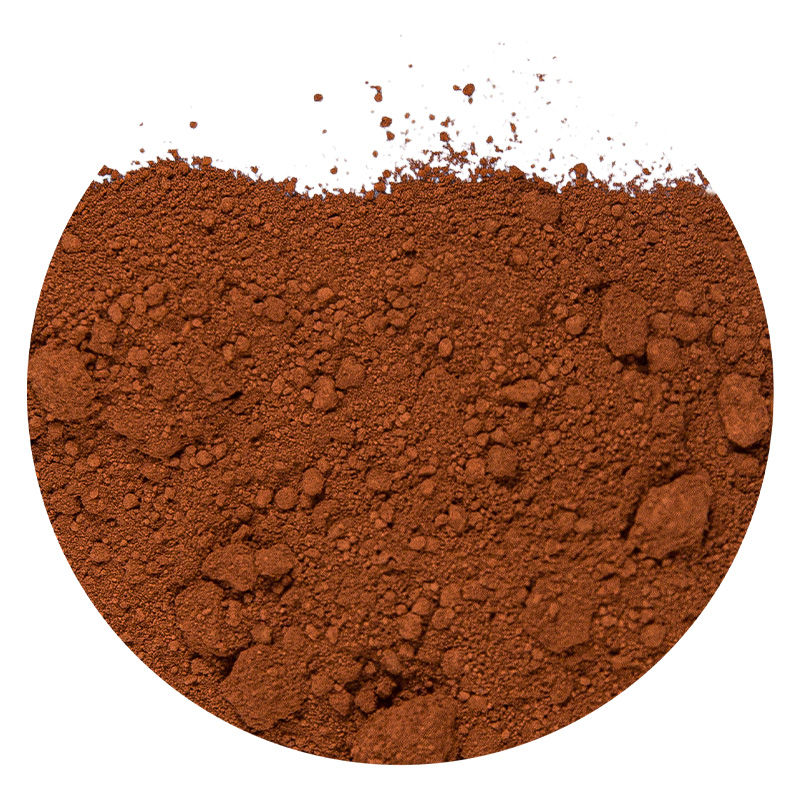
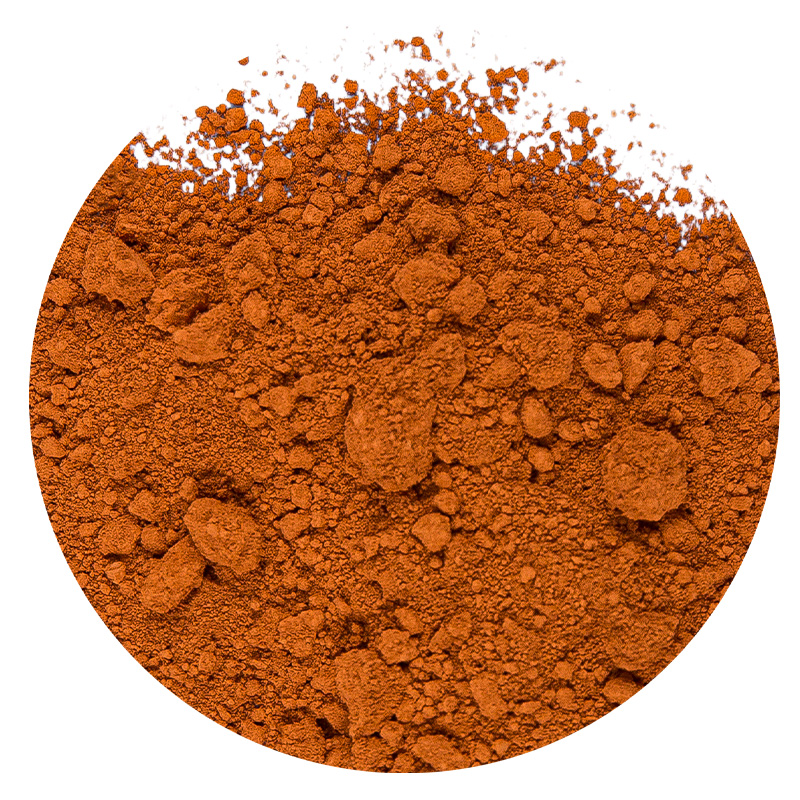
Crude adulteration appears when resellers blend calcium carbonate, brick dust, or synthetic red oxide into natural powder. A certificate reading 90% Fe2O3 combined with a bright orange-red dry color is a contradiction; genuine hematite grinds to a muted brick-red with a brown undertone.
Mining products drift by nature. A supplier that mills from a blended stockpile and revalidates color after each 50-tonne campaign holds lots close to the reference; a supplier that ships from the current hopper produces 15–20% tinting strength swings between lots.
Rock-derived pigments inherit lead, arsenic, and mercury from the ore body. Without a per-batch XRF or ICP scan, a new vein with elevated lead stays invisible until the finished coating fails its own compliance test. Procurement teams should study iron oxide powder heavy metal safety standards before contracting, not after a rejection.
Reliable supply
- Lot-specific CoA with XRF, PSD, and tinting strength values
- Written tinting strength tolerance of ±3–5%
- Blended stockpile and dedicated processing line
- Factory audit supported by batch records
High-risk supply
- CoA lists only "Fe2O3 ≥ 90%" with no test methods
- Price 15–20% below regional mill level
- Delivered lot size changes order to order
- No access to the mine, the mill, or QC data
A producer that publishes a structured range — red, yellow, black, brown, orange, green, and blue iron oxide pigments — rather than a single trade name usually operates intentional grade control. Deqing Demei Pigment Technology Co., Ltd. sells through a separate trading entity, Deqing Hele New Material Technology Co., Ltd., which keeps commercial transactions distinct from the auditable production layer.
Building an Acceptance Plan You Can Enforce
An enforceable acceptance plan for natural red oxide uses three control levels — incoming inspection, batch certification, and annual audit — and follows the classification framework of ASTM D3722 for natural red and brown iron oxide pigments.
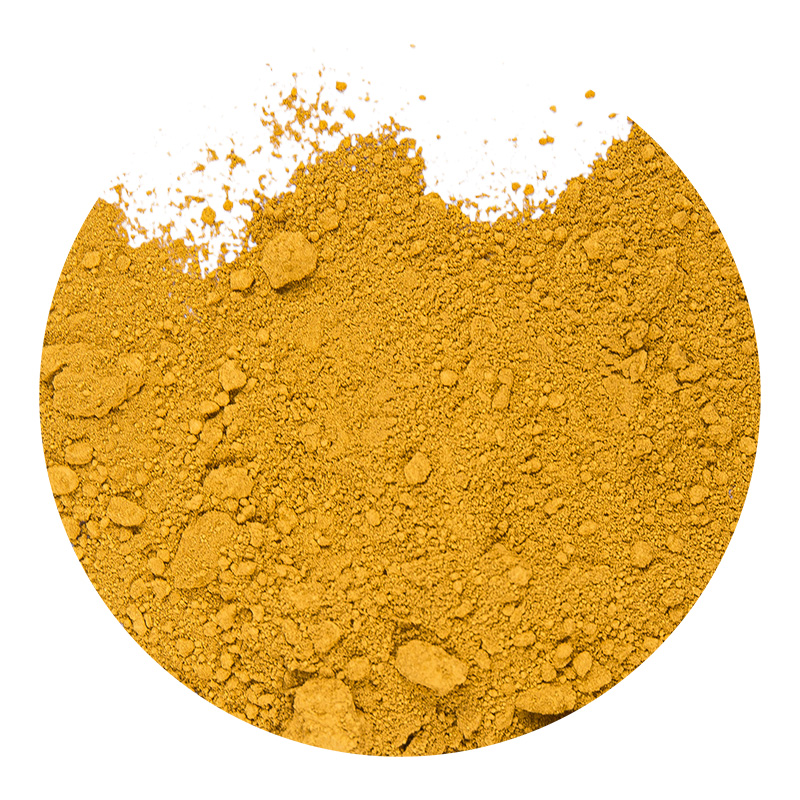
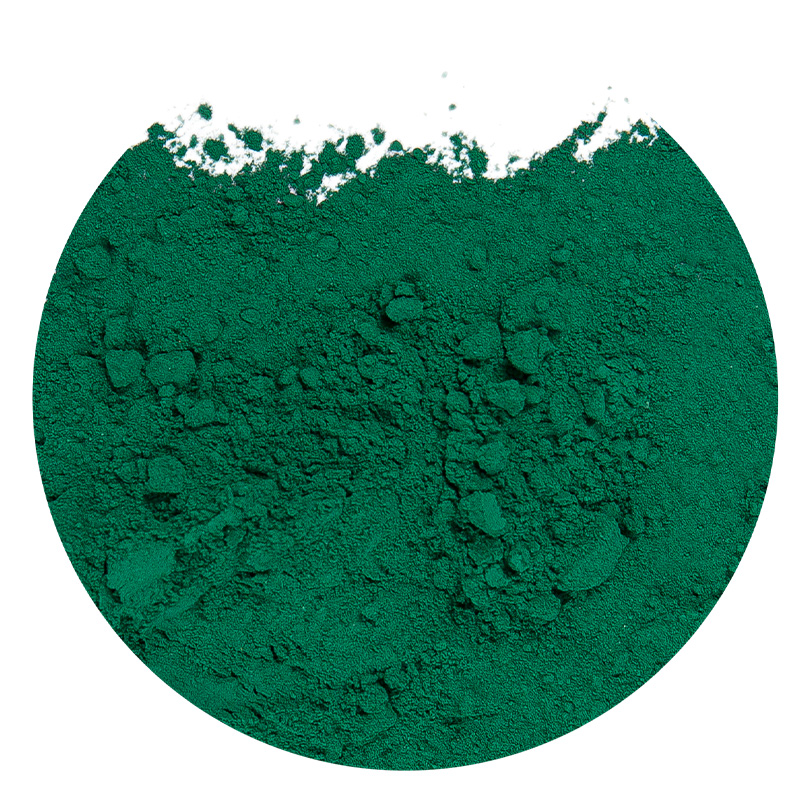
Earth-tone flexibility de-risks small lots. Natural red oxide sits close to natural brown and yellow oxide in CIELAB color space, and many coatings specifications allow substitution across the rust and umber range for warm architectural shades. Producers that control adjacent color families, such as Demei’s iron oxide brown line, can match a reddish-brown batch with a calibrated brown grade instead of forcing a red-only inventory to absorb it.
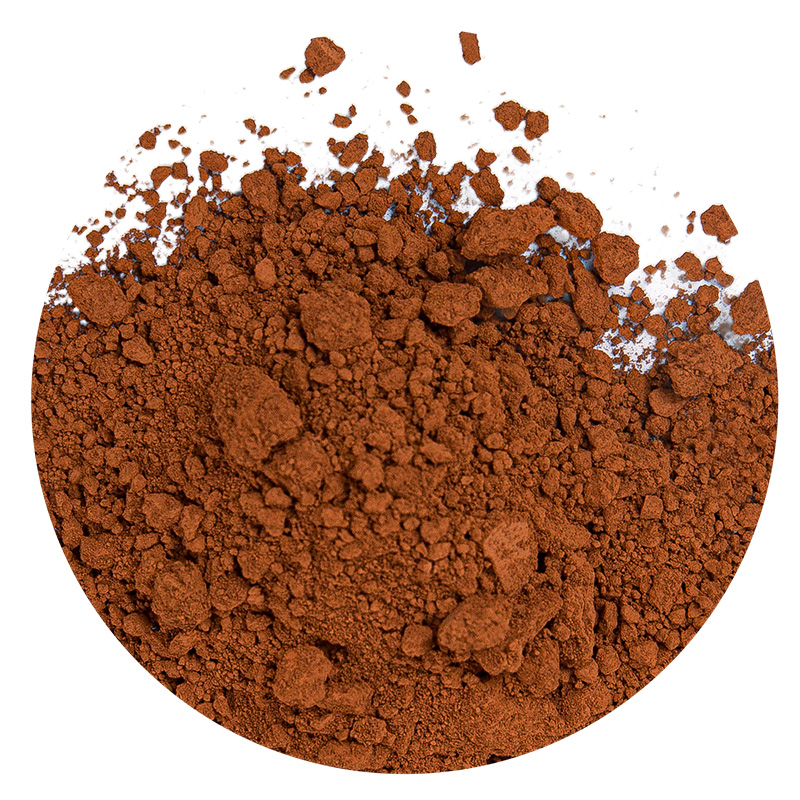 Brown Iron Oxide Pigment for Paints and ConstructionThis brown iron oxide features consistent tinting strength, low oil absorption, and UV and alkali stability. It complies with ISO 10601 and REACH, making it suitable for substituting reddish-brown batches in architectural shades.View Product →
Straight Answers for Procurement Teams
What is the minimum Fe2O3 content for industrial-grade natural red oxide?
85% Fe2O3 is the practical minimum for pigment-grade natural red oxide used in paints and plastics; construction grades for concrete and cement run at 70–80%. ASTM D3722 sets the classification framework for natural red and brown iron oxide pigments, while ISO 1248 covers the pigment specification and test methods for the wider iron oxide pigment family.
How do you measure tinting strength without a full laboratory?
Use the ISO 787-16 drawdown method with a simplified manual paste: mix pigment, white base, and vehicle at a fixed ratio, then compare against the reference under daylight. An experienced technician can reliably detect a 3% tinting strength difference; any visible delta sends the lot for instrument confirmation.
Can natural red oxide replace synthetic red iron oxide?
Only in muted, earth-tone applications. Natural red oxide (PR 102) has a different particle geometry, higher oil absorption of 18–28 g/100 g, and lower chroma than synthetic PR 101. It substitutes cleanly in primers, concrete, and industrial coatings; it fails in glossy architectural finishes where saturation is the specification.
How often should an industrial buyer audit an iron oxide supplier?
Run a color cross-check every quarter and a full on-site audit at least once per year for high-volume contracts. Critical applications — food-contact packaging, toys, drinking-water pipe coatings — require a heavy metal panel on every batch, not once a year.