English
 عربى
 русский
 Español
Natural Red Iron Oxide: Application Factors Buyers Should Check Before Sourcing
Content
- 1 What Natural Red Iron Oxide Is, and What It Is Not
- 2 Application Factors That Decide Whether a Grade Will Work
- 3 Purity, Soluble Salts and Heavy Metals: The Qualification Screen
- 4 Colour Consistency and Tinting Strength in Your Process
- 5 Sourcing Checks Before You Commit to a Lot
- 6 Direct Answers Before You Approve a Specification
Two containers of natural red iron oxide pulled from the same deposit six weeks apart can arrive with a five-point spread in Fe2O3 content, a median particle size that has shifted by several microns, and a colour difference that only becomes visible after the concrete has cured. That is not a supplier failing at its job. It is what happens when a buyer specifies a mined mineral as though it were a synthesised pigment with a fixed datasheet.
The screening sequence below follows the order a purchasing team actually faces: define the application, verify purity and soluble salts, confirm colour behaviour in your own process, then lock the deposit, the lot size and the paperwork.
Natural and synthetic red iron oxide both carry the Colour Index designation CI Pigment Red 101 (CI 77491), so a specification that stops at the index number qualifies nothing.
What Natural Red Iron Oxide Is, and What It Is Not
Natural red iron oxide is beneficiated hematite ore - mined, washed, dried and milled - sold under the same Colour Index designation as the synthetic red pigment it competes with on price.
Working definition: natural red iron oxide is a pigment produced by mining, washing, drying and milling iron-bearing ore that is predominantly hematite, rather than by chemical precipitation or thermal decomposition of iron salts. Its Fe2O3 content, crystal habit, particle shape and trace-mineral profile are set by the deposit and the beneficiation route, not by a reactor setpoint.
Beneficiation decides most of the variation a buyer will meet. Washing strips clay and water-soluble salts, magnetic separation lifts iron-rich fractions away from silica and heavier gangue, and milling sets the particle size distribution that governs tinting strength and oil absorption. Some producers go further and calcine yellow goethite ore between 400 and 700 degrees Celsius, dehydrating it into red hematite and pushing an ochre shade towards a fuller red.
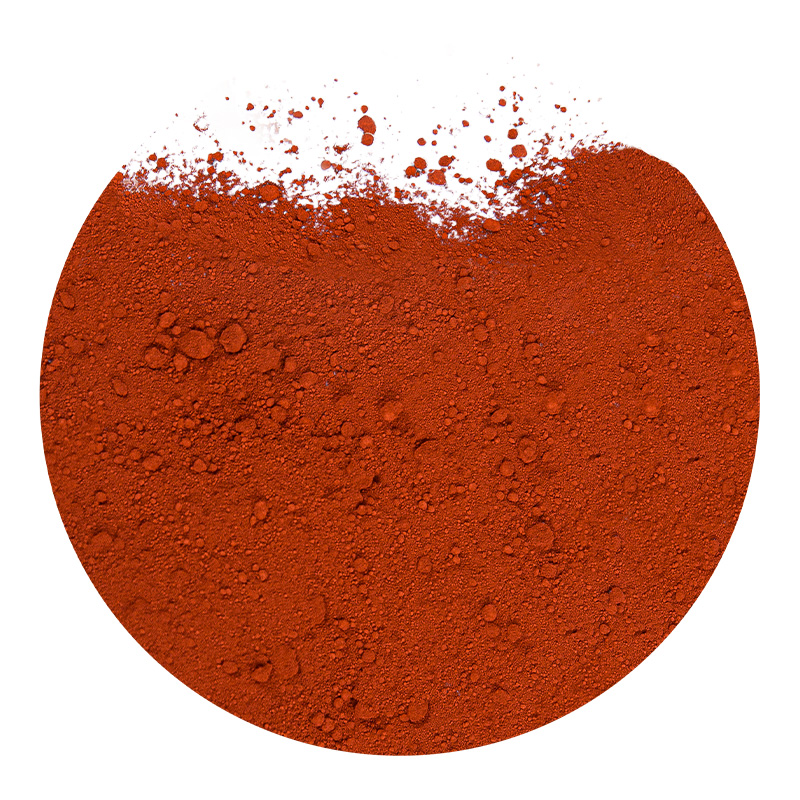 Iron Oxide Red Pigment Grades 110, 120, 130S, 130A, 190, and 180View these synthetic and natural mineral red grades for high Fe2O3 content, stable colour, and oil absorption suited to coatings, cement, plastics, and ceramics.View Product →
The 5 to 20 percent balance in a natural grade is mostly silica, clay and carbonate. That fraction dilutes colour strength, raises oil absorption and puts abrasive material through pumps, mixers and spray nozzles, which is why a straight swap at the same dosing rate almost never holds the shade.
Application Factors That Decide Whether a Grade Will Work
The end-use application, not the Colour Index number, decides which natural red grade will work: cement, coatings, plastics and ceramics each fail on a different property, and a grade that passes one screen can fail the next.
- Cement, concrete and mortar. The pore solution sits at pH 12 to 13, where hematite is stable, so most failures trace back to water-soluble chloride and sulfate rather than to the pigment itself.
- Architectural and industrial coatings. Oil absorption and dispersion quality drive binder demand, and natural grades deliver less opacity per kilogram in thin films than synthetic red.
- Plastics, masterbatch and rubber. Check moisture content and colour behaviour at the actual processing temperature, because trapped volatiles open porosity and shift the shade.
- Ceramics, glass, roof tiles and pavers. Hematite keeps its colour where organic reds burn out, but silica in the ore adds wear to dies and can react inside a glaze.
- Paper, leather and cosmetics. These routes live or die on the heavy-metal statement, so treat the purity data as the first screen rather than the last.
A natural grade fits when
- Colour is dry-blended into cement, mortar or paver mixes at low shear
- Cost per tonne matters more than opacity per kilogram
- The target shade is an earth tone matched to local aggregate
- Processing temperatures exceed what organic reds survive
A natural grade struggles when
- Thin-film coatings need high opacity from a small pigment load
- The colour window is tighter than Delta E 1.0 lot to lot
- High-speed dispersion demands fine, easily wetted particles
- Food, cosmetic or toy compliance drives the specification
If the target is a terracotta or ochre tone, natural red is rarely used alone. Blending it with yellow iron oxide or with a brown oxide is standard practice for reaching earth shades a single red cannot hold, and it spreads colour risk across two lots instead of one.
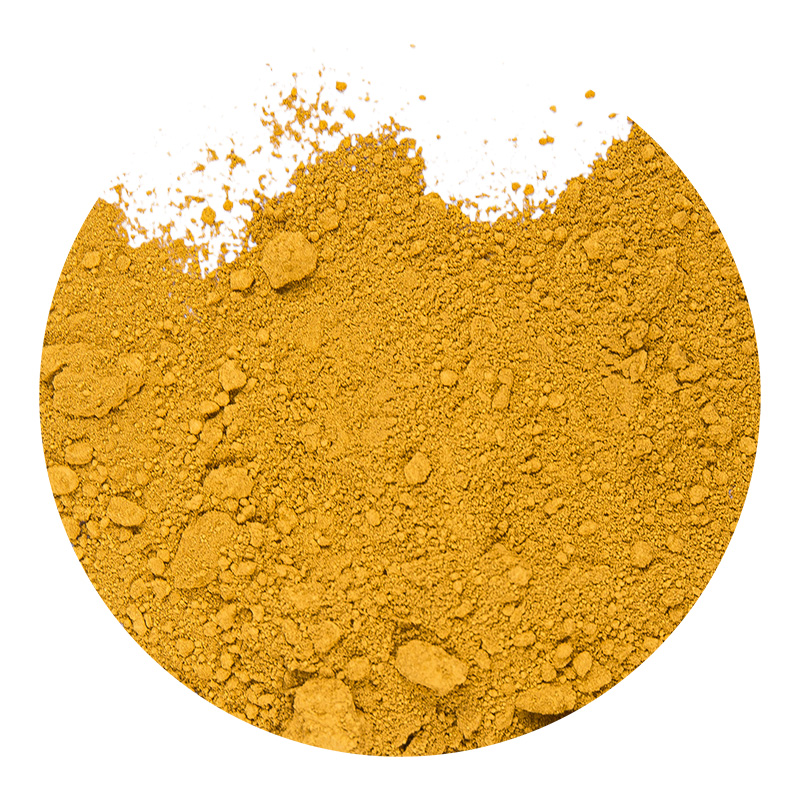 Iron Oxide Yellow Pigment Grades 313, 920, and E172Compare these yellow oxide grades for heat stability, weather resistance, or low-heavy-metal compliance when blending earth tones or matching concrete, coatings, plastics, and cosmetics.View Product →
Match the grade to the failure mode that would hurt most: salts in concrete, dispersion in coatings, heat in plastics, purity in cosmetics.
Purity, Soluble Salts and Heavy Metals: The Qualification Screen
Water-soluble chloride and sulfate, not Fe2O3, reject more natural red iron oxide lots than any other single cause, because both migrate to the surface of curing cement and bloom.
Iron oxide red survives the alkaline environment of curing concrete, so the pigment is rarely the problem. The salts that travel with the ore are. Screen every lot on the parameters below before release.
| Parameter | Test method | What it protects |
| Water-soluble matter | ISO 787-3 | Efflorescence and salt bloom on cured surfaces |
| Matter volatile at 105 C | ISO 787-2 | Dosing accuracy, caking in storage and transit |
| pH of aqueous suspension | ISO 787-9 | Compatibility with binder and cement chemistry |
| Oil absorption | ISO 787-5 | Binder demand, dispersion energy, gloss control |
| Sieve residue at 45 microns | ISO 787-7 | Grit, pinholes and surface defects in finishes |
| Water-soluble chloride and sulfate | EN 12878:2014 | Efflorescence and corrosion risk in reinforced concrete |
| Heavy metals (lead, cadmium, chromium VI, mercury) | EN 12878:2014, EN 71-3 | Compliance in construction, toys and consumer goods |
A grade that cannot produce a batch certificate quoting ISO 787 water-soluble matter and chloride results is not qualified, however good the drawdown looks.
Two standards carry most construction specifications. EN 12878:2014 covers pigments for colouring building materials based on cement and lime; ASTM C979 covers pigments for integrally coloured concrete in North America. Ask which one the buyer names before you sample, because the two documents test different properties.
Colour Consistency and Tinting Strength in Your Process
Qualify a natural red grade on colour difference and tinting strength, not on Fe2O3 alone, because two lots with identical Fe2O3 can still print two different shades.
A workable contract structure sets a CIELAB colour difference band against a retained standard - Delta E 1.5 or tighter for natural grades, measured on a drawdown at fixed film thickness and binder - plus a minimum relative tinting strength per ISO 787-24 at a fixed pigment-to-white ratio, commonly 1 to 10.
Particle size explains most of the tinting-strength gap. Synthetic CI PR101 primary particles sit near 0.1 to 0.6 microns, while ground natural grades commonly show median values between 5 and 25 microns. Coarser particles scatter less light, so plan for a higher dose and confirm the figure in your own mill rather than on a supplier comparison sheet.
Practical rule: approve a natural red on a tint test, a Delta E band and an oil absorption figure, then re-verify every third lot against the retained standard.
Sourcing Checks Before You Commit to a Lot
Lock the deposit and the beneficiation route before you negotiate price, because an ore body changes faster than a grade name does.
- Sample from the production lot. Ask for 1 to 5 kg taken from the lot actually on offer, not from a showroom sample that may be two years old.
- Demand the batch certificate of analysis. Insist on ISO 787 results for water-soluble matter, volatile matter, pH, oil absorption and sieve residue for that specific lot number.
- Run a pilot at production shear. Disperse, cure or fire the material the way your line does; colour developed in a lab beaker does not predict colour after a 30-minute mix cycle.
- Sign the standard sample. Keep two sealed retainers, one with each party, and write the tolerance band into the purchase order next to it.
- Fix packaging and moisture protection. Choose 25 kg polyethylene-lined bags or 1000 kg jumbo bags; natural grades pick up moisture in humid transit and cake.
- Plan the logistics window. A 20 ft container typically loads 20 to 24 tonnes of 25 kg bags, and production plus sea freight commonly runs 45 to 65 days door to door.
One deposit, one standard sample, one tolerance band. A quotation that cannot name the mine and the beneficiation route should be treated as provisional.
Manufacturers such as Deqing Demei Pigment Technology Co., Ltd. list standard, micronised and low-heavy-metal series across seven oxide colours, which is the level of grade detail a purchase specification should carry before a first order is placed.
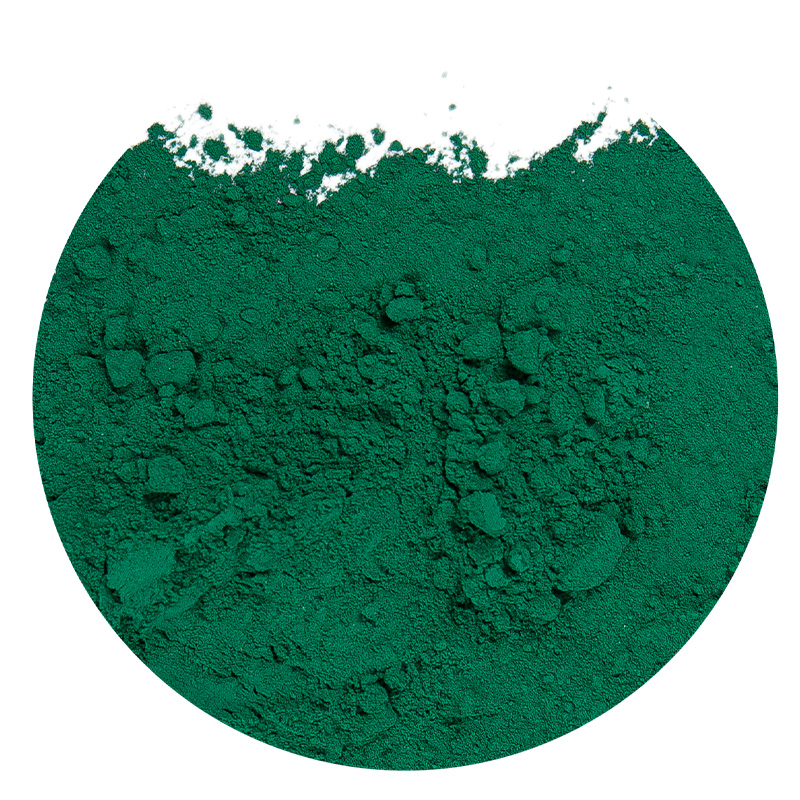
Iron Oxide Pigment Category: Red, Yellow, Black, Brown, Orange, Green, and BlueBrowse Deqing Demei's seven iron oxide colour systems and standard, micronized, or low-heavy-metal series before specifying natural red grades or requesting custom wholesale pigments.View Product →Direct Answers Before You Approve a Specification
Four questions decide most natural red iron oxide purchases. The answers below are the ones to settle before a purchase order is issued.
Is natural red iron oxide the same material as synthetic red iron oxide?
No. Both are sold as CI Pigment Red 101 (CI 77491), but natural grades are beneficiated ore at roughly 80 to 95 percent Fe2O3, while synthetic grades are chemically produced at 96 to 99 percent. Expect lower tinting strength, higher oil absorption and more lot-to-lot colour movement from natural material.
What rejects a natural red lot most often?
Water-soluble salts. Chloride and sulfate remaining in the pigment migrate to the surface and cause efflorescence or bloom, and EN 12878:2014 sets the test framework for pigments used in cement- and lime-based materials. A supplier that cannot quote an ISO 787-3 water-soluble matter result and a chloride figure for the lot under offer has not qualified the material.
Can natural red iron oxide be used in cosmetics or food contact?
Only if the grade meets the purity limits of the destination market. Iron oxides are authorised in the European Union as food colourant E172 and are listed for cosmetic use there and under 21 CFR 73.2250 in the United States. Mined grades carry deposit-specific trace elements, so request a heavy-metal statement rather than assuming the Colour Index number settles the question.
Which documents belong on the purchase order?
A batch certificate of analysis quoting the ISO 787 test results, a safety data sheet in the destination language, a REACH registration statement, a heavy-metal declaration, and a retained standard sample signed by both parties. For construction use, add the EN 12878:2014 or ASTM C979 conformity statement.
Natural red iron oxide is a cost-effective pigment when the buyer treats it as what it is: a beneficiated mineral with a deposit-specific fingerprint. Qualify the application, the salts, the colour band and the mine, in that order, and the material behaves predictably for years.
Skip those four checks and the price advantage disappears into the first rejected lot.
Four screens, in sequence: application fit, purity and salts, colour consistency, then deposit and lot control.