English
 عربى
عربى русский
 Español
Natural Red Iron Oxide: Application Factors Buyers Must Check Before Sourcing
Content
A procurement manager at a facade coatings plant receives a 25 kg natural red iron sample from a new mine-based supplier. The powder looks almost identical to the batch the plant has used for three years, but the tinting strength test comes back 18% below the in-house reference, and the same lot passes construction screening yet fails the heavy metal limit for a consumer paint line operating in the same factory. A natural red iron pigment can pass a visual check and still fail in application. The factors that decide success are measurable, and this guide explains what to verify before you source.
What Natural Red Iron Actually Is
Natural red iron, listed in the Color Index as Pigment Red 102 (PR 102), is hematite-based iron oxide mined from natural deposits and processed by crushing, grinding, classifying, and in some cases calcination to reach pigment particle size. No synthetic chemical conversion is involved, which is why the ore deposit itself dictates most of the final properties.
Core definition: Natural red iron oxide (PR 102) is a mineral pigment obtained by physical processing of hematite ore; its Fe2O3 content, impurity profile, and particle size distribution vary by deposit and directly determine its performance in coatings, concrete, plastics, and ceramics.
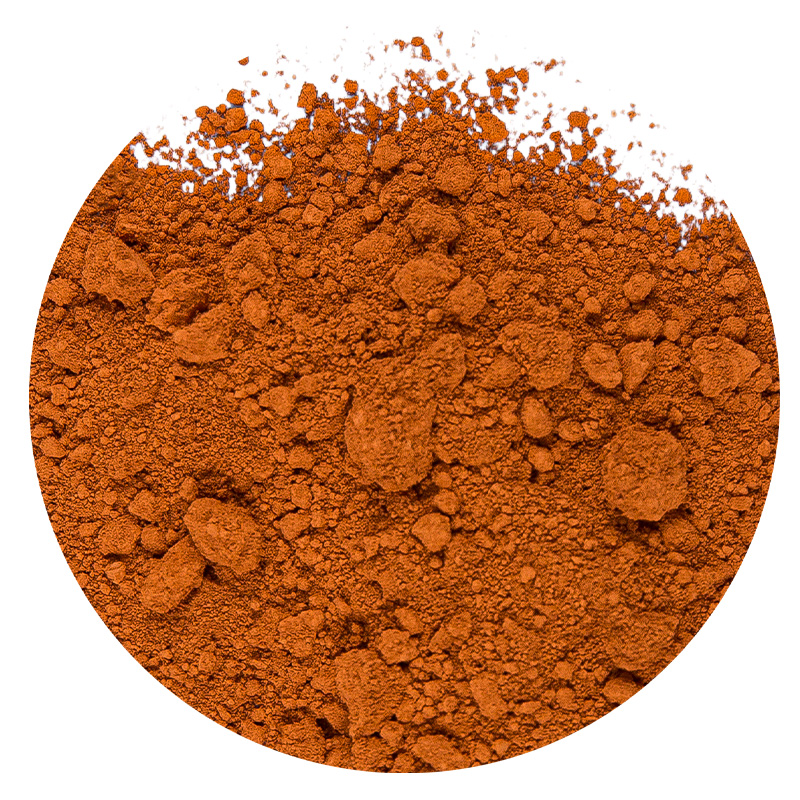
Commercial pigment grades typically contain 85 to 96 percent Fe2O3 by weight, with silica, alumina, manganese, and trace heavy metals remaining from the host rock. Shade varies from brick red to deep violet depending on the deposit and on whether the ore is calcined. A specification sheet from one mine cannot be applied to another source without new testing.
Five Application Factors That Decide Sourcing Quality
Five application factors separate a usable natural red iron oxide from a reject lot: Fe2O3 content, heavy metal profile, particle size distribution, oil absorption, and batch-to-batch color consistency.
| Factor | What it controls | Typical range | Failure symptom |
| Fe2O3 content | Tinting strength, hiding power, cost per unit of color | 85-96% | Weak color, higher dosage needed |
| Heavy metals (As, Pb, Hg, Cd) | Compliance for toys, cosmetics, food contact | As max 3 ppm, Pb max 10 ppm (FDA basis) | Rejected shipment, legal exposure |
| D50 particle size | Dispersion, gloss, tinting strength | 2-8 micron | Streaking, agglomeration, grit |
| Oil absorption | Binder demand, paint rheology | 15-25 g/100 g | Viscosity shift, cracking |
| pH value | Latex stability, cement hydration | 5-8 | Coagulation, set disturbance |
| Batch dE | Color consistency across shipments | max 1.0 target | Rework, shade complaints |
Fe2O3 content and heavy metals are the first gate
Natural red iron with 90% or more Fe2O3 generally supports coatings-grade performance, while 85-90% may still serve concrete and building applications. Heavy metals are the hidden risk because mined ore carries trace arsenic, lead, mercury, and cadmium, and limits vary by market. US FDA 21 CFR 73.200 sets the iron oxide color additive limits at arsenic no more than 3 ppm, lead no more than 10 ppm, and mercury no more than 1 ppm; EN 71-3 applies migration limits for toys; cosmetic-grade material is expected to meet the purity level of CI 77491, normally 95% or higher iron oxide content.
Particle size, oil absorption, and pH act as the second gate
D50 between 2 and 8 micron is the working window for most pigment uses. Finer particles give more tinting strength but raise oil absorption; coarser particles disperse easily but lower gloss and hiding. pH outside 5-8 can destabilize latex paint or disturb the early hydration of cement.
Batch-to-batch color consistency is the commercial risk
Because natural pigment varies lot to lot, the purchasing contract should fix a color tolerance in dE against an agreed physical standard. A dE of 1.0 or less against the reference is a practical target; anything above 2.0 will often be rejected in paint production.
How Application Demands Change the Specification
The same natural red iron powder that colors a concrete paver can fail in an industrial coil coating line, because each application stresses different pigment properties. Buyers should map the specification envelope to the end use first, then compare prices. The application guides published for iron oxide pigments show how one property set serves multiple industries.
- Concrete and building materials: dosed at 2-5% of cement weight; EN 12878 defines the test framework, and the pigment must stay stable in alkaline cement paste.
- Paints and coatings: fine particle size and low oil absorption improve gloss and dispersion; ISO 1248 covers iron oxide pigments for paint, and accelerated weathering of 1,000-2,000 hours is a common facade qualification.
- Plastics: moisture below 0.5% avoids bubbles, and natural red iron must tolerate melt processing temperatures of 200-260 degrees C without shade shift.
- Ceramics: Fe2O3 content and impurity profile affect firing color and sintering behavior.
A construction-grade lot with 86% Fe2O3 is not defective; it is simply not a coatings-grade product. Specify the application first, then source the pigment grade that matches it.
Natural Red Iron vs Synthetic Red Iron Oxide
Synthetic red iron oxide (Pigment Red 101) typically delivers 96% or higher Fe2O3 content and tighter batch control, while natural red iron (PR 102) offers a lower energy footprint and a broader shade range, with more lot-to-lot variation. The choice is an engineering decision, not a price decision.
Natural red iron (PR 102)
- Mined and physically processed
- Fe2O3 85-96%
- Impurities depend on the deposit
- Lower processing energy
- Wider shade variation
Synthetic red iron oxide (PR 101)
- Chemically produced in a plant
- Fe2O3 96% or higher
- Controlled impurity profile
- Higher production cost
- Tighter shade reproducibility
| Parameter | Natural PR 102 | Synthetic PR 101 |
| Fe2O3 content | 85-96% | min 96% |
| Batch dE vs reference | 1.0-2.5 typical | 1.0 or less typical |
| Heavy metal load | Deposit dependent, test each lot | Controlled during production |
| Relative tinting strength | 95-105% of reference | Within 3% of reference |
| Cost per tonne | Lower | Higher |
ASTM D3722 covers natural red and brown iron oxide pigments as a single specification family, so suppliers that handle natural red often offer natural brown grades from the same ore. For a deeper comparison of production routes and stability behavior, see our synthetic versus natural iron oxide pigment comparison.
Requalification rule: switching from synthetic to natural red iron saves cost per tonne but changes particle size, dispersion, and shade; every formulation must be requalified before substitution. Direct replacement without testing is the most common cause of rejected batches.
Deqing Demei Pigment Technology Co., Ltd. reports exports to more than 20 countries and publishes separate specification data for its iron oxide red and iron oxide brown lines; both families are available for factory-level sampling before volume orders.
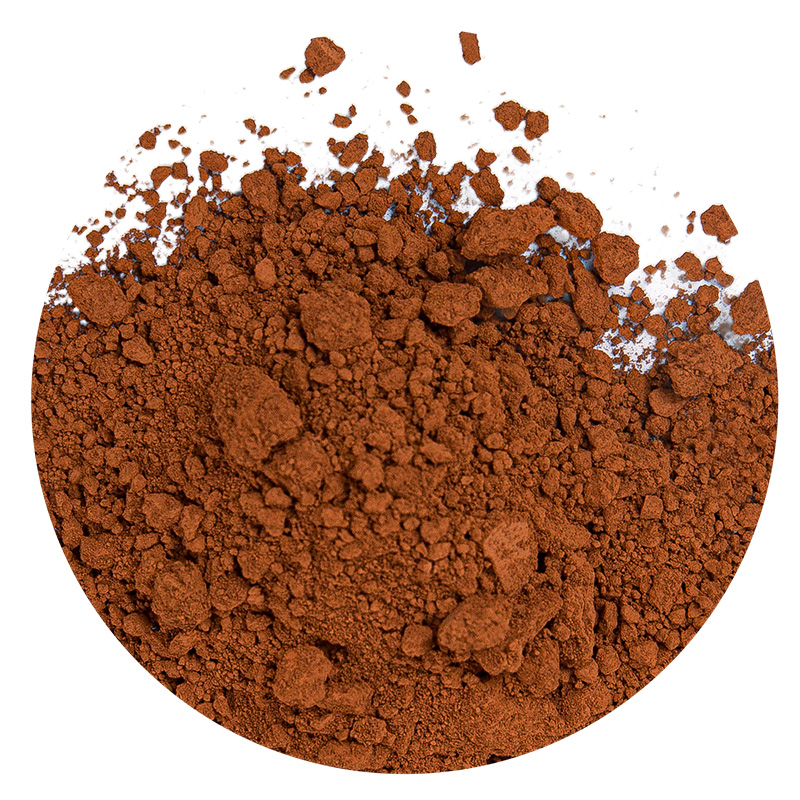 Iron Oxide Brown Pigment Powder for Coatings and ConstructionThis brown iron oxide pigment offers a range from light tan to reddish-brown, with strong tinting strength and compatibility in water- and solvent-based systems. Its documented stability makes it relevant when verifying shade consistency and compliance for building materials.View Product →
Sourcing Checklist Before You Commit
A defensible sourcing process for natural red iron requires six verification steps, from defining a physical shade standard to agreeing on a dE limit in the contract.
Define the shade against a physical standard. A sealed, dated reference plate or powder sample is the only reliable baseline; screen images cannot capture natural pigment undertone.
Request a per-lot certificate of analysis. The certificate must list Fe2O3 content, D50, oil absorption, moisture, pH, and dE against your reference.
Run heavy metal testing for the destination market. Use EN 71-3 migration limits for toys, FDA 21 CFR 73.200 limits for food-contact material, and regional chemical control rules for general goods.
Measure relative tinting strength. Compare the candidate against your in-house reference at the same pigment loading; 95-105% of reference is a common acceptance window.
Test in your actual formulation. Check grind curve, viscosity, drying or curing behavior, and final color; a bag test does not predict line performance.
Write the dE limit into the purchase agreement. A maximum dE of 1.0 against the agreed reference, tested per lot, turns a variable mineral product into a controllable raw material.
Contract note: a "typical analysis" published on a supplier website is not a commitment. The binding document is the certificate of analysis issued for each specific shipment, with test date and batch number.
Deqing Demei Pigment Technology Co., Ltd. supplies processed red iron oxide grades with documented particle size and purity data and offers factory-level samples before volume orders. See the company's iron oxide red product data for current parameters.
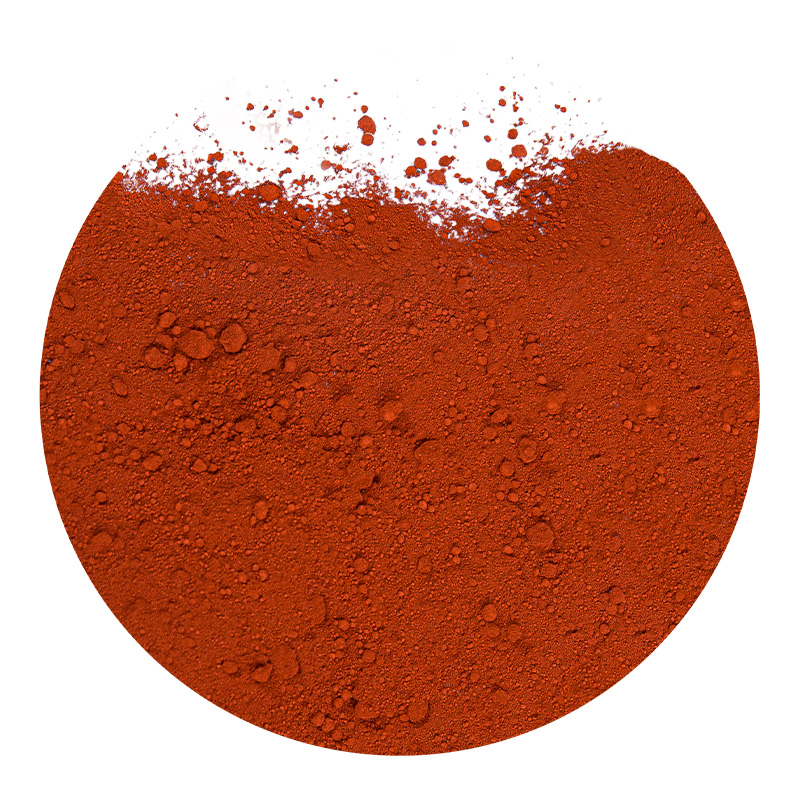 Natural and Synthetic Iron Oxide Red Pigment GradesThis red iron oxide series covers multiple fineness grades for construction materials such as tiles, mortar, and concrete. Its stable weather resistance and uniform particle size are key points when comparing suppliers before ordering samples.View Product →
Quick Answers to Common Sourcing Questions
The following answers cover the questions that most often delay purchase decisions on natural red iron.
What does Pigment Red 102 mean?
Pigment Red 102 (PR 102) is the Color Index designation for natural red iron oxide. It identifies a hematite-based mineral pigment produced by physical processing; the synthetic equivalent produced by chemical conversion is Pigment Red 101.
Is natural red iron the same as red iron oxide?
No. Red iron oxide is the generic family that includes both natural and synthetic pigments. Natural red iron (PR 102) is the mined and milled subset, while synthetic red iron oxide (PR 101) is manufactured chemically. Their Fe2O3 content can overlap, but impurity profiles and batch stability differ.
What dosage of natural red iron is used in colored concrete?
Two to five percent by weight of cement is the common working range for medium to strong shades. Above approximately 10% of cement weight, additional pigment no longer deepens the color and can reduce compressive strength, so selecting a lot with high tinting strength is more effective than increasing dosage.
Why do natural red iron shipments vary in color?
Because the ore body is not uniform: changes in the mine stratum, seasonal processing conditions, and the efficiency of classification create real lot-to-lot differences. That is why a physical reference standard, a per-lot dE measurement, and a written tolerance are the required controls.