English
 عربى
عربى русский
 Español
Iron Yellow Oxide in Concrete: Key Performance Factors and Selection Guide
Content
A precast manufacturer in the middle of a 2,000-piece paver order does not need a lecture on color theory. What they need is to know why batch 41 turned brown when batch 40 was perfect, and the answer sits in the chemistry of iron yellow oxide.
Iron yellow oxide (Pigment Yellow 42, goethite, FeO(OH)) is the least thermally forgiving member of the iron oxide pigment family. Its hydrated structure begins releasing water around 180°C, shifting the pigment irreversibly toward red-brown. Because concrete curing generates internal heat, the relationship between curing temperature, pigment dose, and the yellow oxide grade is the most important quality lever in colored building materials.
Operational fact: a color shift of just two delta E units is visible to the naked eye on a paver edge. Most concrete plants notice a yellow oxide problem only after the second pallet is already cured.
Why Yellow Oxide Is the Thermal Weak Point in the Family
Yellow iron oxide must be checked for heat stability before any other parameter because it is the only common oxide pigment whose crystal chemistry changes below 250°C.
Red oxide (Fe2O3) survives calcination-scale temperatures, and black oxide (Fe3O4) oxidizes only around 600°C, but goethite dehydrates at roughly 180°C. When it does, the particles convert to reddish hematite and the tint moves from bright yellow toward burnt orange. In thick precast panels, heat of hydration can push internal temperatures to 70-90°C, and steam-curing chambers at 60-80°C add further stress over several hours.
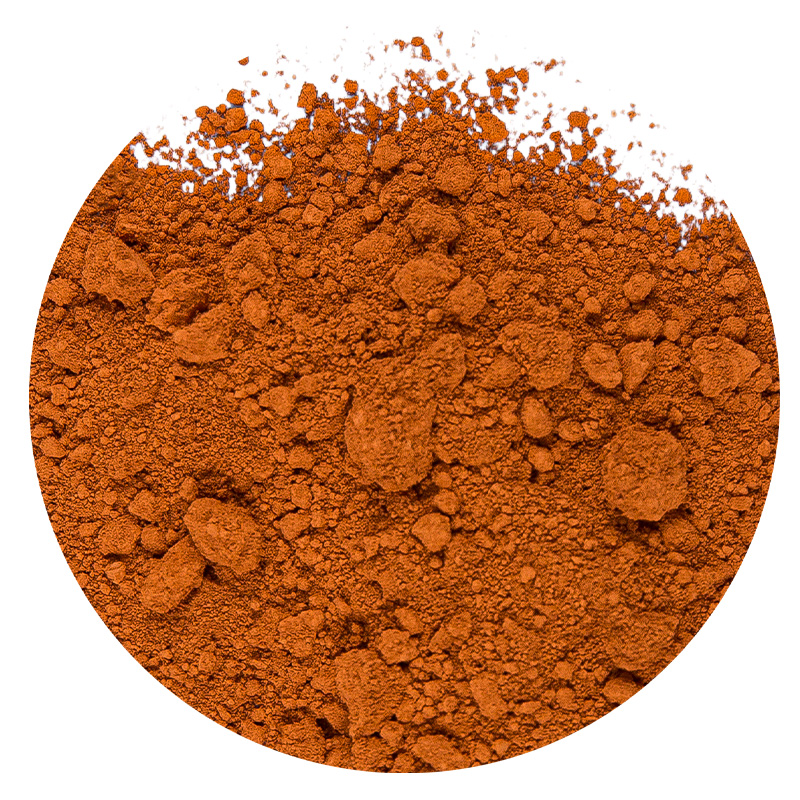
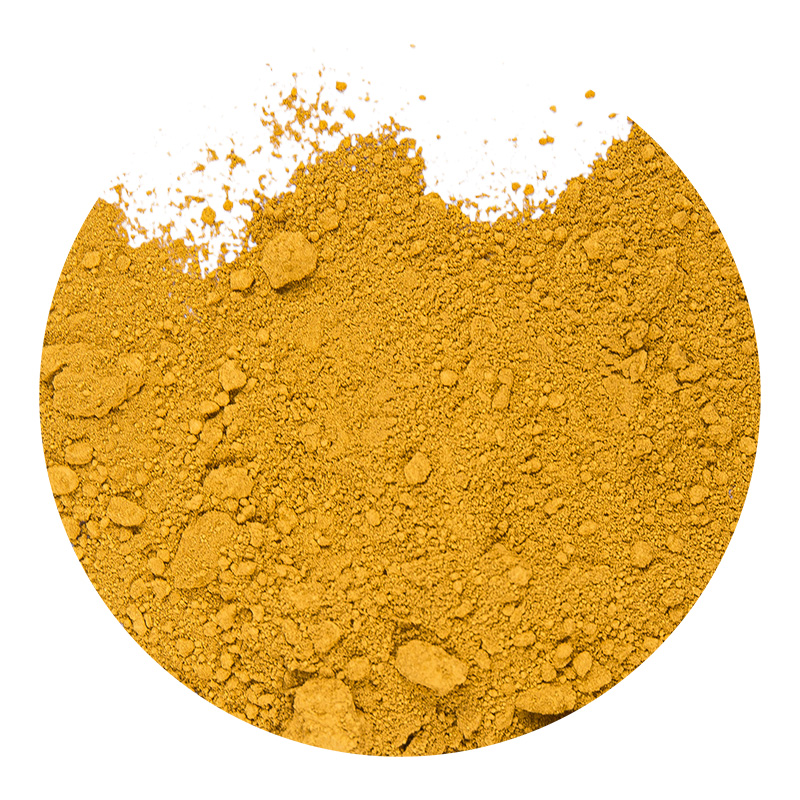 Heat-Sensitive Iron Oxide Yellow Pigment for Precast ConcreteThis yellow oxide powder, available in grades 313, 920, and E172, offers stable particle structure and wide media compatibility. It suits indoor and outdoor concrete coloring, but note that goethite dehydrates around 180°C, making it risky for steam curing above 120°C.View Product →
Rule of thumb: if the curing cycle stays below 120°C, iron yellow oxide is a low-risk choice. Above that, run a full-color trial on the actual element before approving the batch.
Six Performance Factors to Verify Before You Order
Six measurable parameters control whether a yellow oxide lot will match the approved color standard across a full production year, and none of them can be judged from a color chip alone.
The certificate of analysis (COA) should include at least the first five values below. A pigment manufacturer such as Deqing Demei Pigment Technology Co., Ltd. can supply these values on request. If the supplier cannot provide them, treat the batch as unqualified for structural concrete products.
| Factor | Why It Matters | What to Verify |
| Heat stability | Prevents yellow-to-red shift during curing | TGA or DSC curve; delta E after 180°C exposure |
| Alkali resistance | Cement pore water reaches pH 12-13 | Color retention after 28-day cement paste test |
| Lightfastness | Outdoor pavers and facades must not fade | Blue-wool scale 7-8; 1,000-hour QUV report |
| Particle size distribution | Controls tinting strength and water demand | Laser diffraction report; d50 between 0.2 and 0.5 µm |
| Dispersibility | Agglomerates create streaking and shade patches | Hegman gauge reading or mortar rub-out comparison |
| Heavy metal content | Determines approval for public and child-use surfaces | ICP or XRF report against EN 71-3 or local limits |
Because cement pore water is strongly alkaline, the alkali resistance of yellow oxide deserves special scrutiny. Deeper background on why high-pH environments do not attack the oxide crystallite is covered in our technical note on alkali resistance in concrete applications.
Compliance baseline: a single lot with poor alkali resistance can fail a client's 90-day weathering requirement even when every other parameter on the COA looks acceptable.
How Yellow Oxide Holds Up Inside Cement Paste
Once mixed, yellow oxide particles work by coating cement grains and blocking light at the surface layer, so particle size distribution does more work than chemical dosage.
The finest fraction, typically 0.1-0.5 µm, provides the coloring strength; coarse oversize particles contribute little color and act as micro-defects. A well-dispersed system uses the same mass of pigment to cover more surface than a poorly milled one, which explains why two batches with the same pigment dose can look completely different.
Well-dispersed batch
- Uniform shade across the element
- No visible streaking at joints
- Lower water demand at equal slump
- Higher flexural strength at same dose
Poorly dispersed batch
- Patchy color on formed surfaces
- Agglomerates visible as dark specks
- Higher water demand and porosity
- Risk of surface efflorescence after curing
The same behavior appears across the building product families listed in our applications overview, from roof tiles to architectural precast, because the cementitious binder dominates the mixing physics in all of them.
Factory benchmark: a 400 rpm mortar rub-out mixed for 2 minutes should show no unbroken agglomerates above 50 µm. If it does, the pigment needs predispersion before it reaches the mixer.
Standard, Micronized, or Low-Heavy-Metal: Choose the Right Grade
The base color chemistry is identical across all three grades; the differences are dispersion speed, tinting strength, and regulatory compliance.
Standard grade
d50 typically 0.3-0.5 µm. Suits low-to-mid demand products with mixing cycles of 90 seconds or longer.
Micronized grade
Pre-milled to break agglomerates; tight d90, faster dispersion in short-cycle mixers, slightly higher cost per ton.
Low-heavy-metal grade
Controlled lead, cadmium, and arsenic limits. Required for playground surfaces, curb stones, and products near children.
If the process involves steam curing above the yellow threshold, most plants switch the base color to red iron oxide for the cured element and apply the yellow shade in a second coat. Keeping a heat-stable red counterpart in the warehouse is therefore common practice.
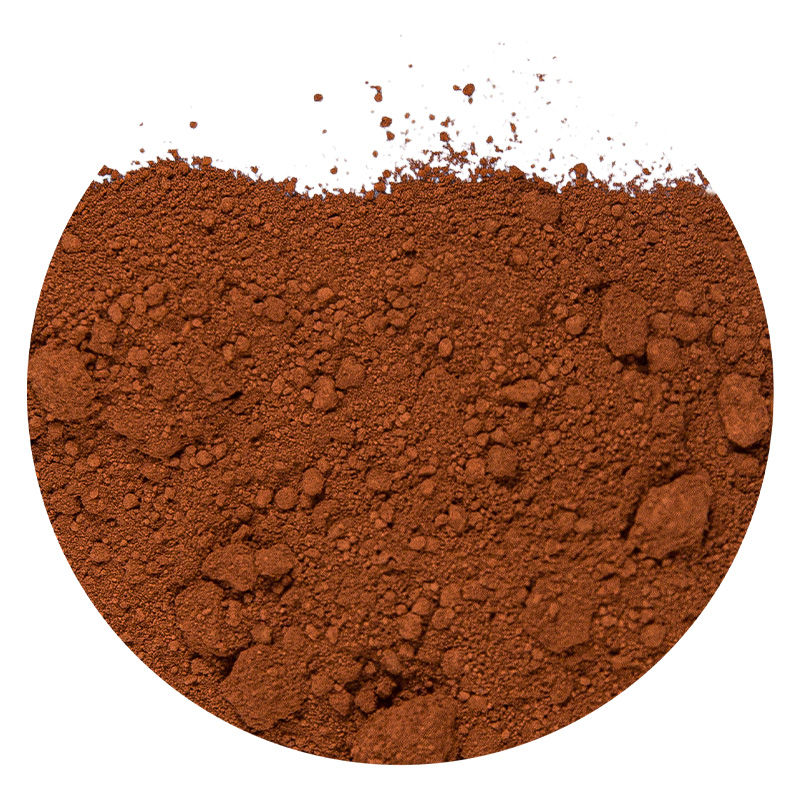
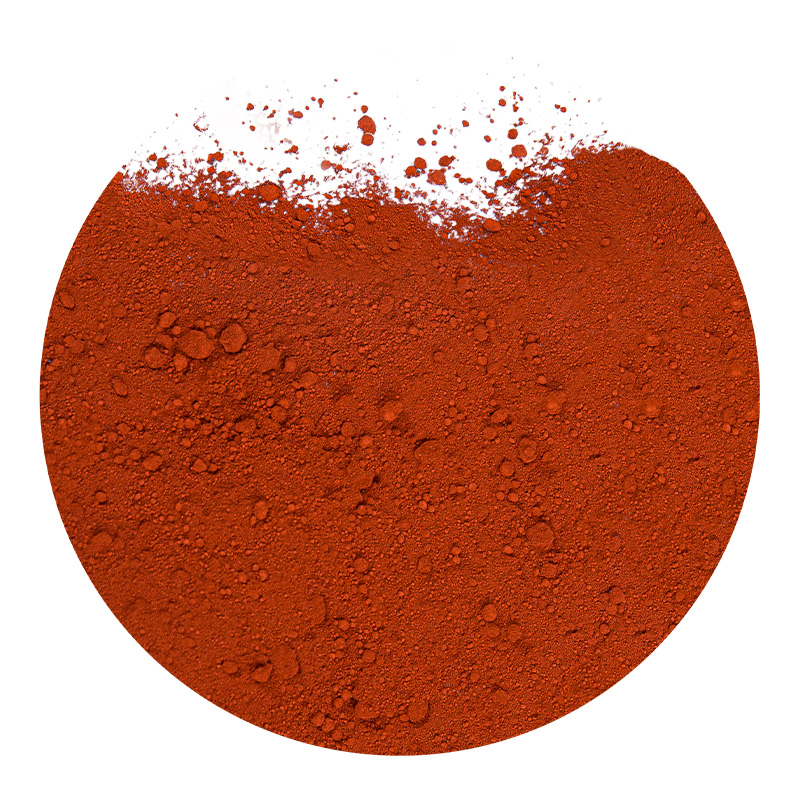 Weather-Stable Iron Oxide Red Pigment for Cement ProductsSynthetic and natural grades of red iron oxide provide consistent color tone and stable weather resistance, making them ideal for colored cement, tiles, and terrazzo. As a heat-stable counterpart to yellow oxide, it is commonly used when steam curing exceeds yellow's threshold.View Product →
Procurement tip: ask the supplier for the d90 value, not just d50. A d90 above 2 µm predicts slow dispersion and shade patches in short-mix cycles.
Mixing, Dosing, and Batch Control on Site
Batch consistency comes from a four-step discipline: verify the lot, pre-blend, wet-mix long enough, then check color on a wet and pressed-dry sample before pouring.
- Verify the lot. Check the COA against the order; re-sieve stored pigment if it has been in the hopper longer than 90 days.
- Pre-blend dry. Mix pigment with cement or sand for 60 seconds before adding water to break up agglomerates.
- Wet-mix fully. Run at least 90 seconds at full agitation; add water gradually rather than in one dump.
- Control against a reference. Take a wet sample and a pressed dry sample; compare both to a stored reference tile.
For shade deepening in dark yellow products, a small dose of black oxide is the standard method; it shifts value without destroying the hue.
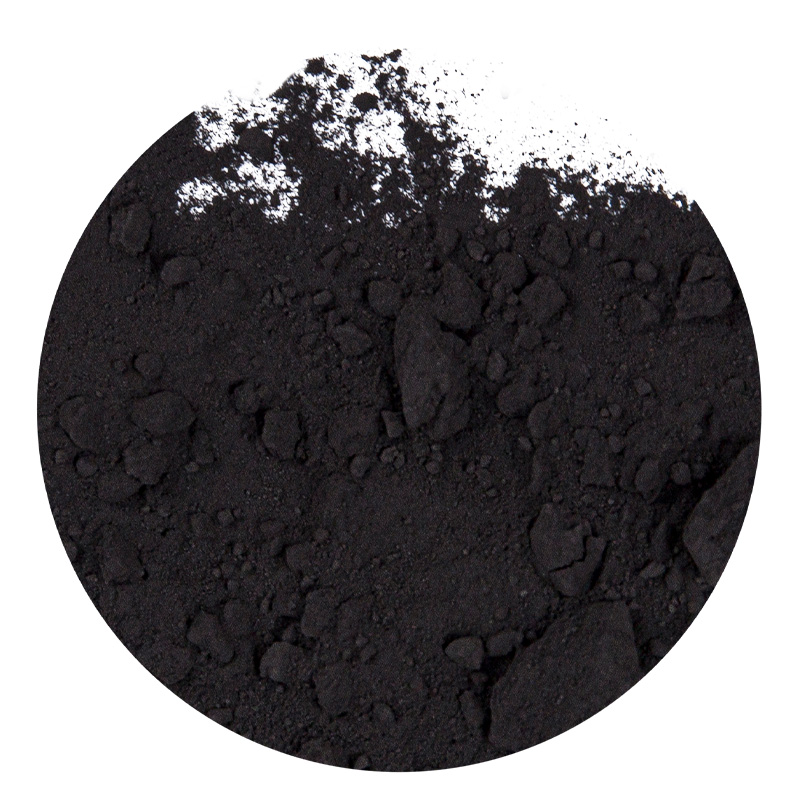 Versatile Iron Oxide Black Pigment with Multiple GradesThis black oxide (Fe3O4) offers strong tinting strength, opacity, and lightfastness, with grades like 318, 330, and 722. It deepens dark yellow shades and meets EU E172 food-grade classification, suitable for concrete, coatings, and ferrimagnetic uses.View Product →
Frequently Asked Questions
At what temperature does iron yellow oxide change color?
Pure goethite begins dehydrating near 180°C, so sustained exposure above that level shifts the tint toward red. Steam-cured concrete at 60-80°C is normally safe, but each plant should verify against its actual curing curve.
Does iron yellow oxide react with cement or lime?
The crystallite is chemically inert in the pH 12-13 environment of fresh concrete, so it does not consume hydration products or corrode. The practical risks are physical: agglomerates, moisture pickup, and overheating during curing.
What is the recommended dose of iron yellow oxide in concrete?
Use 2-3% of cement weight for pastel shades and 5-7% for full monochromatic color. Above 7%, additional pigment adds little strength and measurably increases water demand.
How should I test a yellow oxide batch before purchase?
Run a 1 kg trial mix through your standard curing cycle, press a tile from the mix, and compare it against the approved reference under natural daylight. Review the COA for heat stability, d50, d90, and heavy metal values at the same time.
Final recommendation: put the six performance factors into the purchase order as acceptance criteria. That single change eliminates most color disputes before they reach production.