English
 عربى
عربى русский
 Español
Iron Oxide Yellow 313: Properties, Applications, and Industrial Selection Guide
Content
The Case for Choosing Iron Oxide Yellow 313
A concrete paver manufacturer testing organic yellow colorants usually hits the same wall: the shade weakens after a single season of outdoor exposure, and the high pH of fresh cement degrades the pigment. That is why Iron Oxide Yellow 313 appears so often on formulation sheets. It is a synthetic inorganic yellow with excellent lightfastness, reliable tinting strength, and strong resistance to the alkaline environment of cement, and it achieves this at a fraction of the cost of most organic alternatives. For construction materials, architectural coatings, and many plastic and rubber goods, 313 remains the reference yellow grade. Understanding what the designation means, how the pigment performs, and which quality criteria to verify will help you buy with more confidence and fewer color-related complaints.
What Is Iron Oxide Yellow 313?
Iron Oxide Yellow 313 is a grade code widely used in the iron oxide pigment industry, mainly in China, to identify a synthetic yellow iron oxide with a slightly reddish hue. Its international classification is CI Pigment Yellow 42 (CI 77492), and chemically it is goethite, a hydrated iron oxide with the formula α-FeOOH. Unlike natural yellow ochres, the synthetic route gives manufacturers tight control over particle size, shade, tinting strength, and impurity levels. Some suppliers also label equivalent material as G313; the shade target is essentially the same.
The number 313 distinguishes this reddish yellow from 311, which in the Chinese industry code system describes a greener, lemon-toned yellow. In practice, 313 is the more common grade for building materials and paints because its warm tone blends easily with red and brown iron oxides to create earth shades. Manufacturers with integrated production, such as our Iron Oxide Yellow 313 series, can control the process from raw material through final milling, which is the first thing to look for when shade consistency matters.
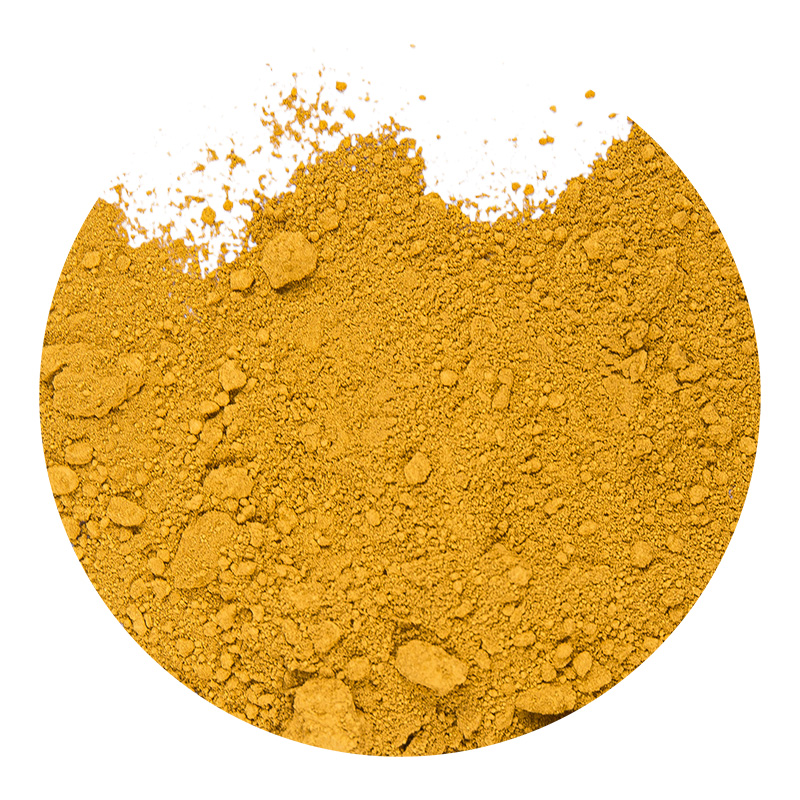 Custom Yellow Oxide Powder, Iron Oxide Yellow Pigment SuppliersDeqing Demi: China Yellow Oxide Powder, Iron Oxide Yellow Pigment Manufacturers, Suppliers, Factory, We Wholesale Custom Iron Oxide Yello...View Product →
Typical Technical Data
The following table summarizes the ranges you can expect from a commercial grade of Iron Oxide Yellow 313. Exact values vary by manufacturer, grinding process, and whether the grade is standard, micronized, or formulated for low heavy metals.
| Parameter | Typical Value |
|---|---|
| Color index | Pigment Yellow 42 (CI 77492) |
| Chemical composition | α-FeOOH (synthetic goethite) |
| Appearance | Fine yellow powder |
| Specific gravity | 3.9-4.1 g/cm³ |
| Oil absorption | 25-35 g/100 g |
| pH of aqueous suspension | 3.5-7.0 |
| Heat stability | Up to approximately 180°C |
| Lightfastness | 7-8 on the blue wool scale |
| Weather resistance | Excellent in exterior applications |
Synthetic production also keeps heavy metal levels low and reproducible, which is why 313 is accepted in applications where trace-element limits are audited. If you are unsure which specification matches your process, compare the grade against the supplier's full iron oxide pigment range before committing to a large order.
Four Performance Properties That Decide the Grade
All yellow iron oxides share a basic chemistry, but the properties below determine whether 313 is suitable for a specific formulation. Check each one against your process and end-use conditions.
Lightfastness and UV Stability
Iron oxide yellows absorb ultraviolet radiation rather than decomposing under it, which gives them a decisive advantage over most organic yellows in outdoor use. Accelerated weathering tests typically rate 313 at 7-8 on the blue wool scale, meaning exterior coatings and concrete retain their color after years of sun exposure. The practical benefit is simple: fewer field failures and less need for expensive UV stabilizer packages. For more detail on how these pigments behave under continuous UV exposure, see our review of iron oxide yellow powder weather resistance and UV stability.
Alkali Resistance
Fresh concrete and cementitious mortars have a pH above 12. Many organic pigments cannot survive that environment and either fade or change shade during curing. Goethite is chemically stable in highly alkaline conditions, which is why 313 is a standard choice for colored concrete, pavers, bricks, and roof tiles. This property is non-negotiable for construction applications; if the pigment cannot tolerate lime, no amount of colorant dosing will fix the result.
Tinting Strength and Hiding Power
Tinting strength determines how much pigment is needed to reach a target shade, and hiding power determines whether the substrate shows through. Synthetic 313 delivers strong values on both counts because its particles are uniform and finely divided. In paint formulations, this translates into lower pigment loading, better economics, and consistent batch-to-batch color. A common acceptance criterion is that tinting strength should remain within plus or minus 3-5 percent of the supplier's reference standard.
Heat Stability
Iron oxide yellow dehydrates when heated above roughly 180°C, gradually converting to iron oxide red and losing its yellow shade. For most building material and coating processes this is not a limitation, since concrete curing and paint drying stay well below the threshold. In plastics, 313 suits materials processed at temperatures under 160-180°C, such as certain PVC and polyolefin compounds; for resins that require higher processing temperatures, confirm the heat profile before substituting a yellow grade.
Main Applications of Iron Oxide Yellow 313
Because of its stability and economics, 313 is used wherever a durable yellow or an earth-tone blend is needed.
Construction and Building Materials
This is the largest market for 313. It colors ready-mix concrete, precast elements, concrete pavers, bricks, roof tiles, and cement mortar. The combination of alkali resistance and UV stability means the color survives decades of outdoor service without the chalking or fading typical of alternative colorants. When a project calls for terracotta or brick tones, formulators commonly blend 313 with iron oxide red pigment to adjust the warmth of the final shade. The same approach works in colored asphalt and soil stabilizers.
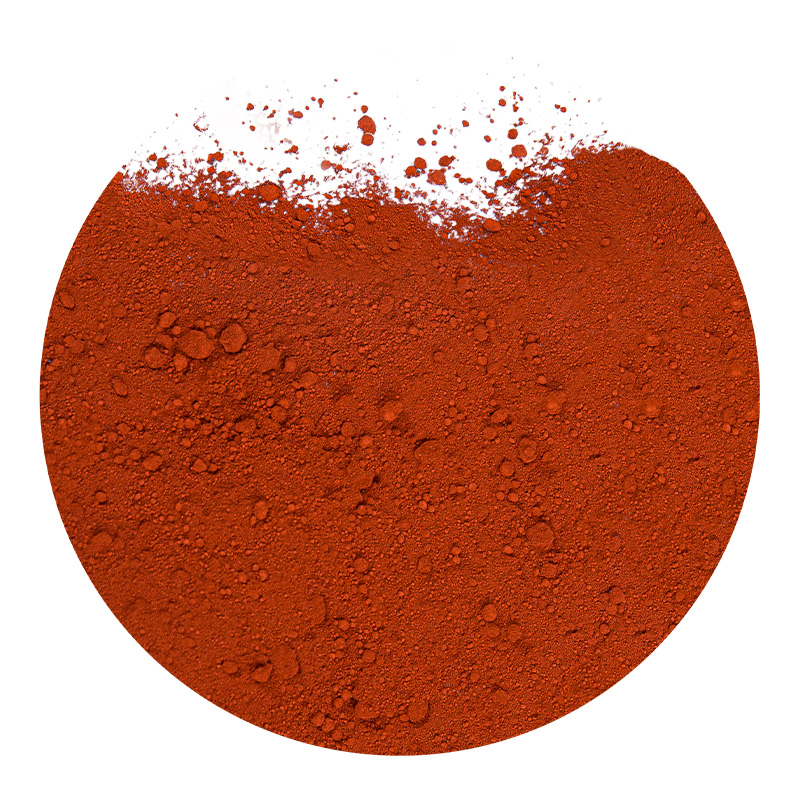 Red Iron Oxide Suppliers, Custom Red Oxide Pigment PowderDeqing Demi: China Red Iron Oxide, Red Oxide Pigment Powder Manufacturers, Suppliers, Factory, We Wholesale Custom Iron Oxide Red Powder ...View Product →
Paints and Coatings
Architectural paints, exterior masonry coatings, primers, and industrial finishes all use 313 for its hiding power and color retention. In waterborne and solventborne systems, particle size distribution influences dispersion and final gloss, so micronized grades are available when higher fineness is required. The low heavy metal profile of synthetic 313 also makes it acceptable in products with strict trace-element requirements.
Plastics and Rubber
In PVC window profiles, pipes, and rubber seals, 313 provides a lightfast yellow that resists the combined attack of sunlight and weathering. Processors must respect the heat ceiling of the pigment; as long as the melt temperature stays in the safe range for the grade, color stability is reliable. For outdoor plastic products, the lightfastness of 313 often eliminates the need for more expensive organic yellows.
Other Uses
Beyond these sectors, 313 appears in several smaller but steady markets:
- Paper coloring and board packaging
- Ceramic bodies and glazes
- Linoleum and floor covering compounds
- Color concentrates for rubber and plastics
If you are mapping a new product to the right pigment, our application guidance for downstream industries can help you identify the correct grade family before you request samples.
What to Verify Before Buying Iron Oxide Yellow 313
Since 313 is a common designation rather than a standardized recipe, quality varies between suppliers. Buyers should verify four points before qualifying a source.
Batch-to-Batch Color Consistency
Ask for the supplier's Delta E data between consecutive production batches. A well-run plant keeps the difference within the range your product can tolerate, usually below 1.0 for critical shades and up to 1.5 for general construction work. If the supplier cannot provide batch data, a single trial batch tells you nothing about the next shipment.
Heavy Metal and Regulatory Compliance
Synthetic 313 normally contains low levels of lead, cadmium, arsenic, and mercury, but the term "low" is not a legal definition. If your end products must meet toy safety, food-contact, or export requirements, request a certificate of analysis that lists each regulated element against the specific limit you must satisfy. Some manufacturers offer a dedicated low-heavy-metal series for these applications, and that distinction is worth confirming in writing.
Particle Size and Dispersibility
Coarse fractions reduce tinting strength and can cause streaking in paint or concrete. Evaluate the pigment using the same dispersion equipment you use in production, not just a laboratory stirrer. Micronized grades cost more per ton but often reduce total formulation cost by lowering pigment demand and improving final surface appearance.
Manufacturing and Supply Stability
Buying from a manufacturer rather than an intermediary gives you direct access to production records, process control data, and more consistent supply. Ask whether the plant produces the shade on dedicated lines and how it handles raw material changes. For projects that need several colors, small additions of iron oxide black pigment are often used to deepen or neutralize a blend, so a supplier who can stabilize the whole palette is easier to qualify than one who only sells a single yellow.
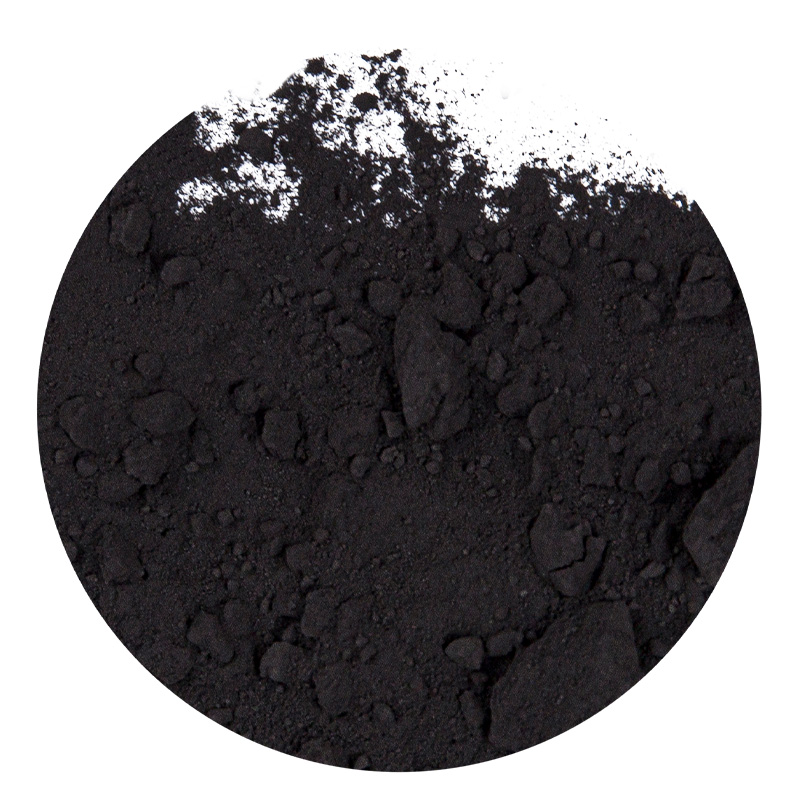 Custom Black Oxide Powder, Black Iron Oxide Pigment SuppliersDeqing Demi: China Black Oxide Powder, Black Iron Oxide Pigment Manufacturers, Suppliers, Factory, We Wholesale Custom Iron Oxide Black E...View Product →
How to Run a Sample Trial
- Request a certificate of analysis and the batch Delta E history before ordering.
- Evaluate tinting strength and shade at your target pigment loading, using production-equivalent dispersion.
- Expose trial panels to your real outdoor or accelerated weathering conditions for at least 500 hours.
- Confirm the chosen grade leaves a comfortable safety margin on temperature, alkali exposure, and heavy metal limits.
The Bottom Line on Iron Oxide Yellow 313
Iron Oxide Yellow 313 is not a trendy product and does not need to be. It is the dependable, cost-effective yellow iron oxide that the construction and coatings industries have standardized on for decades. Its lightfastness, alkali resistance, and tinting strength solve the practical problems that organic yellows cannot, and its price keeps total color cost predictable.
The key to successful procurement is qualification: verify heat stability against your process, confirm heavy metal compliance for your market, check batch consistency with real Delta E data, and buy from a manufacturer that can document all of it. Do that, and 313 will color your products reliably for years.