English
 عربى
 русский
 Español
Iron Oxide Red 110 Pigment: Properties, Applications and Selection Guide
Content
A procurement engineer ordering red pigment for a concrete tile line, and a paint formulator sourcing the same material for an anticorrosion primer, can both request "Iron Oxide Red 110" and receive products with noticeably different performance. The grade number is a commercial shorthand, not a universal standard. What turns that shorthand into a reliable material is a set of measurable properties: Fe2O3 content, tinting strength, color difference, oil absorption, sieve residue and heavy-metal limits. This article explains what Iron Oxide Red 110 is, which properties decide how it behaves in real formulations, and how to qualify a supplier before the pigment reaches your production line.
What Exactly Is Iron Oxide Red 110?
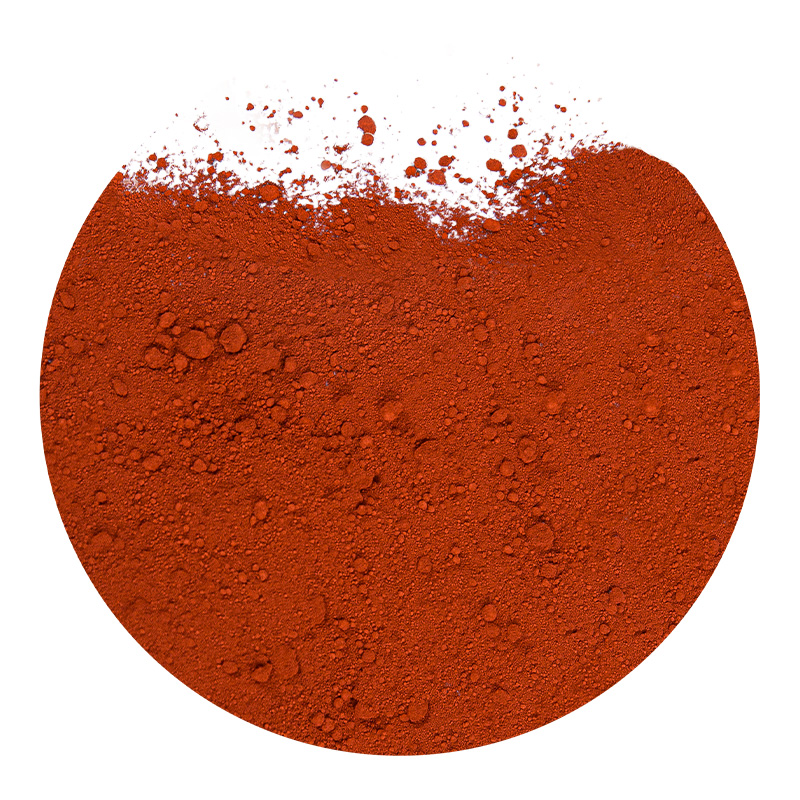
Iron Oxide Red 110 is a synthetic ferric oxide pigment, chemical formula Fe2O3, classified in the Colour Index as Pigment Red 101 (C.I. 77491) and registered under CAS 1309-37-1. It is produced by precipitation and calcination rather than by grinding natural minerals, which gives it more consistent purity, particle size and color than natural ochre or iron oxide earth pigments.
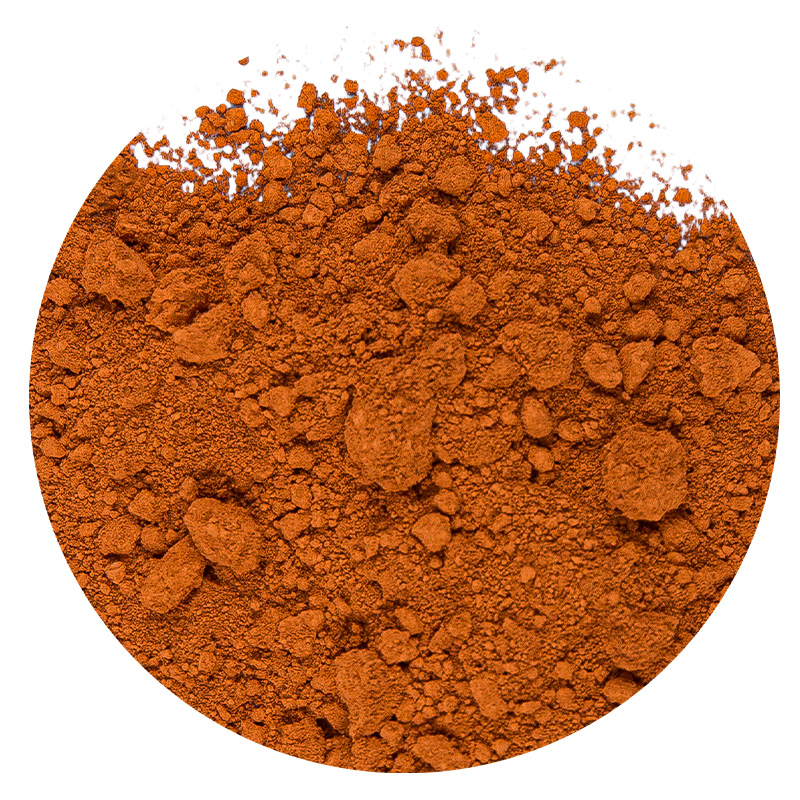
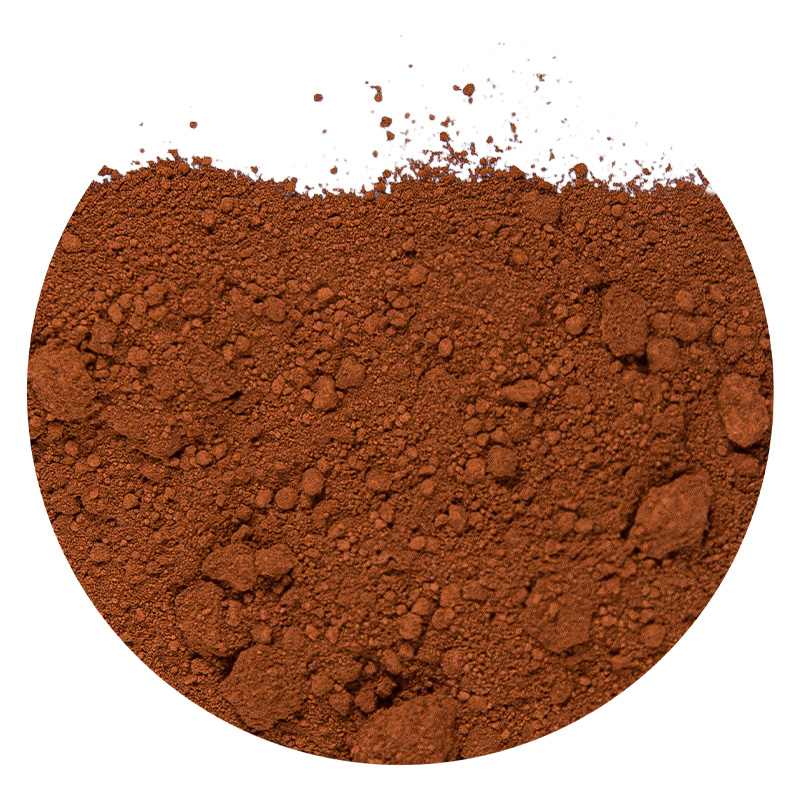
Within the red iron oxide family, the code 110 generally identifies a yellow-shade red with high tinting strength and good opacity. It sits between brighter orange-red grades and deeper violet-red grades such as 130 or 140. For most buyers, the practical result is a warm, slightly orange red that works well in cement, coatings and plastics without drifting toward maroon or rust.
The code 110 is widely used by pigment producers, but it is not a legally standardized grade. Each manufacturer defines its own limits, so the supplier's technical data sheet, not the grade name, is the actual specification. The table below lists representative ranges.
| Parameter | Typical Range for Iron Oxide Red 110 |
|---|---|
| Fe2O3 content | 92-95% |
| Color difference ΔE versus reference | ≤ 1.0 |
| Tinting strength | 95-105% of reference standard |
| Residue on 325-mesh sieve | ≤ 0.3% |
| Oil absorption | 15-25 g/100 g |
| pH of 10% suspension | 4.5-7.0 |
| Volatile matter at 105°C | ≤ 0.3% |
| Density | Approximately 4.6-5.0 g/cm3 |
A certificate of analysis should state each parameter with its test method. If a value sits at the edge of a range, it is not automatically a rejection, but it will shift how the pigment behaves in your recipe. Define the limits that matter with the supplier before you commit to a bulk order.
Key Properties That Decide Real-World Performance
Shade Undertone and Color Consistency
Color consistency is the first property a formulator checks. The difference between a delivered batch and an approved reference is expressed as ΔE, and most buyers set an acceptance limit of 1.0 or below. A shift of 0.5-0.8 may be invisible in a full-shade concrete paver yet clearly visible in a light grey or pastel paint. The approved reference, not the grade code, is the true specification. Keep a sealed reference of every accepted batch and compare each new delivery against it under the same lighting and pigment concentration.
Tinting Strength and Cost Efficiency
Tinting strength measures how strongly a pigment colors a white base, expressed as a percentage of a reference standard. Two batches both labeled Iron Oxide Red 110 can differ by 10% or more. The commercial consequence is simple: price per kilogram is not the same as cost per unit of color. A pigment that costs 8% more but delivers 12% more tinting strength is usually the better purchase. Ask for results measured against a stated reference in a defined binder, not a single number without context.
Particle Size, Oil Absorption and Dispersion
Particle size distribution controls dispersion, hiding power and surface finish. Standard Iron Oxide Red 110 has a fine primary particle size in the micron and submicron range, which gives it strong coverage in thin coatings. Oil absorption predicts how much resin the pigment will consume; high oil absorption raises cost and shifts the pigment volume concentration. Sieve residue is a practical quality indicator: coarse agglomerates appear as specks in a paint film or on the surface of colored concrete. Check oil absorption and 325-mesh residue before approving a new source.
Purity, Heavy Metals and Weather Resistance
Synthetic red iron oxide is chemically stable, resists the alkaline environment of Portland cement, and tolerates sunlight and moderate heat far better than most organic red pigments. The real question is not whether Fe2O3 is stable but what accompanies it. Trace amounts of lead, cadmium, chromium, mercury or arsenic can fail a regulated standard such as EN 71-3 for toys or RoHS. Suppliers offering a low-heavy-metal series should be able to provide a heavy-metal test report for each batch.
Where Iron Oxide Red 110 Is Used in Practice
The same grade appears in very different formulations, and each application stresses a different property.
| Application | Properties that matter most | Typical failure when ignored |
|---|---|---|
| Concrete and cement products | Alkali resistance, color consistency, sieve residue | Fading or mottling on pavers, roof tiles and bricks |
| Paints and anticorrosion primers | Dispersion, tinting strength, weather fastness | Poor hiding power, uneven shade, surface specks |
| Plastics, rubber and masterbatch | Heat stability, dispersion, heavy-metal control | Specks in film, off-shade after processing, compliance failure |
Concrete and Cement-Based Products
Colored concrete pavers, roof tiles, bricks, mortar and precast elements are among the largest consumers of red iron oxide. The pigment must survive the alkaline pore solution of fresh cement, usually pH 12-13, without losing hue or weakening the concrete matrix. Typical dosages range from 2% to 5% of cement weight. Batch consistency becomes visible across large jobs; a single shipment that shifts by one full ΔE unit can create visible joint lines between production runs. Evaluate every incoming batch in the same mortar mix and dosage used in production.
Paints, Primers and Industrial Coatings
Paint formulators select Iron Oxide Red 110 for its hiding power, lightfastness and protective character. In anticorrosion primers, the dense, stable particle structure helps slow the passage of moisture and oxygen to the metal surface, which is why red iron oxide remains a classic primer pigment. What matters at the dispersion stage is ease of grinding and oil absorption. A grade with high oil absorption pulls more resin into the grind and changes the final film performance. Test candidate batches under the same mill conditions you use in production, not in a hand-mixed laboratory paste only.
Plastics, Rubber and Masterbatches
Plastic and rubber processors rely on the heat stability of red iron oxide, which tolerates the 160-220°C range typical of polyolefin and PVC processing without a visible shade change. Masterbatch compounding still requires clean, complete dispersion; coarse agglomerates produce specks in thin films. For toys, food packaging and other regulated articles, demand heavy-metal test reports for each lot. A pigment that meets its own specification is a starting point, not proof that your finished article complies with end-market regulations.
Buying Iron Oxide Red 110: the Checks That Matter
Because the grade code is not a standard, the buyer's own qualification process is the only guarantee of consistent results.
What to Verify Before Approving a Supplier
Confirm that the company manufactures the pigment rather than reselling it. Ask which process is used, where the plant is located, which tests are run on every production batch, and what capacity the factory supports. A manufacturer that produces its own red iron oxide, including standard, micronized and low-heavy-metal series, controls the parameters on the certificate and can react quickly to a quality complaint. A distributor passes on documents from upstream producers and cannot adjust the process when something drifts.
Test in Your Own Matrix Before Scaling Up
No data sheet replaces a trial in your actual formulation. A production sample with its certificate of analysis is the minimum starting point. The sequence below reflects the qualification process used by experienced purchasers.
- Request a production sample of 2-5 kg, together with the current COA.
- Confirm ΔE and tinting strength against your approved reference in the matrix that matters, whether mortar, paint or polymer.
- Check oil absorption, 325-mesh residue and volatile matter if the new source will replace an existing product.
- Run a pilot batch of the real product and evaluate it with the same methods applied to regular production.
- Store a sealed reference sample from the approved batch and keep its COA for traceability.
Documents a Serious Supplier Should Provide
The certificate of analysis should list Fe2O3 content, color difference, tinting strength, oil absorption, 325-mesh residue, volatile matter, pH and heavy-metal results, each with a test method. The technical data sheet adds density, particle size and recommended dosage ranges. If you export to regulated markets, ask about ISO 9001 and any certifications relevant to your segment. Missing documents are not an administrative inconvenience; they are a warning that other quality controls may also be absent.
Iron Oxide Red 110 remains a workhorse pigment because it balances cost, color and durability better than most alternatives. The purchasing teams that avoid batch problems are the ones that define acceptance limits, measure every delivery against an approved reference and treat the supplier as part of their quality system. Choose the grade for its reputation; confirm the material for its measurements.