English
 عربى
 русский
 Español
Iron Oxide Orange: How to Select Pigment Specifications for Consistent Color Output
Content
- 1 Why Color Drift Starts Before the Pigment Reaches the Mixer
- 2 The Specification Parameters That Define Consistent Orange
- 3 Tinting Strength: Where Cost and Color Converge
- 4 Heat Stability: Matching the Grade to the Process Window
- 5 Supplier Qualification in Four Steps
- 6 Iron Oxide Orange Specification FAQ
- 6.1 Which specification has the largest effect on iron oxide orange color consistency?
- 6.2 What Delta E limit should a coating plant set for incoming pigment?
- 6.3 Can iron oxide orange survive high-temperature polymer processing?
- 6.4 Is a lower-priced iron oxide orange actually cheaper per finished part?
In 2025, a European paint plant rejected an entire production batch because the iron oxide orange supplied against the approved architectural reference shifted 1.8 Delta E units. The formulation had not changed. The pigment lot had.
Iron oxide orange is not a single crystal species. It is an inorganic pigment combination built on hematite (Fe2O3) and goethite (FeOOH) phases, normally co-precipitated or blended to reach the target shade. Because two lots with the same commercial name can carry different phase ratios, particle morphologies, and surface treatments, consistent color starts with specification control, not with the label.
Deqing Demei Pigment Technology Co., Ltd., a professional inorganic iron oxide pigment manufacturer, produces iron oxide orange as a dedicated product line with batch-controlled parameters.
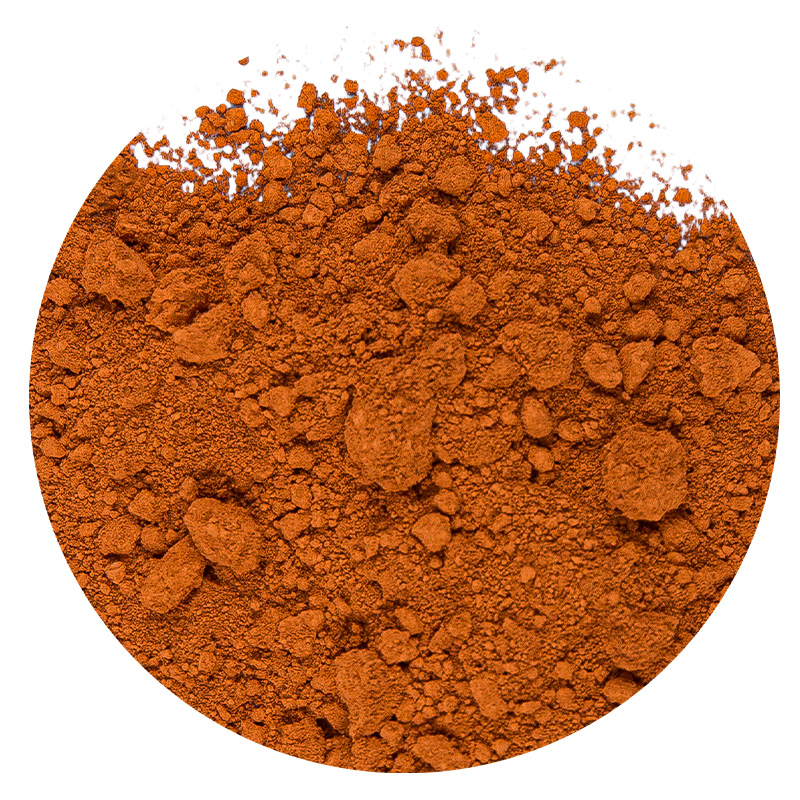 Batch-Controlled Iron Oxide Orange for Durable CoatingsThis inorganic pigment meets CI Pigment Orange 78 and REACH, offering stable orange hues with lightfastness and alkali resistance. Its batch-controlled parameters help address color drift signals in architectural and marine coatings.View Product →
Why Color Drift Starts Before the Pigment Reaches the Mixer
Batch-to-batch color drift is a raw-material signal, not a milling or weighing error.
When a supplier changes the iron ore source, calcination temperature, or grinding parameters, the drawdown can shift by 0.5 to 2.0 Delta E before any other ingredient changes. The two most sensitive variables are the alpha-Fe2O3 to alpha-FeOOH ratio and the particle size distribution. Trace levels of manganese and chromium also push the masstone toward muddier or redder values.
The practical consequence is that an incoming inspection which only checks "orange" and a lot number cannot protect your finished product.
Consistent color output starts when the phase ratio and particle size distribution of the incoming iron oxide orange stay inside a controlled band. Everything else is downstream correction.
The Specification Parameters That Define Consistent Orange
Buy iron oxide orange with a complete technical data sheet, and treat a color index name as only a category label.
Demei publishes numerical values for content, tinting strength, heat stability, oil absorption, pH, particle size, and moisture. Each parameter has a direct effect on the final shade or on the process that applies it. The table below summarizes the band widths a coating, concrete, or plastics producer should demand.
| Parameter | Typical range | Why it controls consistency |
| Fe2O3 content | 90-96% | Sets color depth and limits by-product interference |
| Tinting strength | 95-105% | Direct lever on dosage and final Delta E |
| Heat stability | 200 C standard / 260 C calcined | Prevents thermal drift in plastics and stoving enamels |
| Oil absorption | 15-25 g/100 g | Controls binder demand, gloss, and mill-base viscosity |
| pH (aqueous) | 4-7 | Protects paint storage and cure behavior |
| D50 particle size | 0.3-2.5 micron | Drives opacity, chroma, and dispersion energy |
| Moisture | No more than 0.5% | Prevents agglomeration and weight-based dosage errors |
A usable certificate of analysis reports every one of these parameters numerically. A certificate that lists only "orange" and a lot number is not a specification.
The same discipline applies to every shade. Review Demei's complete range of iron oxide pigment shades before you finalize a multi-color approval program.
Tinting Strength: Where Cost and Color Converge
Tinting strength is the specification with the largest economic impact on an iron oxide orange purchase.
It is measured by drawing down the sample next to an approved reference with a fixed amount of white base, then calculating the relative strength as a percentage. A result of 100% means the lot matches the reference; a result of 95% means the processor needs roughly 5-8% more pigment to hit the same target. That extra dosage raises raw-material cost, lifts viscosity, and slows dispersion.
At or above 100% relative strength
- Lower pigment dosage per batch
- Higher chroma in masstone
- Stable viscosity through the mill
At or below 95% relative strength
- Higher pigment dosage to hold the shade
- Duller masstone and reduced opacity
- Frequent corrective additions and rework
A 5-point drop in tinting strength rarely costs 5% more in powder. It costs 5-8% more in pigment, plus the labor and downtime of a corrected batch.
Because orange shades are often formulated by blending red and yellow iron oxides, single-pigment tinting control of each component matters as much as the final blend. The yellow component is available as a separate controlled product line.
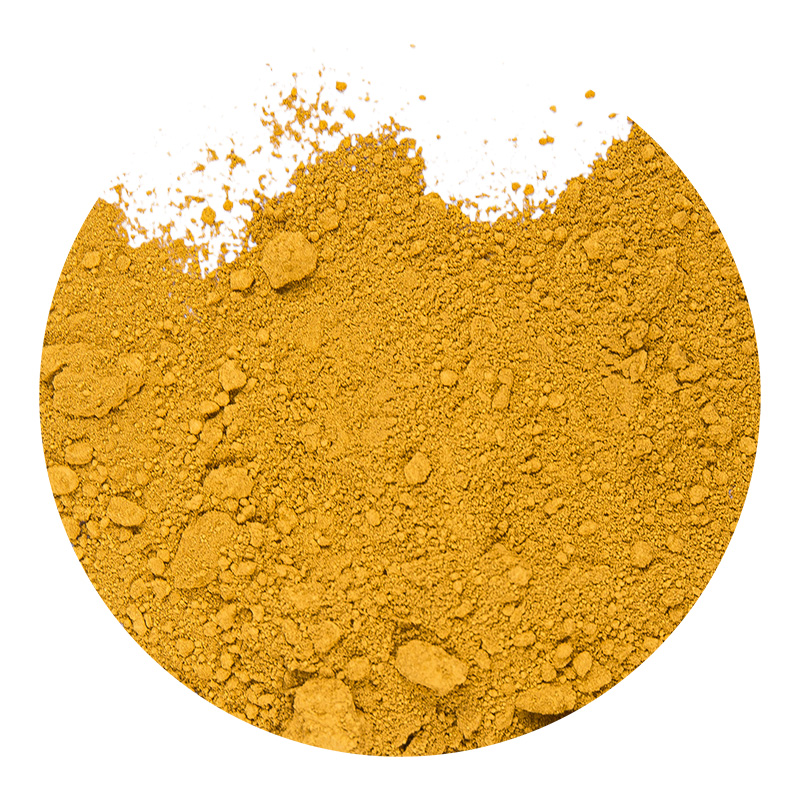 Iron Oxide Yellow Grades for Concrete and CeramicsAvailable as 313, 920, and E172, this yellow oxide offers stable particle structure and consistent hue for precast concrete and glazed ceramics. Single-pigment control supports precise tinting in orange blends.View Product →
Heat Stability: Matching the Grade to the Process Window
Choose the iron oxide orange grade by the maximum continuous process temperature, not by the melting point of the resin.
Standard synthetic orange holds its color through roughly 200 C continuous exposure. In polyolefin masterbatch or engineering polymer compounds that run at 220-260 C, a calcined-grade orange is required. The chart below shows a typical color shift after 10 minutes at temperature for a standard grade and a calcined grade.
Typical Delta E values after 10 minutes at temperature, measured in a white-reduced tint. Verify every grade at the actual production dwell time.
If the compounder runs above 220 C, request a calcined-grade specification sheet and verify thermal data for the actual hold time before piloting a new lot.
Supplier Qualification in Four Steps
Lock color consistency with a qualification protocol that treats the supplier as a process, not as a warehouse.
- Request the certificate of analysis and technical data sheet. Check every parameter numerically against the acceptance band, including tinting strength and particle size.
- Run a laboratory drawdown. Compare masstone and a 10% white-reduced tint against the approved reference under controlled light.
- Repeat the drawdown across three production lots. Record Delta E and tinting strength each time, and evaluate the spread rather than the average.
- Set the acceptance limit in writing. A practical starting band is Delta E of no more than 1.0 and tinting strength between 97% and 103%.
After three consecutive lots stay inside the band, the supplier has demonstrated process control. From that point, audit the certificate of analysis on every delivery and reserve the right to reject any lot outside the limits.
For blend-based orange, verify the red and yellow single-pigment inputs as carefully as the finished shade; a specification drift in either component shifts the final color.
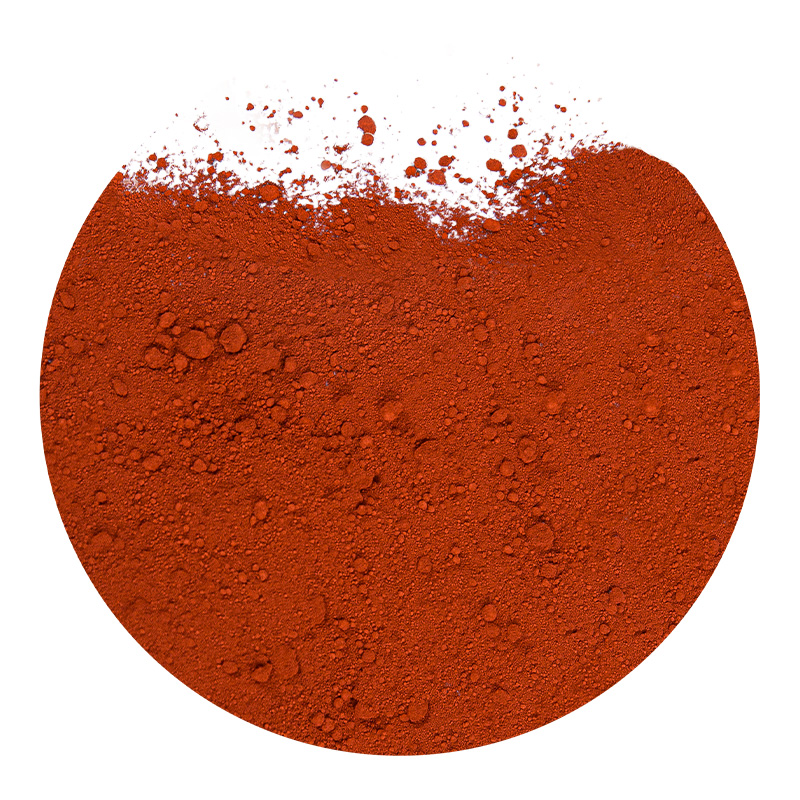 Iron Oxide Red Grades with Stable Weather ResistanceOffered in synthetic and natural grades like 110, 130, and 190, this red pigment maintains consistent tone and component stability in outdoor use. It suits colored cement and tile applications where dispersion affects color.View Product →
Dispersion behavior interacts with color stability at every step. Our color stability and dispersibility guide explains how processing conditions change the result of the same pigment batch.
Iron Oxide Orange Specification FAQ
Which specification has the largest effect on iron oxide orange color consistency?
Relative tinting strength and the hematite-to-goethite phase ratio have the largest effect. Both must be confirmed numerically on every lot that enters production.
What Delta E limit should a coating plant set for incoming pigment?
For architectural coatings, a realistic acceptance band is 0.5 to 1.0 Delta E against the approved standard. Above 1.5 Delta E, the shift is visible in most whites and light tints.
Can iron oxide orange survive high-temperature polymer processing?
Standard grades tolerate about 200 C. Calcined grades are specified for 260 C and above. Always verify color shift at the actual dwell time instead of relying on a single temperature rating.
Is a lower-priced iron oxide orange actually cheaper per finished part?
Only if its tinting strength is equal. Price should be evaluated per unit of tinting strength, not per kilogram of powder.
Consistent color output comes from one source: a controlled specification, a certified lot, and a supplier that publishes both.