English
 عربى
عربى русский
 Español
Iron Oxide Black 318 Pigment: Properties, Applications and Buying Guide
Content
What Is Iron Oxide Black 318?
Iron Oxide Black 318 is a synthetic black iron oxide pigment based on the magnetite crystal structure (Fe3O4), classified as C.I. Pigment Black 11 under CAS 1317-61-9. The digits 318 identify a specific production grade within a manufacturer's iron oxide black series, normally optimized for high tinting strength, fine particle size, and broad compatibility across construction and coating binders.
The synthetic route is what separates grade 318 from ground natural magnetite. Controlled precipitation and thermal treatment produce uniform crystal shapes, a narrow particle size distribution, and reproducible color from batch to batch, which is why concrete, paint, and plastics producers specify synthetic grades for shades that must stay stable for decades.
In practical terms, Iron Oxide Black 318 is a fine, dry powder that creates a deep neutral black by absorbing light across the visible spectrum. It does not bleed, does not migrate, and keeps its hue under strong alkali and long-term UV exposure.
For a wider view of the pigment family, the iron oxide black pigment properties and applications overview covers construction, cosmetic, and industrial use cases.
Core Technical Properties That Define Grade 318
Grade 318 performance is controlled by four measurable properties: tinting strength, particle size, pH, and heavy metal content. The cards below summarize typical commercial values, and the table that follows adds the full property picture.
Treat these ranges as qualification baselines. Exact figures vary from one manufacturer to another, so a written datasheet remains the only reliable source for specification work.
| Crystal form | Magnetite, Fe3O4 | Magnetic response and black undertone |
| Tinting strength | 95 min, relative index | Color yield and pigment cost per unit volume |
| Specific gravity | 4.5-4.7 g/cm3 | Settling behavior in liquid systems |
| pH in 10% suspension | 5-7 | Compatibility with binders and additives |
| Oil absorption | 15-20 g/100 g | Resin demand in paints and plastics |
| Particle size D50 | 0.3-0.5 micron | Dispersion, gloss, and hiding power |
| Heat stability | up to about 500 deg C | Safe processing window in thermoplastics |
| Heavy metals | within applicable limits | Regulatory compliance and end-product safety |
Deqing Demei Pigment Technology Co., Ltd., a specialized iron oxide pigment manufacturer, publishes the standard commercial grade parameters on its Iron Oxide Black 318 pigment product page.
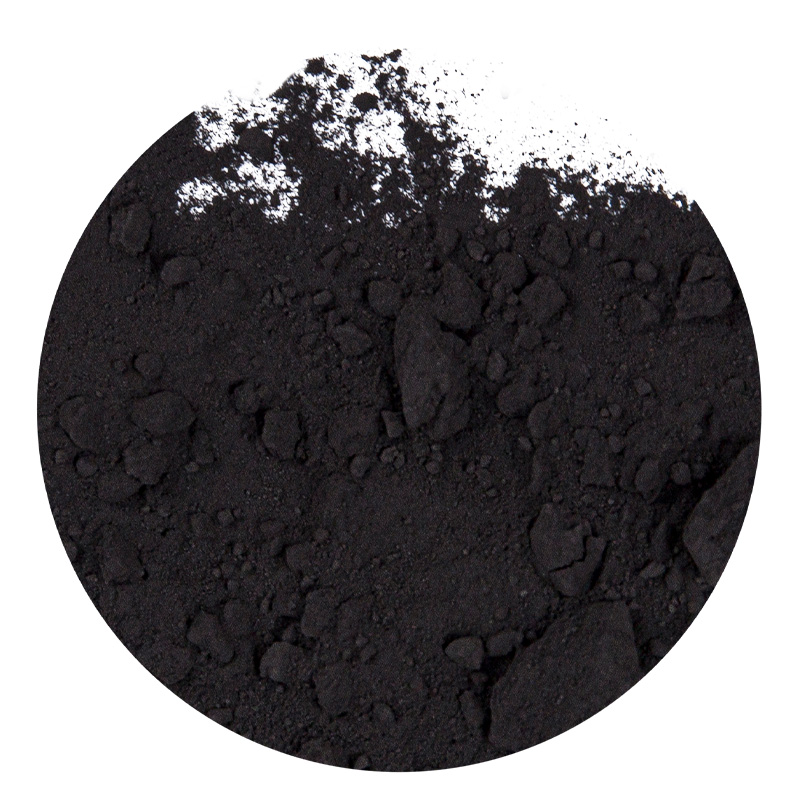 Custom Black Oxide Powder, Black Iron Oxide Pigment SuppliersDeqing Demi: China Black Oxide Powder, Black Iron Oxide Pigment Manufacturers, Suppliers, Factory, We Wholesale Custom Iron Oxide Black E...View Product →
Iron Oxide Black 318 vs Other Black Pigment Grades
Grade selection starts with the processing window and the end-use performance target, not with the darkest possible shade. The table below compares typical values across four commonly specified iron oxide black grades.
| Feature | 318 | 330 | 722 | 808 |
| Relative tinting strength | 100 | 97 | 94 | 90 |
| Typical D50 (micron) | 0.3-0.5 | 0.4-0.6 | 0.3-0.5 | 0.5-0.8 |
| Heat stability | Good | Good | Excellent | Good |
| Primary fit | Concrete, coatings, plastics | Concrete and masonry | Plastics and powder systems | General economy applications |
Where Iron Oxide Black 318 Is Used
Grade 318 is the default black pigment across six industrial groups. In every case, the pigment must satisfy the target shade and the chemical and mechanical limits of the surrounding system.
- Concrete products - pavers, roof tiles, and precast elements where alkali resistance and UV stability prevent the black shade from graying out.
- Architectural coatings - base paints, primers, and water-based topcoats that require no bleeding and consistent hue across batches.
- Plastics and rubber - PVC profiles, cable compounds, and seals processed in the 180-220 deg C range where heat stability and dispersion decide surface quality.
- Ceramics and glass - ceramic stains and glass frits that rely on the magnetite crystal to produce controlled black tones.
- Cosmetics and food-contact packaging - only in low-heavy-metal, E172-compliant versions of the same pigment chemistry.
- Industrial primers - anti-corrosion systems where pigment inertness avoids unwanted reactions with active additives.
How to Qualify a Reliable Iron Oxide Black 318 Supplier
Qualifying a 318 supplier requires documented evidence, not datasheet claims. Apply a five-point checklist before you commit to bulk orders.
- Request the full technical datasheet. Verify tinting strength, pH, oil absorption, particle size distribution, and moisture content in writing.
- Audit heavy metal documentation. Lead, cadmium, mercury, and arsenic limits must fit the destination market's regulations; the heavy metal safety standards for iron oxide pigment guide explains the relevant limits.
- Test batch-to-batch color consistency. Ask for color difference values measured against a standard reference sample.
- Run a pilot dispersion trial. Confirm tinting strength and viscosity in the exact binder, plastic compound, or cement formula you produce.
- Confirm supply and logistics. Check minimum order quantity, lead time, packaging, and export documentation before placing the first order.
To compare available grades against your own targets, browse the full iron oxide pigment range and request a sample from the sales team.
 Custom Iron Oxide Pigment Suppliers, ManufacturersDeqing Demei Pigment Technology Co., Ltd. Is China Iron Oxide Pigment Suppliers, Manufacturers And Iron Oxide Pigment Factory, We Offer c...View Product →
Frequently Asked Questions
The four questions below cover the points that surface most often in real buying conversations about Iron Oxide Black 318.
Is Iron Oxide Black 318 the same as Pigment Black 11?
Not exactly. Pigment Black 11 (CAS 1317-61-9) covers the entire family of synthetic iron oxide black pigments, while the digits 318 identify one specific grade within that family with defined tinting strength, particle size, and processing behavior.
How does Iron Oxide Black 318 compare with carbon black?
Iron oxide black is denser, chemically inert, and delivers a brown-black undertone, while carbon black produces a bluer, stronger jetness with much finer particles. Use iron oxide black when lightfastness, alkali resistance, and environmental safety matter more than maximum darkness.
Can grade 318 be used in cosmetics or food-contact packaging?
Only if the specific batch meets E172 and the applicable heavy metal limits. Standard construction-grade 318 is not automatically food-contact safe, so specify the low-heavy-metal variant and demand the corresponding compliance documentation.
What temperature can Iron Oxide Black 318 withstand?
Commercial 318 grades remain stable up to roughly 500 deg C, which covers standard thermoplastic processing. Above that range, magnetite slowly oxidizes toward a reddish phase, so high-temperature ceramic applications require a dedicated thermal test.