English
 عربى
عربى русский
 Español
Practical Brown Iron Oxide Pigment: Grades, Properties and Selection Guide
Content
Brown iron oxide pigment looks simple on a shade card, but in a production environment it is the most demanding member of the iron oxide family. It is never a single crystal; it is a blend of yellow, red, and black oxide phases, and that is exactly where color drift, segregation, and strength losses come from. This guide explains what brown iron oxide is, how grades such as 686, 663, and 610 differ, and how to verify a supplier before you commit a full production run.
What Is Brown Iron Oxide Pigment?
Brown iron oxide pigment is a synthetic inorganic colorant produced by intimately blending and co-milling yellow (goethite), red (hematite), and black (magnetite) iron oxide phases into a single uniform powder, commonly classified under CI Pigment Brown 6 or CI Pigment Brown 7.
Because it is a composite rather than a single oxide, the final hue depends on the ratio of base phases and the fineness of the grind. Industrial grades typically carry an iron oxide (Fe2O3) content above 90 percent, and a properly milled brown shows no visible segregation under a 100x microscope.
Typical Specification Ranges
The values below are what a well-run mill should hold across delivered lots. Always request a certificate of analysis per shipment, not a one-time data sheet.
| Fe2O3 content | 90-95% | Sets tinting strength per kilogram |
| Moisture | 0.5% max | Prevents lumps and bag-weight errors |
| pH (10% slurry) | 3.5-7.0 | Affects cement cure and coating stability |
| Oil absorption | 18-28 g/100g | Drives resin and binder demand |
| Heat stability | 180-220 degrees C | Limits use in engineering plastics |
| Lightfastness | 5 on the 1-8 scale | Required for outdoor concrete and coil coatings |
For production buyers, the two numbers to check first are Fe2O3 content and moisture. Moisture above 1 percent will appear as poor dispersion in plastics and as mottled surfaces in concrete. Deqing Demei Pigment Technology Co., Ltd. offers its compound brown iron oxide in standard, micronized, and low-heavy-metal series, including the brown iron oxide pigment used most often for pavers and architectural coatings.
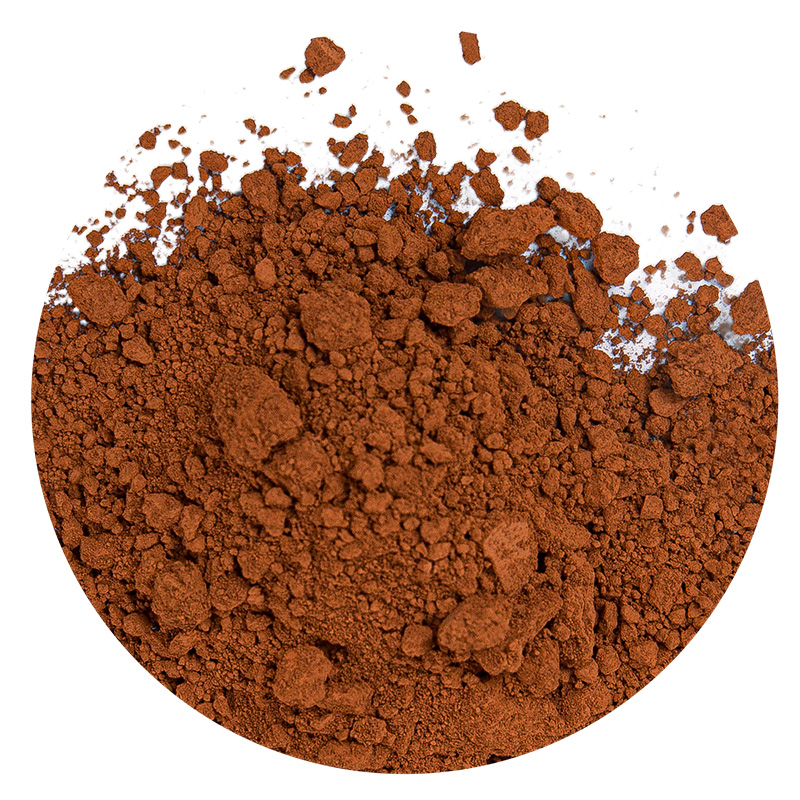 Brown Oxide Pigment, Brown Oxide Powder Manufacturers, SuppliersDeqing Demi: China Brown Oxide Pigment, Brown Oxide Powder Manufacturers, Suppliers, Factory, We Wholesale Custom Brown Iron Oxide Pigmen...View Product →
Color Stability Is Decided by the Blend, Not the Color Card
Color stability in brown iron oxide is decided inside the mill, before the powder reaches your mixer; the ratio of yellow, red, and black base phases is the single biggest factor you can audit.
Yellow goethite is soft and oil-hungry, red hematite is dense and hard, and black magnetite is heavy and slightly magnetic. When a mill simply tumbles these powders together, the denser phases migrate during transport and the shade separates in your silo. Correctly made compound brown is co-milled until the particle-size distributions of all three phases overlap, usually with a D50 between 1 and 3 microns.
The practical consequence: specify micronized brown for plastics and powder coatings, where agglomerates form visible specks, and standard grade for concrete. For shade-critical work, our comparison of 686, 663, and 610 brown oxide grades shows how the same color number can hide very different hue angles.
Where Brown Iron Oxide Is Used in Production
Brown iron oxide is specified wherever a warm earth-tone color must survive sunlight, weather, and repeated mechanical abuse, and it is the pigment of choice for concrete, coatings, and plastics.
In concrete and construction, it delivers through-body color to pavers, roof tiles, and architectural blocks without bleeding or fading like organic colorants. In coatings, it is the base for wood stains, facade paints, and industrial primers because of its UV stability. In plastics, it is loaded into polyolefin masterbatch for garden furniture, automotive interior parts, and outdoor packaging.
| Concrete pavers | High tinting strength, weather resistance | 686 standard grade |
| Roof tiles | Acid and alkali resistance | 660 micronized grade |
| Architectural coatings | Easy dispersion, low oil absorption | 663 micronized grade |
| Plastic masterbatch | Heat stability, no agglomerates | 610 micronized grade |
Typical concrete dosage is 3 to 6 percent of cement weight. At that level, brown iron oxide does not reduce compressive strength; exceeding it only increases water demand.
Choosing the Right Grade: 686, 663, or 610
A brown iron oxide grade number encodes a hue family and a strength level, not a universal standard, so the right choice is made by comparing real color chips and running your own test batch.
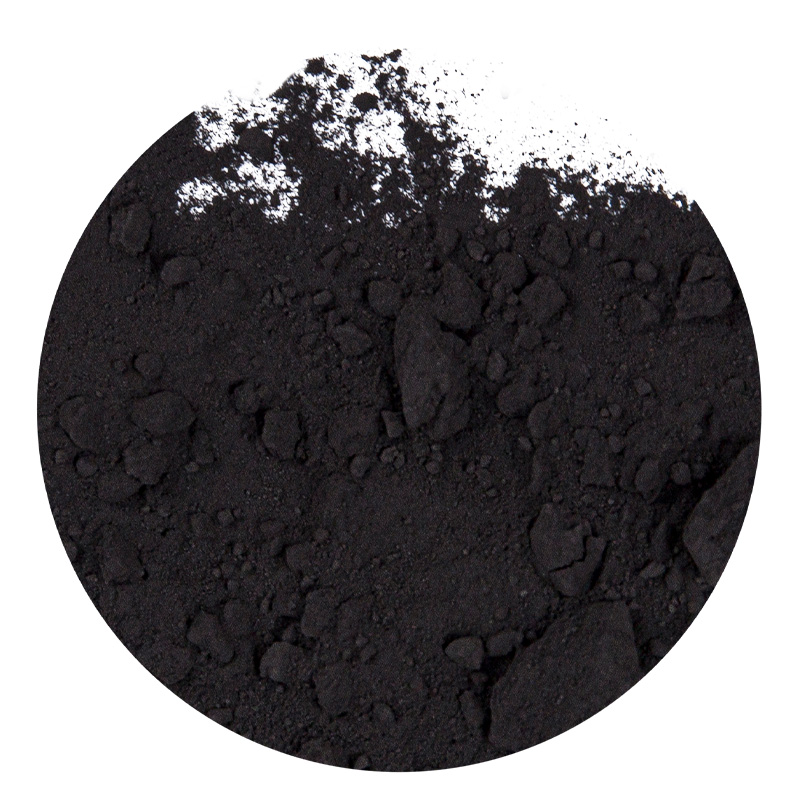
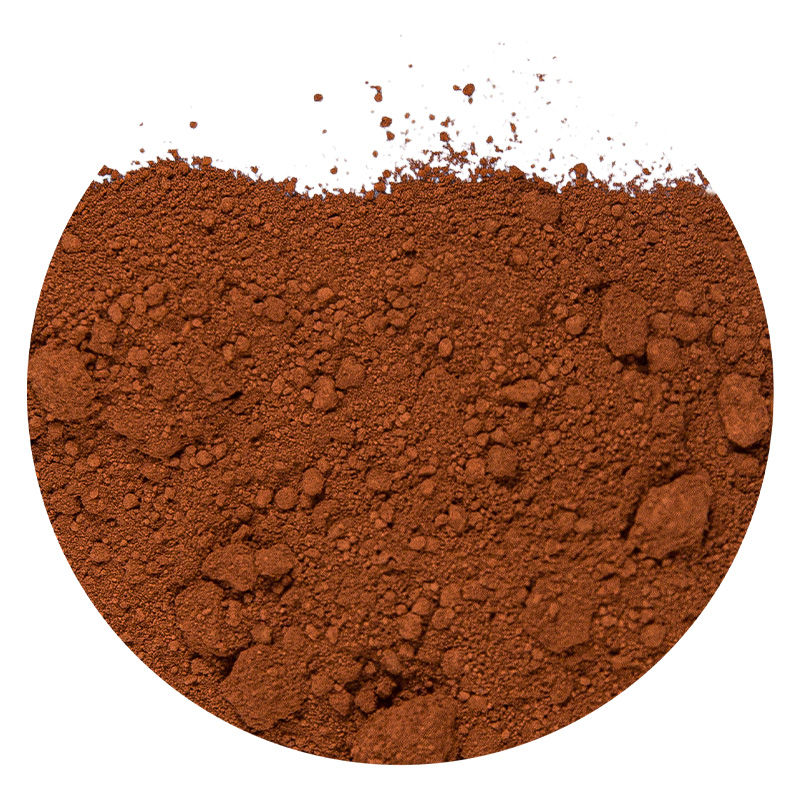
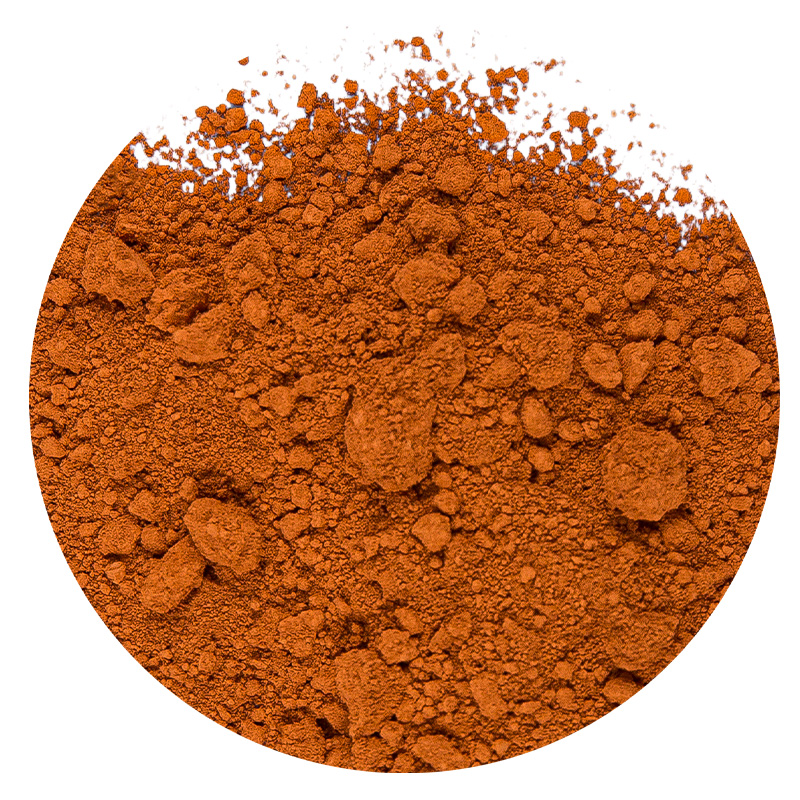
686 is the workhorse dark reddish brown with the highest tinting strength and the best economics per kilogram for concrete. 663 is a yellow-brown with a softer, warmer tone, favored in architectural coatings and wood stains. 610 is a light reddish brown that produces clean tan shades but needs a higher dose to reach the same depth.
Relative Tinting Strength, Normalized to 686 Grade
Indicative values of relative tinting strength based on typical manufacturer data for comparable particle sizes.
Choose 686
Dark chocolate and coffee shades with maximum strength. Best cost per kilogram for concrete pavers, blocks, and roof tiles.
Choose 663 or 610
Warm tan and wood tones for stains and facade coatings. Expect higher pigment dosage in exchange for a more transparent, warmer hue.
Do not rely on the grade number alone: two mills can both label a product 686 and deliver visibly different hue angles. To pull a 610 toward a yellow-tan, blend it with a heat-stable iron oxide yellow pigment; for a deep umber, add a small portion of red oxide.
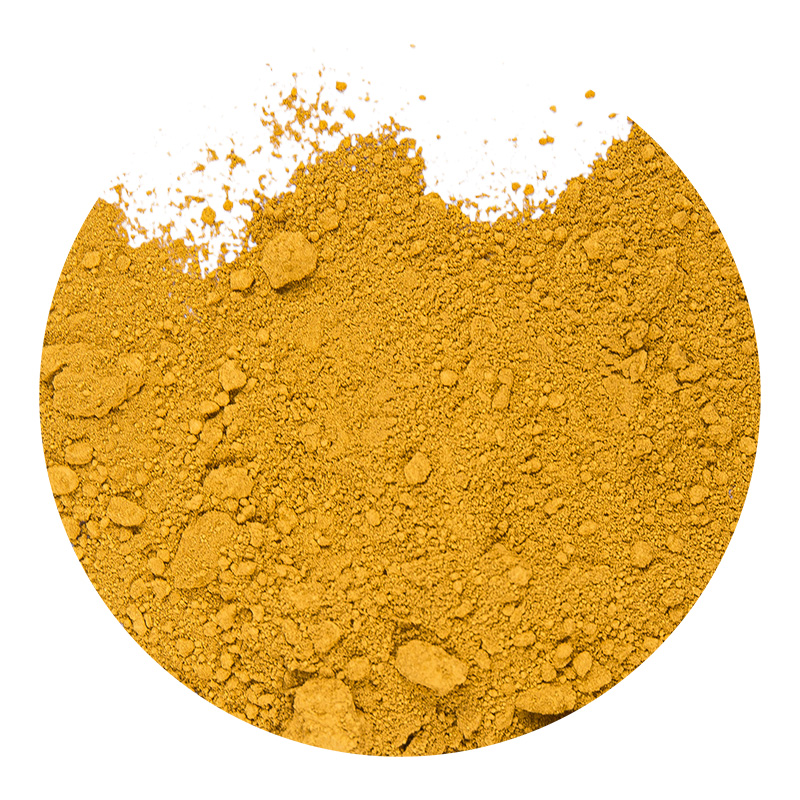 Custom Yellow Oxide Powder, Iron Oxide Yellow Pigment SuppliersDeqing Demi: China Yellow Oxide Powder, Iron Oxide Yellow Pigment Manufacturers, Suppliers, Factory, We Wholesale Custom Iron Oxide Yello...View Product →
How to Qualify a Brown Iron Oxide Pigment in One Week
- Request a certificate of analysis with Fe2O3, moisture, pH, oil absorption, and D50 particle size.
- Make a 200 g test batch in your real system: concrete mix, mill base, or masterbatch.
- Measure delta-E against your approved master sample after 24 hours and again after one week.
- Run a 60-minute heat test at the maximum process temperature you expect.
- Scale to a trial lot and check color drift across three separate deliveries.
How to Vet a Brown Iron Oxide Supplier
A reliable brown iron oxide supplier is defined by three measurable things: control of base-oxide ratios, consistent moisture, and a certificate of analysis on every lot.
Because brown is a composite pigment, the supplier's real competence is in proportioning and milling, not in matching a color number. Ask three questions: Do you mill each brown shade from controlled base oxides? What is your lot-to-lot delta-E tolerance? Can you certify heavy-metal content on the low-heavy-metal series? The application guide on iron oxide pigment selection helps match these properties to your specific process.
- Certificate of analysis per lot: Fe2O3, moisture, pH, sieve residue
- Delta-E tolerance of 1.0 or better versus the approved master sample
- Confirmed lead time and production capacity for your order size
- Low-heavy-metal option for food-contact and sensitive applications
- Physical color card for shade approval, not a screen image
As a manufacturer rather than a trading house, Deqing Demei controls milling and quality testing on its own production line, and the full iron oxide pigment portfolio is available for cross-shade supply planning.
Frequently Asked Questions
Is brown iron oxide pigment heat stable in plastics?
Yes. Standard grades survive 180 degrees C across normal processing cycles, and properly micronized grades hold their color through 200 degrees C in polyolefin masterbatch. For engineering resins above 220 degrees C, always run a heat-soak trial before ordering in volume.
What is the difference between 686 and 663 brown iron oxide?
686 is a dark reddish-brown with high tinting strength and the best cost per kilogram for concrete. 663 is a yellow-brown with a warmer, lighter tone for coatings and stains. Both are compound pigments, and only a physical color chip plus your own test batch can confirm the correct one.
Can brown iron oxide be used in concrete without weakening it?
Yes. At the standard dosage of 3 to 6 percent of cement weight, brown iron oxide does not reduce compressive strength. Keep the pigment pH in the 3.5 to 7.0 range and avoid overdosing, which raises water demand and can lead to surface dusting.
How do I check lot-to-lot color consistency?
Ask for the certificate of analysis on every lot, focusing on moisture and Fe2O3 content, and measure delta-E against your approved master sample. A well-run mill should hold compound brown within 1.0 delta-E across consecutive deliveries.