English
 عربى
عربى русский
 Español
How to Choose Iron Oxide Red Powder for Industrial Applications and Manufacturing Use
Content
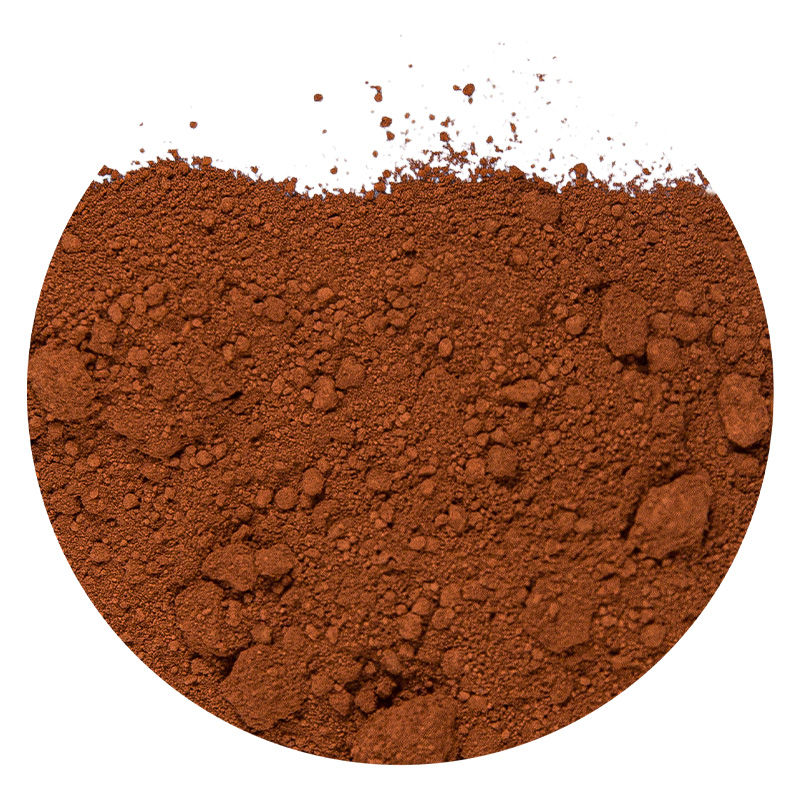
Selecting the right iron oxide red powder depends on matching pigment type, particle size, and performance grade to the demands of the end application. This guide covers the main types of iron oxide red pigment, where each one performs best, the properties that separate a reliable industrial grade from an inconsistent one, and how to process it correctly for stable, repeatable color results across concrete, paint, plastics, rubber, and ceramic production.
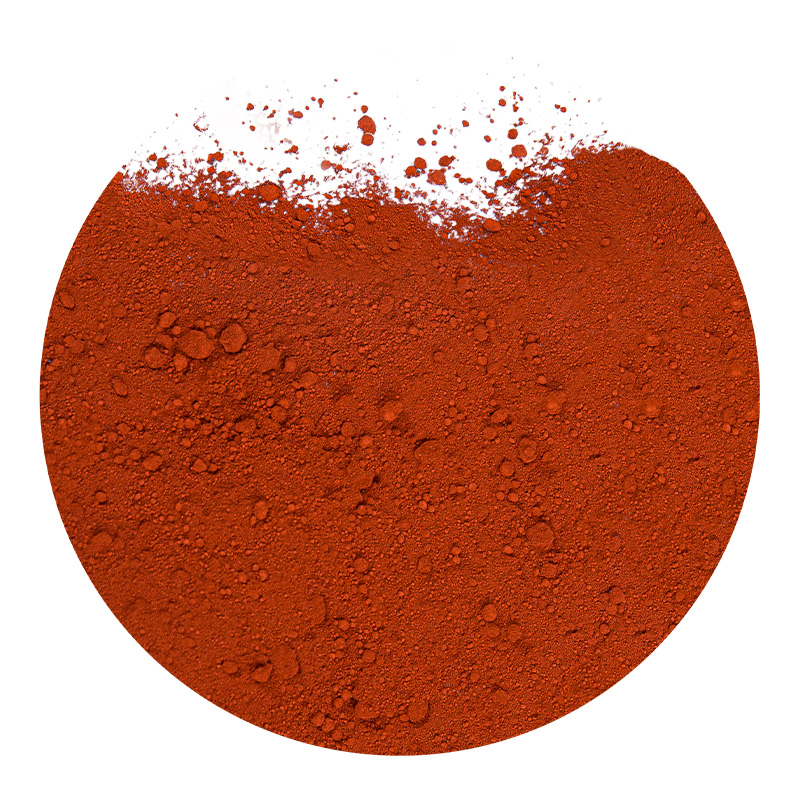
Iron oxide red powder is the common industrial name for synthetic or natural iron(III) oxide, a stable inorganic compound valued for high tinting strength, strong lightfastness, and resistance to heat, weathering, and chemical attack. Because particle size, purity, and crystal structure vary between production methods, two batches labeled the same way can behave very differently once mixed into concrete, paint, or a polymer matrix. Buyers who understand these variables can specify the correct grade the first time, avoiding shade drift, weak tinting strength, or poor dispersion in the finished product.
Types of Iron Oxide Red Powder
Iron oxide red powder is available in synthetic and natural forms, further differentiated by particle size, purity, and processing method, and the right choice depends on the color consistency, purity, and dispersion behavior a given application requires.
- Synthetic Iron Oxide Red Produced through controlled chemical precipitation, synthetic iron oxide red powder offers tighter particle size control and more consistent shade from batch to batch. It is the preferred choice as an industrial iron oxide pigment wherever tight color-matching tolerances apply.
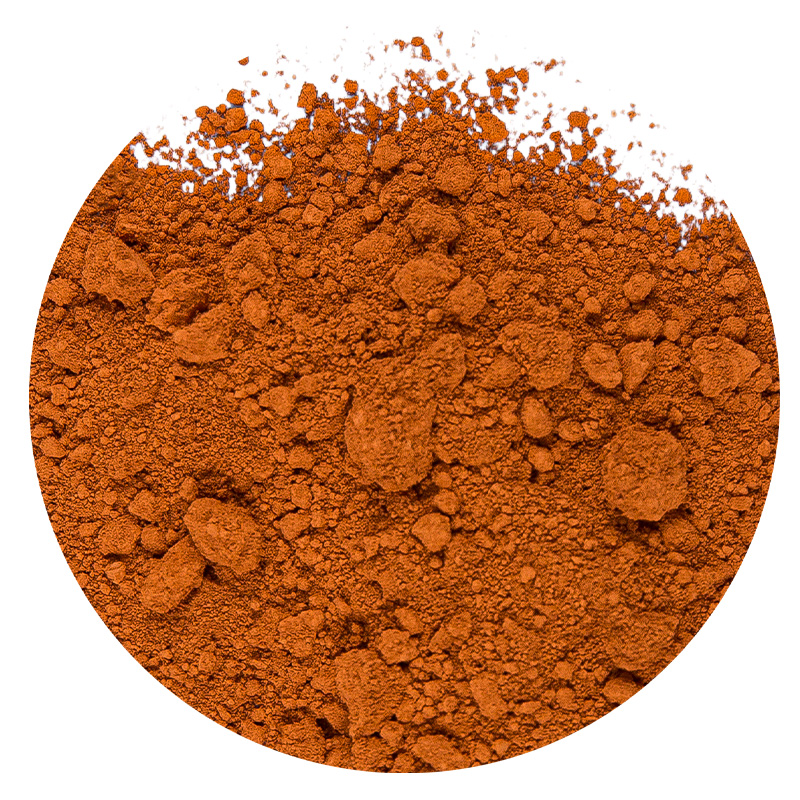
- Natural Iron Oxide Pigment Sourced from mined iron ore and mechanically processed, natural iron oxide red pigment carries trace minerals that give it a slightly muted, earthier tone. It is a cost-effective option for high-volume uses where minor shade variation between lots is acceptable.
- Micronized Iron Oxide Powder Natural or synthetic material that has been further milled into a finer, more uniform particle size. Micronized red iron oxide powder improves color strength and dispersion, and reduces the risk of grit or streaking in paints and coatings.
- High Purity Iron Oxide Powder A refined synthetic grade with minimal trace-metal content, used where color must stay unaffected by contaminants, such as precision pigment blending, technical ceramics, and specialty industrial coatings.
Synthetic Grade
Tighter particle size control, higher consistency between lots, stronger and more predictable tinting strength, and typically higher purity. Best suited to applications with strict color-matching requirements.
Natural Grade
More economical at scale, slightly more variation between lots, earthier undertone, and a longer track record in bulk construction coloring where exact shade matching is less critical.
This differentiation is why sourcing decisions for iron oxide red powder should start with the intended application, not with price per kilogram alone. A high purity iron oxide powder chosen for a low-tolerance masonry application is an unnecessary cost, while a natural-grade pigment used in a color-critical coating can create shade problems that are expensive to correct downstream.
Applications of Iron Oxide Red Powder
Iron oxide red powder is used wherever a manufacturer needs a stable, non-fading red-to-brown color that will not degrade under UV exposure, heat, or chemical contact, which is why it appears across construction materials, protective coatings, and polymer products alike.
- Concrete and Cement Iron oxide red powder for concrete and cement colors decorative pavers, colored mortar, and architectural concrete. Even dispersion is critical to avoid streaking, and dosage is generally kept within limits that do not interfere with cement hydration.
- Bricks and Masonry Iron oxide red pigment for bricks is blended directly into clay or concrete brick mixes to produce a through-body color that holds up through firing or curing, rather than a surface coating that can wear away.
- Paints and Coatings Iron oxide red powder for paint and iron oxide pigment for coatings serve exterior architectural paints, anti-corrosive primers, and protective industrial coatings, where weather resistance and long-term UV stability are the deciding factors.
- Plastics Iron oxide red powder for plastics is used in masterbatch coloring for pipes, containers, and roofing products. Heat stability during extrusion or injection molding determines whether the final part holds true color.
- Rubber Iron oxide red powder for rubber colors compounds used in flooring, seals, and mats. The pigment must withstand vulcanization temperatures without shifting shade or losing strength.
- Ceramics In glazes and body coloring, stability at high firing temperatures makes iron oxide red pigment one of the more dependable choices for ceramic manufacturers working with demanding kiln profiles.
Iron oxide red powder is best defined as a stable, inorganic red-to-brown pigment used to impart permanent, non-fading color to construction materials, coatings, and polymer products without altering the underlying material's structural performance.
Key Performance Properties Buyers Should Evaluate
The performance of iron oxide red powder is defined less by color alone and more by color strength, heat resistance, weather resistance, purity, and particle size distribution, the properties that determine whether a pigment performs consistently once it reaches production scale.
Iron oxide particle size distribution affects both color strength and how easily the pigment disperses. A narrower distribution reduces grit and produces more even color, while a broad or inconsistent distribution is the most common root cause of iron oxide pigment dispersibility problems such as poor wetting and agglomeration during mixing.
| Property | Standard Grade | Micronized Grade |
| Particle Size | Coarser, more variable | Finer, tightly controlled |
| Color Strength | Moderate | High |
| Dispersion Ease | Moderate, may require longer mixing | High, wets out faster |
| Typical Use | Bulk concrete and masonry coloring | Paints, coatings, fine-finish applications |
Installation / Usage / Processing Considerations
Getting consistent color from iron oxide red powder depends as much on correct dispersion, dosage control, and storage as it does on the quality of the pigment itself.
- Pre-Weigh and Pre-Blend Measure the iron oxide dosage in concrete or any other matrix accurately before mixing begins. Small dosage swings shift the final shade visibly.
- Choose the Dispersion Method Select an iron oxide powder dispersion method suited to the system: dry blending for cement and mortar, or wet grinding and high-shear mixing for paints and coatings to fully wet out each particle.
- Follow a Consistent Mixing Sequence When learning how to mix iron oxide pigment into a formulation, introduce the pigment early in the cycle so shear forces break up agglomerates before other additives are added.
- Check Color Before Full Production Compare a test batch against a reference standard visually and, where possible, with instrumentation before committing to a full production run.
- Store Under Stable Conditions Correct iron oxide storage conditions keep the powder sealed, dry, and away from direct sunlight or temperature extremes. Moisture uptake causes clumping and inconsistent metering in automated dosing systems.
FAQ
What is iron oxide red powder used for?
It is used to add permanent, non-fading red-to-brown color to concrete, bricks, paints, coatings, plastics, rubber, and ceramics, wherever a stable inorganic pigment is preferred over an organic dye.
How do you use iron oxide pigment correctly?
Pre-weigh the correct dosage, disperse it using a method suited to the system (dry blending or wet high-shear mixing), introduce it early in the mixing sequence, and verify color against a reference standard before scaling to full production.
Is iron oxide safe for industrial use?
Iron oxide pigments are widely used across construction, coatings, and polymer industries and are generally regarded as one of the more stable and low-hazard inorganic pigment classes, though standard industrial handling practices such as dust control and proper ventilation should still be followed.
What is the difference between natural and synthetic iron oxide?
Synthetic iron oxide is chemically produced with tighter particle size control and more consistent shade, while natural iron oxide pigment is mined and processed from ore, offering a more economical option with slightly more lot-to-lot variation.
How do you choose the right iron oxide powder?
Match the grade to the application: synthetic or micronized grades for tight color-matching and fine finishes, natural or standard grades for bulk construction coloring where minor shade variation is acceptable.
Why does iron oxide particle size matter?
Particle size directly affects color strength and dispersion behavior. Finer, more uniform particles disperse more easily and produce stronger, more even color, while inconsistent particle size is a common cause of streaking and weak tinting.
Final Thoughts
Choosing the right iron oxide red powder comes down to three factors: the application it will serve, the performance properties that application demands, and the processing method used to disperse it correctly. Synthetic and micronized grades suit color-critical work such as coatings and fine finishes, while natural and standard grades remain a practical choice for bulk construction coloring. Evaluating purity, particle size distribution, and heat and weather resistance against the end-use requirement is the most reliable way to select a grade that performs consistently at scale.