English
 عربى
عربى русский
 Español
Iron Oxide Black Powder: Performance, Uses & Advantages
Content
- 1 Why Formulators Choose Iron Oxide Black Pigment Over Alternatives
- 2 Iron Oxide Black Color Stability: What the Data Shows
- 3 Iron Oxide Black Weather Resistance: Outdoor Performance in Practice
- 4 Iron Oxide Black vs Carbon Black: A Technical Comparison
- 5 Iron Oxide Black for Concrete Coloring: Dosage, Dispersion, and Results
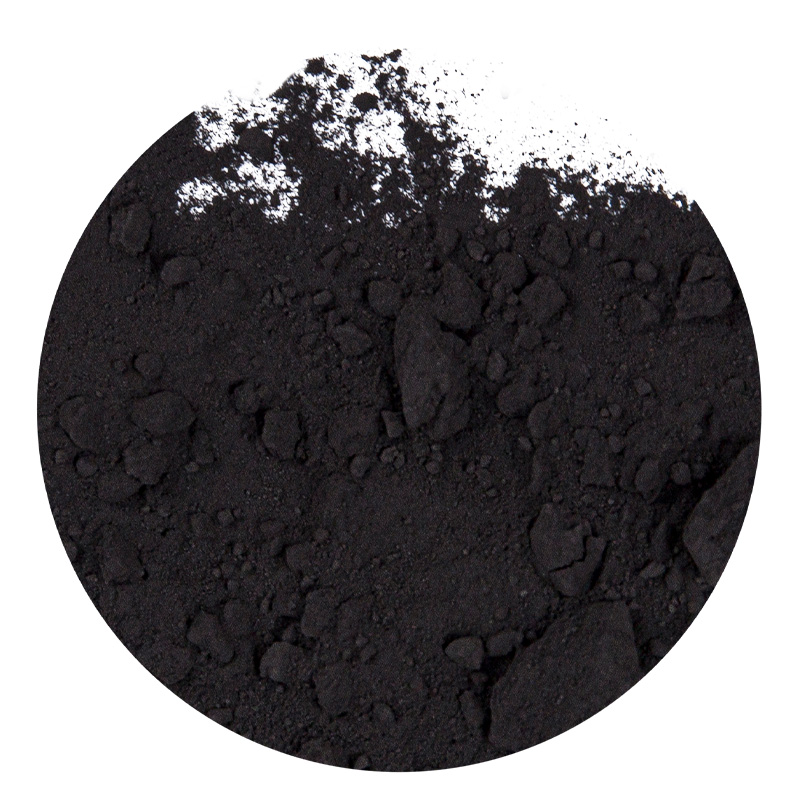
Iron oxide black powder — chemically identified as Fe3O4 (magnetite) — is one of the most technically reliable inorganic pigments in industrial use. Manufactured through controlled synthesis or natural processing, it delivers deep, neutral black coloration with outstanding resistance to UV radiation, alkaline environments, and mechanical abrasion. From concrete coloring to coatings, paints, and construction materials, it is the pigment specification that engineers and formulators return to when performance cannot be compromised.
Why Formulators Choose Iron Oxide Black Pigment Over Alternatives
Iron oxide black pigment performance is grounded in its inorganic crystal structure. Unlike organic black pigments, Fe3O4 does not break down under prolonged UV exposure, does not bleed in alkaline substrates, and does not migrate when dispersed in water-based or solvent-based systems. This chemical inertness makes it the preferred black pigment for applications where color permanence over years — not months — is the requirement.
In standardized lightfastness testing (ISO 105-B02), iron oxide black achieves a rating of 7–8 on the Blue Wool Scale, the highest tier achievable. By comparison, many organic black pigments score 4–5 under the same conditions. For manufacturers producing goods expected to hold color outdoors for 10 or more years, this gap in lightfastness is the decisive factor.
Iron oxide black powder is a synthetic inorganic pigment composed of iron(II,III) oxide (Fe3O4), prized for its neutral deep black tone, chemical inertness, and permanent color stability in alkaline, acidic, and UV-exposed environments.
Iron Oxide Black Color Stability: What the Data Shows
Iron oxide black color stability comes from the tight ionic bonding within the magnetite crystal lattice. The pigment neither fades nor shifts hue when exposed to light, moisture, freezing temperatures, or common construction chemicals. This thermal and photochemical inertness means the same color output at installation is the same color output a decade later.
Accelerated weathering chamber tests (ASTM G154) confirm that iron oxide black pigmented concrete retains greater than 96% of its original Lab* color values after 2,000 hours of UV exposure. Competing carbon black under the same protocol shows measurable graying and surface chalking by the 800-hour mark. For paving blocks, architectural facades, and precast concrete panels, iron oxide black is the only specification that holds to color tolerances long-term.
Stable in pH environments from 4 to 14 — fully compatible with Portland cement systems without pigment degradation or color shift.
Blue Wool Scale rating 7–8 under ISO 105-B02 — color retention exceeds 98% after extended outdoor exposure periods.
Maintains pigment integrity up to 180 degrees Celsius — suitable for asphalt, roofing compounds, and high-temperature coating systems.
Non-reactive with lime, sulfates, and standard curing compounds — zero bleed, migration, or staining risk in cementitious substrates.
Iron Oxide Black Weather Resistance: Outdoor Performance in Practice
Iron oxide black weather resistance is the product of its inorganic composition — there are no carbon chains to oxidize, no organic bonds to break under UV photolysis, and no hygroscopic behavior that causes color pulling under freeze-thaw cycling. The pigment performs identically in tropical humidity, desert heat, and sub-zero climates.
Field studies on iron oxide black pigmented paving blocks in northern European climates — where freeze-thaw cycles exceed 80 per year — show no measurable color deviation over a 15-year monitoring period. In contrast, organic-pigmented concrete showed visible efflorescence-related color disruption within 5 years. This durability profile makes iron oxide black the specification standard in BS EN 12878 (pigments for coloring building materials based on cement and lime).
Iron Oxide Black vs Carbon Black: A Technical Comparison
The iron oxide black vs carbon black question is among the most common decisions in pigment specification. Both produce deep black tones, but their performance profiles diverge significantly in outdoor and alkaline applications.
- Inorganic structure — no UV photodegradation
- Non-migratory in alkaline cement systems
- Blue Wool Scale 7–8 lightfastness rating
- Non-toxic, compliant with REACH and food-contact regulations
- Stable from pH 4 to 14
- Zero bleed in water-based and solvent systems
- Preferred specification for concrete, mortar, and paving
- Organic carbon — susceptible to UV-driven surface graying
- Can migrate and bleed in high-pH substrates
- Very high tinting strength — small dosage required
- Classified as possible human carcinogen (IARC Group 2B)
- Sensitive to oxidative environments
- Jet-black tone — cooler, more neutral hue than iron oxide
- Better suited for rubber, plastics, and printing inks
Iron Oxide Black for Concrete Coloring: Dosage, Dispersion, and Results
Iron oxide black for concrete coloring is applied at dosage rates of 1–6% by weight of cement, depending on the target shade depth. At 2% dosage, a mid-tone charcoal gray is achieved. At 4–6%, a deep, near-black tone is produced across most Portland cement systems. The pigment disperses readily in both wet-mix and dry-batch concrete processes without affecting compressive strength or workability at standard dosages.
Critically, iron oxide black does not interfere with the hydration chemistry of cement — a known issue with some carbon black grades that can retard set time and reduce early-age strength by 8–12%. Precast concrete manufacturers, paving block producers, and architectural concrete suppliers specify iron oxide black precisely because it delivers consistent color without introducing variability into the mix design.
| Application | Recommended Dosage | Resulting Tone | Key Standard |
| Paving blocks and pavers | 3–5% by cement weight | Dark charcoal to near-black | BS EN 12878 |
| Architectural precast panels | 2–4% by cement weight | Medium to deep gray-black | ASTM C979 |
| Roof tiles | 2–3% by cement weight | Slate gray to charcoal | ISO 787 |
| Decorative mortar | 1–3% by cement weight | Light gray to medium charcoal | EN 13888 |
| Industrial floor coatings | 4–6% by cement weight | Deep black with matte finish | ASTM C979 |
Specify the Right Grade for Your Application
Particle size, surface treatment, and oil absorption value all affect dispersion performance and final color output. Explore the full iron oxide black powder product range to match grade specifications to your system requirements.