English
 عربى
عربى русский
 Español
How Does Iron Oxide Powder Work as a Pigment? Color Mechanism & Selection Guide
Content
- 1 Iron oxide powder works by absorbing the light it does not show
- 2 Where the color actually comes from
- 3 What makes the color hold up for years
- 4 One chemistry, a full color card
- 5 Particle size and dispersibility control the final result
- 6 Choosing the right iron oxide powder
- 7 What to remember before you buy
Iron oxide powder works by absorbing the light it does not show
Mix a small dose of iron oxide powder into a gray concrete batch and the entire load turns a deep, uniform red or yellow. The pigment does not dissolve, does not react with the cement, and does not float to the surface. It works because each solid particle absorbs part of the visible spectrum and reflects the rest, and the reflected wavelengths are what you see as color. A yellow iron oxide absorbs blue light and reflects yellow; a red iron oxide absorbs green and reflects red; a black iron oxide absorbs across the visible range and reflects almost nothing.
That makes iron oxide an absorbing pigment, not a dye. A dye dissolves and colors a medium molecule by molecule; pigment particles stay intact and remain suspended in the material. Because the color mechanism is physical, the same iron oxide powder can color concrete, coatings, plastics, and even cosmetics without needing a chemical reaction with the host material. This single property explains why iron oxide is the default colorant for exterior, high-pH, and UV-exposed applications.
Where the color actually comes from
Crystal structure fixes the hue
Each iron oxide pigment has a defined crystal lattice, and that lattice determines the color. In hematite (α-Fe2O3), iron ions sit in a hexagonal oxygen arrangement that splits the d-orbital energy levels of iron by a specific amount. When visible light strikes the crystal, electrons absorb the wavelengths whose energy matches that split; the unabsorbed wavelengths scatter back. Hematite absorbs green light, so the reflected color is red. Goethite (FeO(OH)) has a different lattice that absorbs blue and violet light, so it reflects yellow. Magnetite (Fe3O4) absorbs across the whole visible range, which is why it reads as black.
This is the same mechanism known as crystal field splitting, and it is why two iron oxide powders with very similar elemental analysis can be completely different pigments. The manufacturer controls the crystal phase and particle morphology during synthesis or calcination, and those parameters define the final color. For browns and oranges, producers blend red, yellow, and black oxides in controlled ratios, which is why these shades are usually formulations rather than single crystal phases.
Particle size changes how the shade looks
Particle size does not alter the crystal structure, but it changes light scattering. Fine particles, with more surface area per gram, scatter shorter wavelengths more effectively and produce cleaner, slightly more transparent shades. Coarser particles scatter light more efficiently across the visible range, giving higher opacity and a deeper, sometimes duller shade. In opaque architectural coatings, opacity comes from scattering; in thin films such as printing inks, the same pigment must be ground finer to avoid visible specks. That is why suppliers offer several particle-size grades of the same color, from standard to micronized.
What makes the color hold up for years
Durability is the commercial reason iron oxide pigments are specified in demanding environments. The crystal structure that creates the color also resists the conditions that destroy most organic dyes.
- Lightfastness: iron oxide pigments resist ultraviolet fading and rate near the top of the blue wool scale. Exterior paints, roof tiles, and pavers keep their shade after years in direct sun.
- Weather resistance: pigment particles do not bleed, chalk, or wash out of the matrix, so color stays uniform across large surfaces.
- Alkali resistance: fresh concrete has a pore solution pH of 12 to 13. Many organic colorants decompose in that environment, while iron oxide remains stable. This is why cement and concrete products rely almost exclusively on iron oxide pigments.
- Processing tolerance: iron oxide powders withstand the heat of plastic compounding, ceramic firing, and cement production. Each grade has its own heat-stability limit, so match the grade to the process.
Safety is part of the value proposition. Internationally recognized pigments such as CI Pigment Red 101, CI Pigment Yellow 42, and CI Pigment Black 11 are approved for cosmetics, food-contact packaging, and other regulated uses when heavy metal content is controlled. Always check that the grade meets the relevant market standard, because an industrial grade and a cosmetics-grade product may look identical but differ significantly in trace element content.
One chemistry, a full color card
Iron oxide pigments cover an unusually wide palette for an inorganic system. The table below summarizes the main categories, their mineral basis, and typical specifications.
| Color | Main mineral / form | Common designation | Typical applications |
|---|---|---|---|
| Red | Hematite (α-Fe2O3) | CI Pigment Red 101 | Concrete, roof tiles, paints, plastics |
| Yellow | Goethite (FeO(OH)) | CI Pigment Yellow 42 | Architectural coatings, cement, asphalt |
| Black | Magnetite (Fe3O4) | CI Pigment Black 11 | Coatings, plastics, cosmetics, ink |
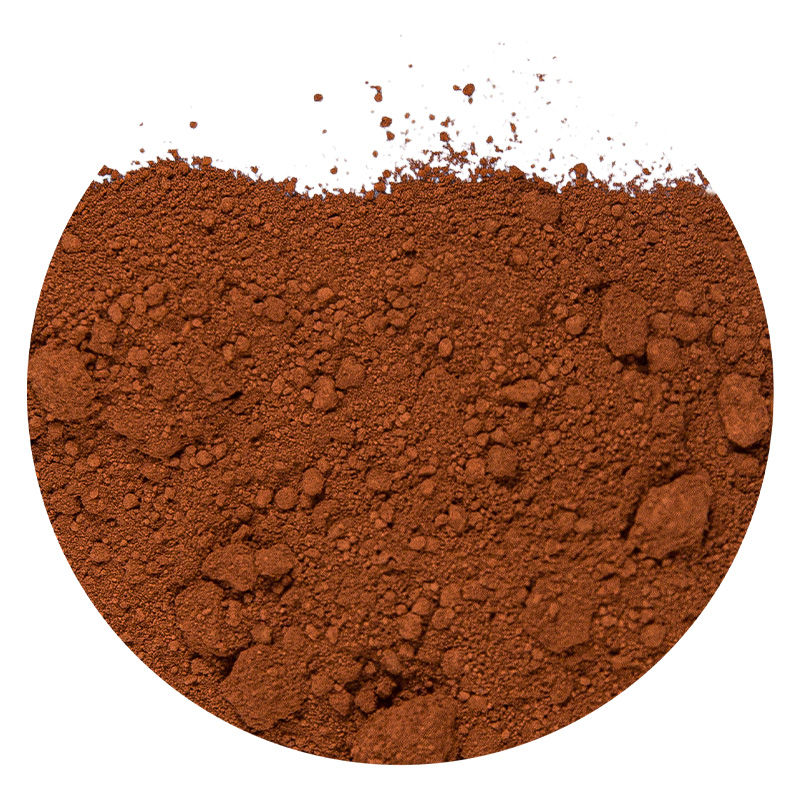
| Brown | Blends of red, yellow, black | CI Pigment Brown 6 / 7 | Wood stains, pavers, powder coatings |
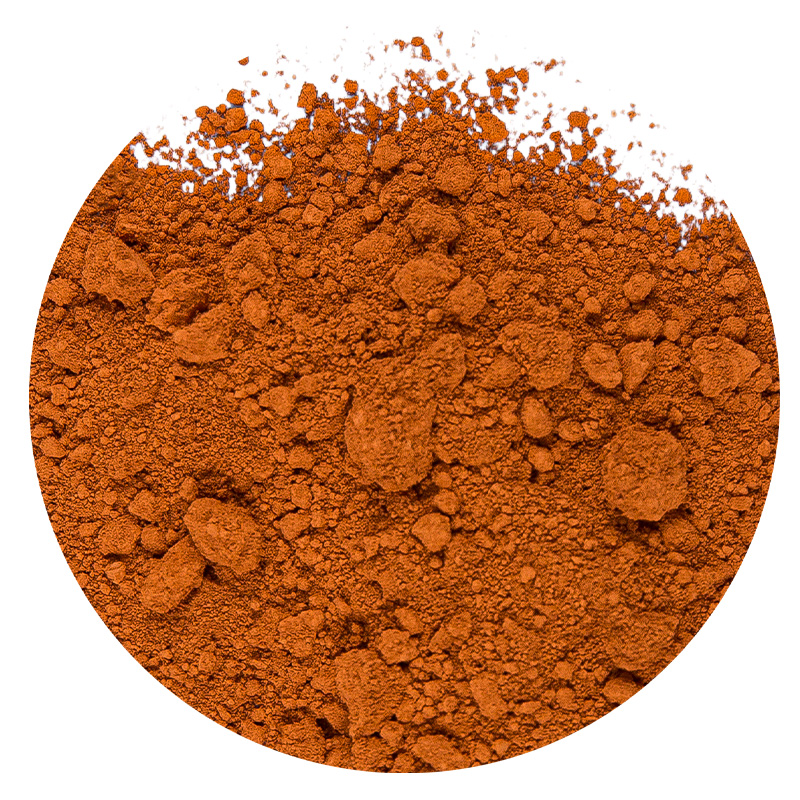
| Orange | Calcined red-yellow blends | Varies by product | Architectural coatings, tile |
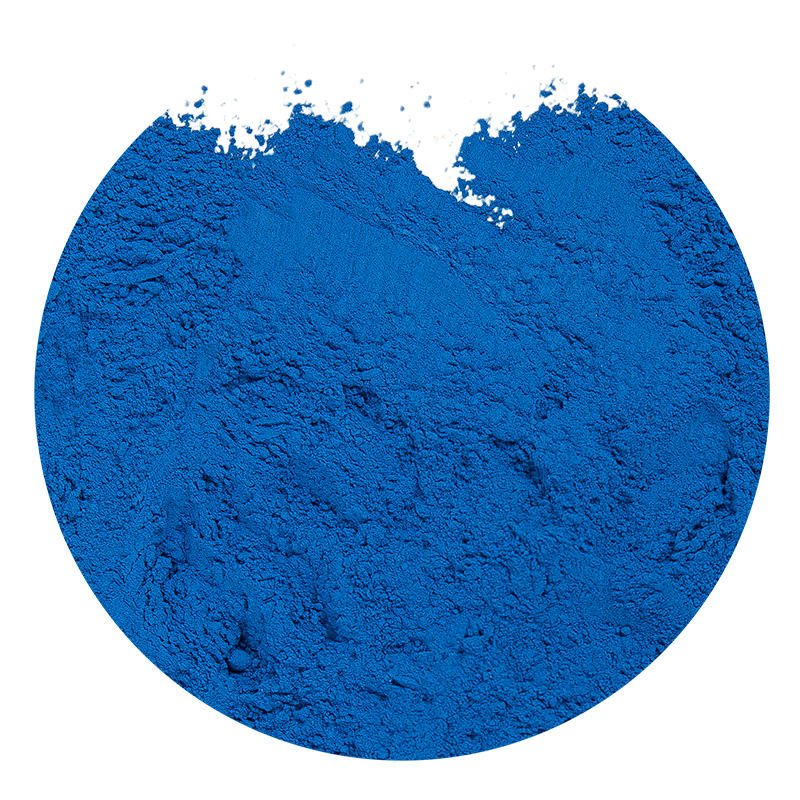
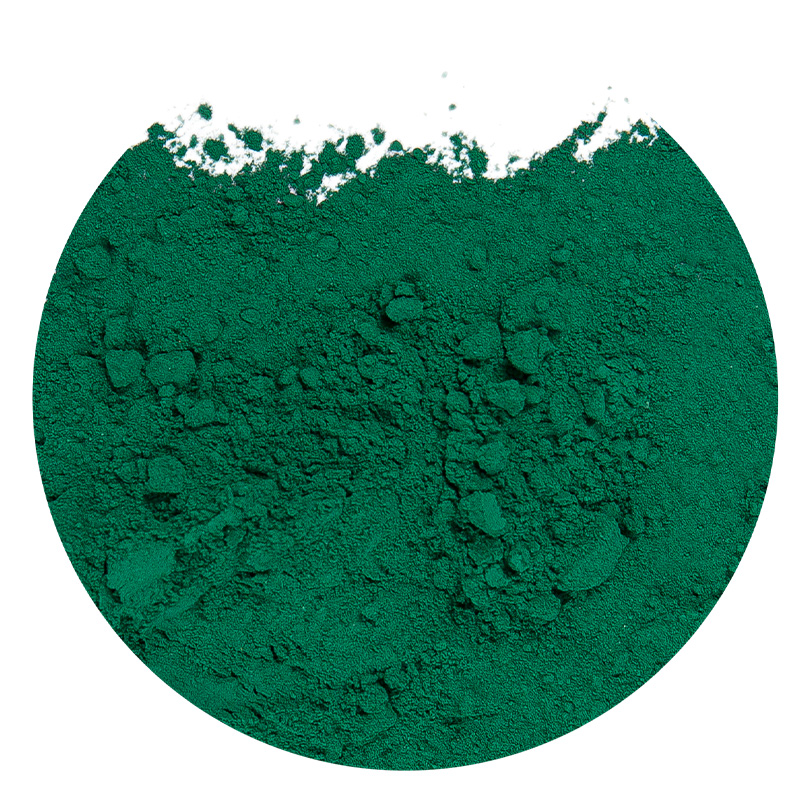
| Green / Blue | Composite iron-based pigments | Varies by product | Specialty coatings and plastics |
The practical takeaway: specify the use as well as the color. A red iron oxide for concrete needs strong alkali resistance and high tinting strength; a red iron oxide for paint needs a controlled particle size distribution so it disperses without streaking. The same logic applies across the palette, which is why manufacturers publish separate technical data for each color and application. You can compare the complete iron oxide pigment range to see what is available.
If your formulation is a coating, a synthetic iron oxide red for coatings will usually give the cleanest shade and the most consistent batch-to-batch color. For cement and concrete work, ask for a granular or low-dust grade with documented alkali resistance.
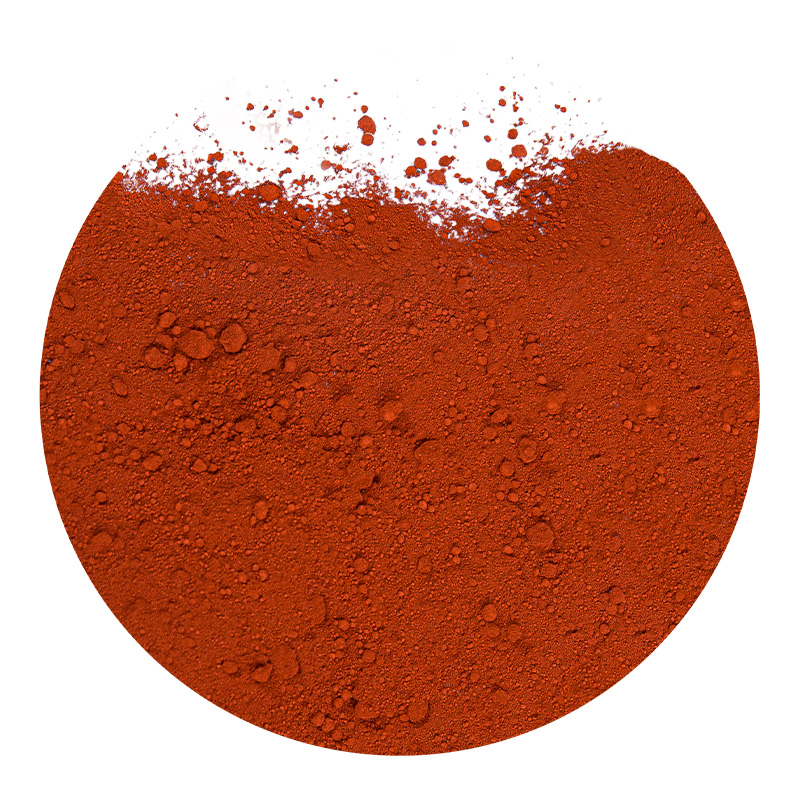 Red Iron Oxide Suppliers, Custom Red Oxide Pigment PowderDeqing Demi: China Red Iron Oxide, Red Oxide Pigment Powder Manufacturers, Suppliers, Factory, We Wholesale Custom Iron Oxide Red Powder ...View Product →
Particle size and dispersibility control the final result
Particle size distribution affects strength, shade, and gloss
Particle size distribution (PSD) is one of the first things a paint formulator checks. A D50 that is too coarse reduces tinting strength and makes a coating look dull; a distribution that is too fine increases oil absorption and can lower hiding power. Consistent PSD also matters for color matching: two batches with the same purity but different PSD can produce measurably different color difference values, which is why suppliers publish PSD on the datasheet.
Dispersibility makes or breaks the batch
Iron oxide particles naturally form agglomerates during drying and storage. If those agglomerates survive mixing, they appear as streaks, specks, or color clouds in the finished product. Standard grades are usually adequate for concrete and mortar, where shear forces are high and small specks are acceptable. Micronized or surface-treated grades are specified for thin-film coatings, inks, and plastics, where a single undispersed aggregate can ruin the surface.
The same principle applies to every shade. A well-dispersed black iron oxide pigment gives a neutral, deep tone in coatings and plastics, but an agglomerated grade will show gray streaks. If you are working on a color-critical formulation, our practical guide to iron oxide color stability and dispersibility covers the common failure modes and how to avoid them.
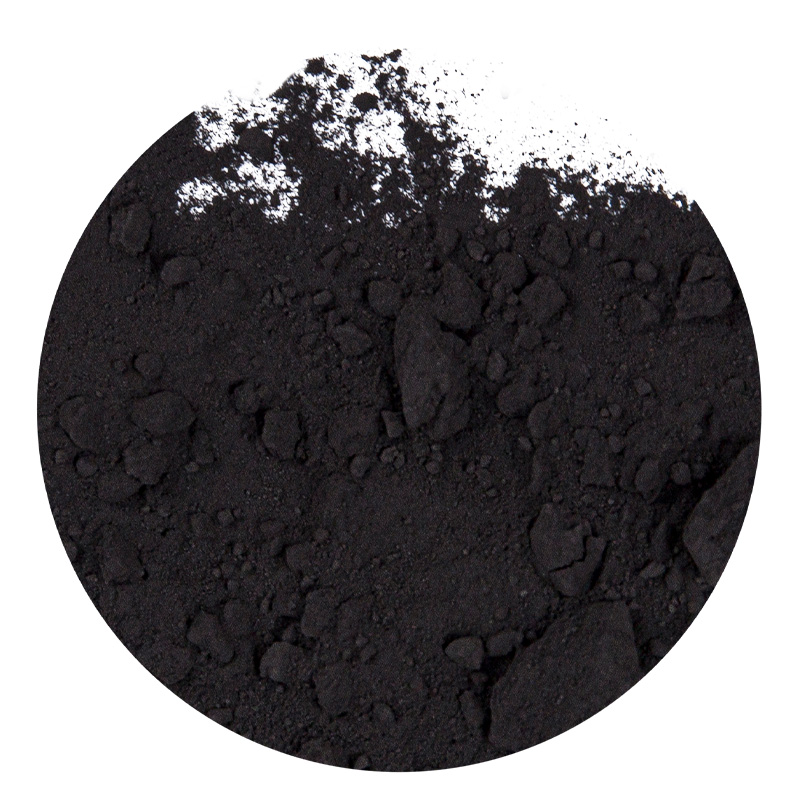 Custom Black Oxide Powder, Black Iron Oxide Pigment SuppliersDeqing Demi: China Black Oxide Powder, Black Iron Oxide Pigment Manufacturers, Suppliers, Factory, We Wholesale Custom Iron Oxide Black E...View Product →
Choosing the right iron oxide powder
Start with the end use, not with the color name. Ask what the pigment must survive: high pH, UV exposure, heat, contact with food, or direct skin contact. Our application reference pages show how each pigment behaves across construction, coatings, and plastics.
- For cement and concrete: choose a grade with documented alkali resistance, high tinting strength, and, if dust is a concern, a granular form.
- For architectural and industrial coatings: look for consistent PSD, good dispersibility, and full weather-resistance data.
- For plastics: check heat stability at your processing temperature and any food-contact compliance required for the part.
- For cosmetics and personal care: require low heavy metal limits and a certificate of analysis.
In every case, run a trial batch in the actual formulation. Tinting strength, shade, and dispersibility can look excellent in a lab panel and still behave differently in your mixer, extruder, or spray line. A manufacturer that produces its own pigments can usually supply reference formulations, sample panels, and practical advice on dosage rates.
Yellow shades deserve an extra comment. Iron oxide yellow pigment has excellent UV stability, but its heat stability is lower than red or black, so confirm the process temperature before high-heat plastics processing. For architectural work this is rarely a problem, but it is a classic example of why selection should come from the datasheet rather than the color swatch.
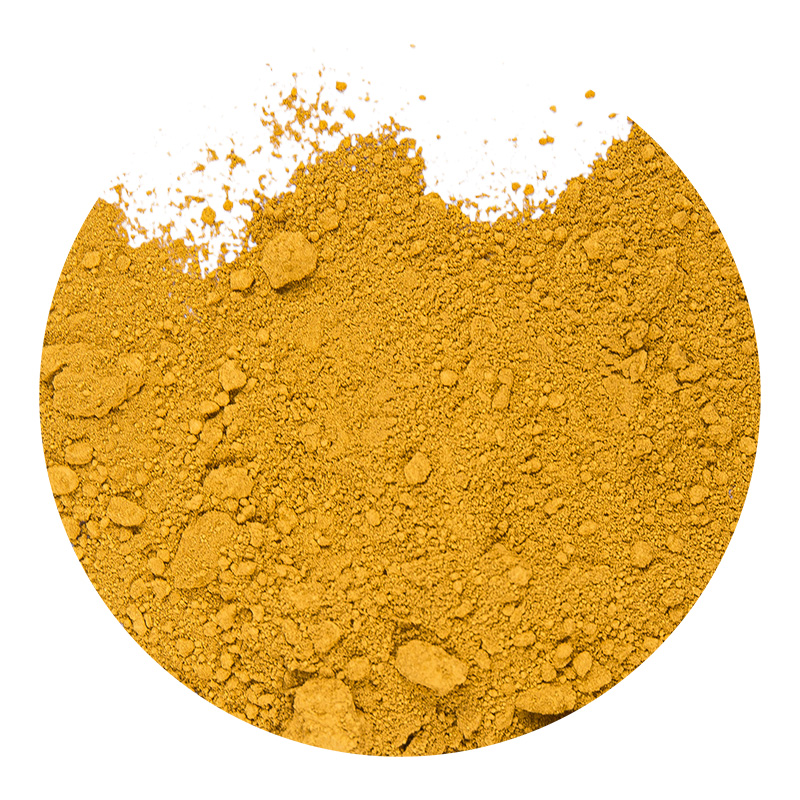 Custom Yellow Oxide Powder, Iron Oxide Yellow Pigment SuppliersDeqing Demi: China Yellow Oxide Powder, Iron Oxide Yellow Pigment Manufacturers, Suppliers, Factory, We Wholesale Custom Iron Oxide Yello...View Product →
What to remember before you buy
Iron oxide powder works as a pigment because its crystal structure absorbs specific wavelengths and reflects the color you see. That mechanism delivers a set of practical advantages: lightfastness, weather resistance, alkali resistance, and safety in regulated applications. Consistency is part of the deal as well. If you buy from a manufacturer that controls crystal phase and particle size distribution, you can match colors across batches and product lines.
The right grade depends on where the pigment will live. Concrete wants alkali resistance and tinting strength; coatings want PSD control and dispersibility; plastics and cosmetics want heat stability and purity limits. Ask for the datasheet, run a trial batch, and choose a supplier that produces rather than only trades the material. With the right pigment and the right process, iron oxide gives color that stays for the life of the product.