English
 عربى
عربى русский
 Español
Blue Iron Oxide Powder: Properties, Uses, and Safety Guide
Content
- 1 Full Guide to Blue Iron Oxide Powder: Properties, Applications, and Selection
- 2 Introduction to Blue Iron Oxide Powder
- 3 Properties of Blue Iron Oxide
- 4 Uses and Applications of Blue Iron Oxide
- 5 Safety Considerations and Environmental Impact
- 6 Top Blue Iron Oxide Powder Product Categories
- 7 Conclusion
- 8 Guide to Industrial Blue Iron Oxide Powder: Market Grades and Professional Selection
- 9 Top Blue Iron Oxide Powder Product Categories
- 10 Conclusion
- 11 Safety Considerations for Handling Blue Iron Oxide
- 12 Professional Blue Iron Oxide Product Grades
- 13 Conclusion
- 14 Market Outlook and Professional Selection of Blue Iron Oxide Powder
- 15 Conclusion and Future Trends
Full Guide to Blue Iron Oxide Powder: Properties, Applications, and Selection
Blue iron oxide powder, technically known as ferric ferrocyanide or iron blue, is a high-performance synthetic inorganic pigment. Unlike natural oxides, it offers a deep, vivid blue hue that is essential for industries requiring high tinting strength and durability. Often referred to as Prussian Blue or Milori Blue, this pigment has been a staple in global manufacturing for centuries due to its unique chemical structure and versatility.
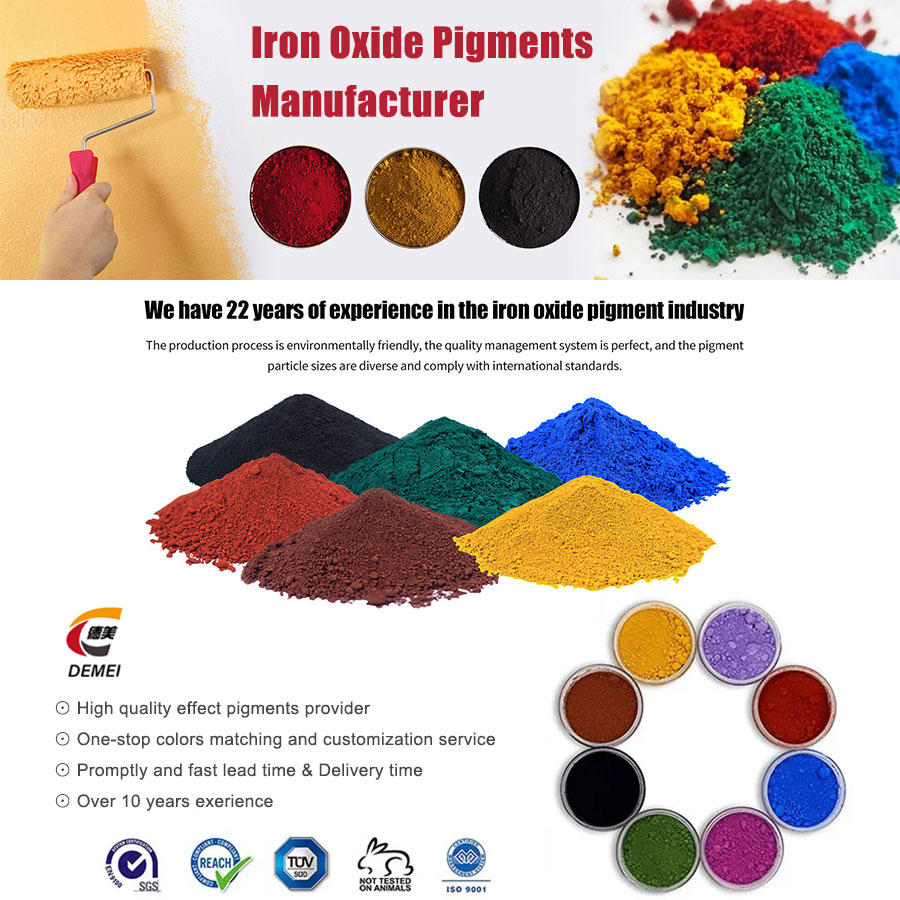
As a leader in the industry, Demei focuses on the research, development, and production of inorganic iron oxide pigments. Our pigments cover iron oxide red, yellow, black, brown, green, orange, blue, etc. We produce high-performance and high-stability composite iron oxide pigments with three series: standard, micronized, and low heavy metal content levels.
Introduction to Blue Iron Oxide Powder
Definition and Chemical Identity
Blue iron oxide is an inorganic compound with the chemical formula . It is a complex coordination compound where iron exists in both and oxidation states within a cubic lattice structure. This specific arrangement allows for intense light absorption, resulting in its characteristic dark blue appearance.
Common Synonyms
- Prussian Blue: The most historical and widely recognized name.
- Milori Blue: Often used to describe higher quality, softer-textured varieties.
- Pigment Blue 27: The official designation in the Color Index (C.I. PB27).
- Berlin Blue / Paris Blue: Regional names reflecting its European manufacturing origins.
Industrial Importance
The importance of blue iron oxide lies in its cost-effectiveness compared to organic blues and its exceptional lightfastness. It serves as a critical component in products ranging from heavy-duty industrial coatings to sensitive cosmetic formulations. Its ability to provide deep coloration at low concentrations makes it indispensable for mass-market manufacturing.
Properties of Blue Iron Oxide
Chemical Properties
Blue iron oxide is known for its stability under a variety of environmental conditions, but it behaves uniquely depending on the chemical environment:
- Chemical Stability: Highly resistant to most organic solvents and dilute acids.
- pH Sensitivity: While it is acid-resistant, blue iron oxide is sensitive to alkalis. Exposure to strong alkaline environments (like fresh concrete or lime) can cause the pigment to decompose and lose its color, turning yellowish-brown.
- Reactivity: It is chemically inert in neutral conditions, making it safe for long-term storage and use in stable polymer matrices.
Physical Properties
The physical characteristics of the powder directly influence its ease of use in production lines:
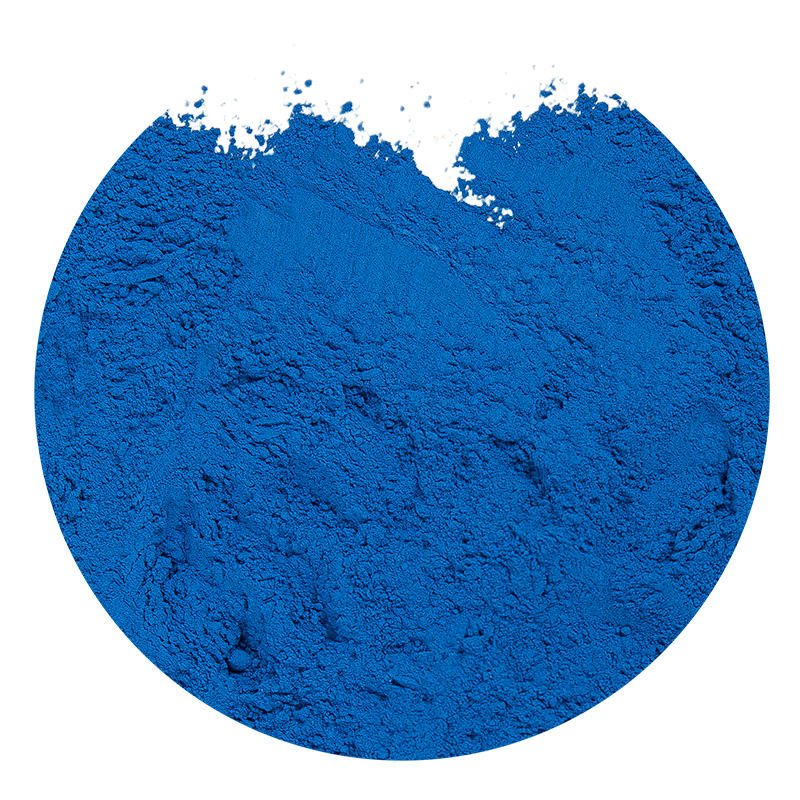
- Appearance: A fine, odorless, deep blue powder.
- Particle Size: Typically ranges between 0.1 and 1.0 microns, ensuring high opacity and coverage.
- Density: Has a specific gravity of approximately 1.8 to 1.9 g/cm³.
- Solubility: It is insoluble in water and organic oils, meaning it must be dispersed as a solid particle rather than dissolved.
Technical Specification Comparison
Below is a typical parameter comparison for different grades of blue iron oxide pigments used in industry:
| Property | Standard Grade | Micronized Grade | Cosmetic Grade |
|---|---|---|---|
| Fe Content (%) | ≥ 85% | ≥ 90% | ≥ 95% (High Purity) |
| Oil Absorption (g/100g) | 30 - 45 | 35 - 50 | 25 - 40 |
| Mean Particle Size (μm) | 0.8 - 1.2 | ≤ 0.5 | 0.2 - 0.5 |
| Tinting Strength (%) | 95 - 105% | ≥ 105% | Standardized |
| Heavy Metal Content | Industrial Standard | Industrial Standard | Ultra-low (Pb < 10ppm) |
Demei not only contributes to production and operation, but also faithfully fulfills its social responsibilities, protects the ecological environment, strengthens safe production, and cares for the health of employees. This commitment ensures that our low heavy metal series meets the strictest global safety regulations.
Manufacturing Process
The industrial production of blue iron oxide typically involves the precipitation method. Soluble ferrous salts (like ferrous sulfate) react with potassium ferrocyanide to form a white intermediate ("White Paste"), which is then oxidized using agents like sodium chlorate or hydrogen peroxide. The resulting blue precipitate is filtered, washed to remove salts, dried, and milled into a fine powder. Quality control at this stage focuses on color consistency (Delta E) and moisture content to ensure the pigment remains free-flowing.
Uses and Applications of Blue Iron Oxide
The versatility of blue iron oxide powder makes it a cornerstone in modern manufacturing. Its unique chemical structure allows it to provide intense coloration across various media, from fluid inks to solid polymers. Below are the primary industrial applications where this pigment excels.
Pigments and Dyes in Coatings and Inks
Blue iron oxide is highly valued in the coatings industry for its high tinting strength and transparency when finely dispersed. It is a primary choice for creating deep blue shades in automotive finishes, industrial equipment coatings, and architectural paints.
- Color Stability and Lightfastness: One of the greatest advantages of blue iron oxide is its resistance to UV radiation. Unlike many organic dyes, it does not fade easily when exposed to sunlight, making it ideal for outdoor applications.
- Printing Inks: In the ink industry, it is used for offset printing, packaging inks, and metal decorative inks. Its ability to be ground into extremely fine particles allows for smooth application and high-gloss finishes.
- Coating Compatibility: It integrates well with various resin systems, including acrylics, epoxies, and alkyds, provided the system is not highly alkaline.
Plastics and Rubber Industry
As a colorant for polymers, blue iron oxide provides more than just aesthetic value. It plays a functional role in the processing and longevity of plastic and rubber products.
- Material Enhancement: In certain rubber formulations, the pigment acts as a reinforcing agent, slightly improving the tensile strength and heat dissipation of the final product.
- Heat Resistance: While it is stable at standard processing temperatures, care must be taken during high-heat extrusion to ensure the pigment does not undergo thermal decomposition.
- Applications: Common uses include blue-colored PVC pipes, polyethylene films, rubber flooring, and silicone components.
Cosmetics and Personal Care
In the world of beauty, ferric ferrocyanide is a critical ingredient for achieving rich blue and teal tones. However, this application requires the highest levels of purity.
- Eye Makeup: It is widely used in eye shadows, eyeliners, and mascaras due to its ability to produce deep, dramatic colors that are safe for use around the ocular area.
- Safety and Purity Standards: Cosmetic-grade blue iron oxide must comply with strict international regulations, such as those set by the FDA and EU. These standards ensure that heavy metal content (like lead, arsenic, and mercury) is kept at ultra-low, safe levels.
- Demei produces high-performance and high-stability composite iron oxide pigments with three series: standard, micronized, and low heavy metal content levels, specifically catering to these sensitive regulatory environments.
Specialized and Emerging Applications
Beyond traditional coloring, blue iron oxide is finding its way into specialized technological fields.
- Paper Industry: Used in the production of high-quality blue paper, blueprint paper, and as a whitener (in very small amounts) to neutralize yellow tones in pulp.
- Fertilizer Marking: Used as a seed coating or fertilizer colorant to help farmers identify treated areas and ensure uniform application.
- Energy Storage (Novel Use): Modern research is exploring Prussian Blue analogues for use in sodium-ion battery electrodes due to their open framework structure which allows for rapid ion transport.
Safety Considerations and Environmental Impact
While blue iron oxide is generally considered safe and non-toxic, professional handling is essential to maintain a healthy workspace and protect the environment.
Handling Precautions
To ensure worker safety and product integrity, the following procedures should be followed in manufacturing environments:
- Personal Protective Equipment (PPE): Workers should wear nitrile gloves, safety goggles, and high-efficiency particulate air (HEPA) filtered masks to avoid inhalation of fine dust.
- Ventilation: Work areas should be equipped with local exhaust ventilation (LEV) or dust collection systems to minimize airborne particles.
- Prevention of Cross-Contamination: Due to its high tinting strength, even small amounts of blue powder can contaminate other pigment lines. Dedicated tools and thorough cleaning protocols are recommended.
Health Hazards and First Aid
Exposure to blue iron oxide powder is usually low-risk, but the following health effects and responses should be noted:
- Inhalation: May cause mild respiratory irritation. Move the individual to fresh air immediately.
- Skin Contact: May cause mechanical irritation or staining. Wash with soap and water.
- Eye Contact: Flush eyes with plenty of water for at least 15 minutes and seek medical advice if irritation persists.
Environmental Impact and Waste Management
Demei not only contributes to production and operation, but also faithfully fulfills its social responsibilities, protects the ecological environment, strengthens safe production, and cares for the health of employees. This philosophy extends to the environmental management of our pigments.
- Ecological Impact: Blue iron oxide is non-biodegradable but has low mobility in soil. It is not considered an acute hazard to aquatic life.
- Disposal: Waste should be disposed of according to local environmental regulations. Because it contains cyanide groups (tightly bound in a stable complex), it should not be mixed with strong acids during disposal to prevent the release of gases.
- Sustainable Practices: Modern production facilities now employ closed-loop water systems to treat and recycle the water used during the pigment washing process.
Application Parameter Comparison
| Application Field | Main Requirement | Typical Concentration | Key Advantage |
|---|---|---|---|
| Industrial Paints | UV Resistance | 5% - 15% | Excellent Lightfastness |
| Plastic Extrusion | Dispersion | 0.5% - 2% | High Color Saturation |
| Cosmetics | Purity/Safety | 1% - 30% | Deep, Vibrant Blue Tones |
| Paper Coating | Water Resistance | 0.1% - 1% | Uniform Tinting |
Top Blue Iron Oxide Powder Product Categories
Selecting the right blue iron oxide powder depends heavily on the end-use environment. While the chemical core remains ferric ferrocyanide, the physical processing—such as milling and surface treatment—defines the product's performance. Below are the primary product categories available in the professional market.
Standard Industrial Grade
The Standard Grade is the workhorse of the pigment industry. It is optimized for general industrial use where high tinting strength is required at a competitive price point.
- Key Features: High opacity, deep blue hue, and excellent lightfastness.
- Best For: Industrial primers, structural steel coatings, and mass-market plastic products.
- Benefits: Provides the most cost-effective solution for large-scale coloring projects.
Micronized High-Dispersion Series
For applications requiring a superior finish, Micronized Grade blue iron oxide undergoes an intensive grinding process to reduce particle size and narrow the particle size distribution.
- Key Features: Ultra-fine particles (often sub-micron), low grit content, and rapid dispersibility.
- Best For: High-end automotive paints, thin-film plastics, and high-resolution printing inks.
- Benefits: Reduces the energy required for grinding during production and prevents clogging in spray nozzles or printing heads.
Low Heavy Metal & Cosmetic Series
As regulatory requirements become stricter, specialized series with low heavy metal content have become essential for sensitive applications.
- Key Features: Rigorous purification process to remove trace elements like Lead (Pb), Arsenic (As), and Mercury (Hg).
- Best For: Eye-area cosmetics, children’s toys, and food-contact packaging (where permitted).
- Demei focuses on the research, development, and production of inorganic iron oxide pigments. We produce high-performance and high-stability composite iron oxide pigments with three series: standard, micronized, and low heavy metal content levels, ensuring compliance with the highest safety benchmarks.
Product Grade Comparison Table
| Feature | Standard Grade | Micronized Grade | Cosmetic Grade |
| Primary Goal | Cost-Efficiency | Ease of Dispersion | Safety & Purity |
| Color Tone | Deep/Dark Blue | Vibrant/Bright Blue | Rich/Pure Blue |
| Residue on Mesh (325 mesh) | ≤ 0.5% | ≤ 0.05% | ≤ 0.01% |
| Recommended Use | General Paints | Inks & Fine Coatings | Personal Care |
Conclusion
Blue iron oxide powder remains a vital component in the global pigment market due to its unique combination of deep color, excellent light stability, and economic value. From its complex chemical structure as ferric ferrocyanide to its diverse roles in industrial coatings, plastics, and high-end cosmetics, it provides a level of performance that is difficult to replicate with organic alternatives.
Understanding its sensitivity to alkaline environments and the importance of choosing the correct grade—whether standard, micronized, or low heavy metal—is crucial for any manufacturer. As industries move toward safer and more efficient production, the demand for high-purity and easily dispersible blue oxides continues to grow.
Demei not only contributes to production and operation, but also faithfully fulfills its social responsibilities, protects the ecological environment, strengthens safe production, and cares for the health of employees. Our commitment to innovation ensures that our pigments meet the evolving needs of the paper, plastic, and coating industries while maintaining a focus on environmental sustainability.
Future Outlook
The future of blue iron oxide lies in functionalization. Beyond simple color, emerging research into its electrical properties for battery technology and its use in advanced seed coatings suggests that this "traditional" pigment will remain relevant well into the next generation of industrial technology.
Guide to Industrial Blue Iron Oxide Powder: Market Grades and Professional Selection
In the global pigment market, blue iron oxide powder stands out for its deep tinting strength and high lightfastness. As an inorganic pigment, its performance is highly dependent on the manufacturing precision and post-processing treatments. Understanding the available product tiers and technical benchmarks is essential for optimizing formulation costs and ensuring product durability.
Demei focuses on the research, development, and production of inorganic iron oxide pigments. Our pigments cover iron oxide red, yellow, black, brown, green, orange, blue, etc. We produce high-performance and high-stability composite iron oxide pigments with three series: standard, micronized, and low heavy metal content levels.
Top Blue Iron Oxide Powder Product Categories
The selection of a specific blue iron oxide grade is dictated by the requirements for dispersion, particle size, and chemical purity. Professional suppliers typically categorize these pigments into three main functional groups.
Standard Industrial Grade
The Standard Grade is the most common choice for large-scale applications where cost-efficiency is a primary concern. It offers a balance of reliable coloration and robust physical properties.
- Key Features: Exhibits a classic navy blue hue with a high pigment content (typically ≥ 85% ferric ferrocyanide). It has strong covering power and is highly resistant to weathering.
- Best For: Architectural paints, exterior coatings, and the coloration of industrial rubber products.
- Benefits: Provides high economic value for manufacturers needing deep color saturation without the premium cost of specialized grinding.
Micronized High-Dispersion Series
For applications where surface smoothness and rapid integration are critical, the Micronized Grade is preferred. This series undergoes advanced milling to ensure the finest possible particle distribution.
- Key Features: Significantly reduced residue on 325-mesh screens (often ≤ 0.05%) and a mean particle size optimized for liquid systems.
- Best For: High-resolution printing inks, automotive topcoats, and thin-wall plastic injection molding.
- Benefits: Enhances the gloss of the final product and reduces the time and energy required during the high-speed dispersion process.
Low Heavy Metal & High Purity Series
Increasingly, global regulations demand pigments with ultra-low impurity levels. This High Purity Series is manufactured under strict quality control to minimize trace contaminants.
- Key Features: Characterized by ultra-low heavy metal concentrations (e.g., Lead < 10ppm) and a stable pH value.
- Best For: Cosmetic formulations (eye shadows, eyeliners), high-end toys, and paper products requiring environmental certification.
- Demei provides high-performance and high-stability composite iron oxide pigments with this series, ensuring that our clients meet the most stringent international safety and environmental standards.
Product Parameter Comparison Table
The following table outlines the typical technical specifications across the three primary grades of blue iron oxide powder.
| Technical Item | Standard Industrial | Micronized Series | Low Heavy Metal |
| Color Tone | Dark Navy Blue | Vibrant Bright Blue | Pure Sapphire Blue |
| Fe Content (%) | 85% - 88% | ≥ 90% | ≥ 95% (High Purity) |
| Residue on 325 Mesh | ≤ 0.3% | ≤ 0.05% | ≤ 0.01% |
| Oil Absorption (g/100g) | 30 - 45 | 35 - 55 | 25 - 40 |
| pH Value | 5.0 - 7.0 | 6.0 - 7.5 | 6.5 - 7.0 |
| Lightfastness (Grade) | 7 - 8 | 7 - 8 | 8 (Highest) |
Conclusion
The role of blue iron oxide powder in modern industry is irreplaceable, offering a unique blend of aesthetic depth and technical resilience. From its fundamental chemical stability to its evolving role in high-tech applications like energy storage, this pigment remains a critical material for developers worldwide. Success in its application lies in matching the correct grade—standard, micronized, or high-purity—to the specific technical demands of the final product.
Demei not only contributes to production and operation, but also faithfully fulfills its social responsibilities, protects the ecological environment, strengthens safe production, and cares for the health of employees. We remain committed to advancing the technology of iron oxide pigments, ensuring our products continue to empower industries while respecting global ecological standards.
As we look toward the future, the integration of micronized technology and low heavy metal processing will continue to drive innovation in the coatings, plastics, and personal care sectors. The ability to provide consistent, high-performance blue pigments will remain the cornerstone of vibrant and durable manufacturing.
Safety Considerations for Handling Blue Iron Oxide
While blue iron oxide powder (ferric ferrocyanide) is widely recognized as a safe, non-toxic inorganic pigment, professional industrial handling requires adherence to specific safety protocols. Maintaining a controlled environment ensures both the quality of the end product and the well-being of the workforce.
Handling Precautions and Workspace Safety
Due to the fine particulate nature of blue iron oxide powder, the primary handling concern is the management of airborne dust. Proper workplace hygiene prevents accidental ingestion and respiratory exposure.
- Ventilation: Work areas should be equipped with local exhaust ventilation (LEV) or integrated dust collection systems to capture particles at the source.
- Personal Protective Equipment (PPE): Professionals should wear nitrile gloves to prevent skin staining, safety goggles for eye protection, and N95 or HEPA-filtered respirators in high-dust environments.
- Hygiene Practices: Workers should wash hands thoroughly before breaks and avoid eating or drinking in areas where pigments are processed.
Health Hazards and First Aid Measures
Although it is not classified as a hazardous substance under major global frameworks like GHS, improper exposure can cause minor physical irritations.
- Inhalation: Excessive inhalation of dust may cause mechanical irritation to the respiratory tract. First Aid: Move the individual to fresh air and seek medical attention if a cough or discomfort persists.
- Skin Contact: Prolonged contact may cause mild dryness or temporary staining. First Aid: Wash the affected area with soap and warm water.
- Eye Contact: Fine particles can cause mechanical abrasion to the cornea. First Aid: Immediately flush eyes with clean water for at least 15 minutes, keeping eyelids open.
Environmental Impact and Waste Management
Demei not only contributes to production and operation, but also faithfully fulfills its social responsibilities, protects the ecological environment, strengthens safe production, and cares for the health of employees. This commitment is reflected in our focus on sustainable waste management.
- Disposal of Waste: Blue iron oxide contains complexed cyanide groups that are chemically stable. However, waste should never be mixed with strong acids, as this could theoretically trigger the release of hydrogen cyanide gas. Always dispose of pigment waste as regulated industrial solid waste.
- Water Protection: Avoid discharging pigment-laden wash water directly into sewage systems. Use sedimentation tanks or filtration to remove solids before water treatment.
Professional Blue Iron Oxide Product Grades
Selecting the right product involves matching the technical specifications of the blue iron oxide powder to the specific requirements of the application, such as particle size for smoothness or purity for safety.
Market-Leading Product Categories
- Standard Industrial Blue: Optimized for high-volume use in construction and heavy-duty coatings. It provides a reliable dark blue shade with excellent opacity.
- Micronized Dispersion Series: These powders undergo intensive milling to achieve a finer particle size, making them easier to disperse in high-speed mixers and ideal for thin-film plastics.
- Cosmetic & High Purity Grade: This series features ultra-low heavy metal content, meeting global standards for personal care products like eye shadows and liners.
Technical Parameter Comparison by Grade
| Technical Parameter | Industrial Standard | Micronized Grade | High Purity (Cosmetic) |
| Tinting Strength (%) | 95% - 105% | ≥ 105% | Standardized |
| Residue on 325 Mesh | ≤ 0.5% | ≤ 0.05% | ≤ 0.01% |
| Oil Absorption (g/100g) | 30 - 45 | 35 - 50 | 25 - 40 |
| Heavy Metal (Pb) | ≤ 20 ppm | ≤ 15 ppm | ≤ 5 ppm |
| Recommended Application | Paving stones, primers | Inks, automotive paint | Makeup, medical coatings |
Conclusion
Blue iron oxide powder remains an indispensable tool for modern industry, offering a unique combination of deep sapphire hues and rugged environmental resistance. From its stable chemical lattice to its diverse roles in coatings, plastics, and high-purity cosmetics, it provides performance that organic dyes often cannot match.
Demei focuses on the research, development, and production of inorganic iron oxide pigments. Our pigments cover iron oxide red, yellow, black, brown, green, orange, blue, etc. We produce high-performance and high-stability composite iron oxide pigments with three series: standard, micronized, and low heavy metal content levels. As the market moves toward more specialized applications—including emerging roles in energy storage and advanced material science—the importance of high-quality, sustainably produced blue iron oxide continues to grow.
Final Thought on Future Trends
The future of blue iron oxide lies in precision engineering. We expect to see a shift toward even more finely micronized particles and surface-treated variants that offer better compatibility with eco-friendly, water-based coating systems. By prioritizing safety and environmental responsibility, the industry ensures that this classic pigment remains a cornerstone of vibrant, durable manufacturing for years to come.
Market Outlook and Professional Selection of Blue Iron Oxide Powder
As of 2026, the global market for blue iron oxide powder is witnessing a significant shift toward high-performance, sustainable, and multifunctional grades. With the increasing demand for UV-stable and non-toxic colorants in infrastructure and consumer goods, selecting the correct pigment grade has become a strategic decision for manufacturers aiming for both quality and regulatory compliance.
Top Blue Iron Oxide Powder Product Categories
To meet diverse industrial requirements, blue iron oxide powder is engineered into several distinct categories. Each is optimized for specific technical outcomes, from deep tinting in construction to ultra-fine dispersion in high-tech coatings.
- Standard Industrial Grade: This is the most widely used category, offering excellent opacity and weathering resistance. It is the primary choice for coloring pavers, roof tiles, and industrial primers where cost-efficiency and durability are the main drivers.
- Micronized High-Performance Series: Through advanced milling technology, these pigments achieve a sub-micron particle size. This results in superior gloss, better transparency in inks, and significantly reduced processing time for manufacturers.
- High-Purity & Low Heavy Metal Series: Designed for sensitive applications, this grade undergoes rigorous purification to meet the stringent safety standards of the cosmetics and toy industries.
Demei focuses on the research, development, and production of inorganic iron oxide pigments. Our pigments cover iron oxide red, yellow, black, brown, green, orange, blue, etc. We produce high-performance and high-stability composite iron oxide pigments with these three series: standard, micronized, and low heavy metal content levels.
Technical Parameter Comparison by Grade
When evaluating blue iron oxide powder, technical specifications serve as the benchmark for performance. The following table provides a comparison of the key parameters across the primary product tiers available in 2026.
| Technical Item | Standard Industrial | Micronized Grade | High Purity (Cosmetic) |
| Fe Content (%) | ≥ 88% | ≥ 92% | ≥ 96% |
| Mean Particle Size (μm) | 0.8 - 1.2 | 0.2 - 0.4 | 0.1 - 0.3 |
| Sieve Residue (325 mesh) | ≤ 0.3% | ≤ 0.05% | ≤ 0.01% |
| Oil Absorption (g/100g) | 25 - 35 | 35 - 50 | 20 - 35 |
| Light Resistance (1-8 Scale) | 7 | 7 - 8 | 8 (Highest) |
| Heavy Metal (Pb) | ≤ 20 ppm | ≤ 10 ppm | ≤ 2 ppm |
Conclusion and Future Trends
The role of blue iron oxide powder in the 2026 industrial landscape is characterized by its transition from a traditional colorant to a high-tech functional material. Its core strengths—excellent lightfastness, chemical stability, and non-toxicity—ensure its continued dominance in the construction, coatings, and plastics sectors.
Summary of Key Aspects
- Versatility: Its applications range from the rugged requirements of colored asphalt to the delicate purity needed for eye-area cosmetics.
- Durability: Exceptional UV and weather resistance make it the preferred choice for outdoor materials that must maintain color integrity for decades.
- Safety: As an inorganic pigment, it offers a non-hazardous profile, provided that professional handling and dust-control measures are maintained.
Future Outlook and Emerging Applications
Looking forward, blue iron oxide powder is poised for growth in several innovative areas. In the energy sector, "Prussian Blue" analogues are being actively integrated into the next generation of sodium-ion batteries due to their unique lattice structure which facilitates efficient ion exchange. Additionally, the move toward sustainable agricultural coatings is driving the use of high-purity iron oxides for marking seeds and fertilizers without damaging soil ecosystems.
Demei not only contributes to production and operation, but also faithfully fulfills its social responsibilities, protects the ecological environment, strengthens safe production, and cares for the health of employees. We remain committed to pioneering eco-friendly manufacturing processes that align with the global push for a greener chemical industry.