English
 عربى
 русский
 Español
Natural Red Oxide: How to Evaluate Raw Material Quality for Industrial Use
Content
- 1 What Natural Red Oxide Is and Why the Evaluation Baseline Matters
- 2 Five Parameters That Decide Raw Material Quality
- 3 Five Tests to Verify Natural Red Oxide in 48 Hours
- 4 Three Supply-Chain Red Flags in Natural Red Oxide
- 5 Building an Acceptance Plan You Can Enforce
- 6 Straight Answers for Procurement Teams
Two pallets of natural red oxide taken from the same quarry, shipped in the same container and tested on the same afternoon can differ by 10 to 15 percent in tinting strength. That single figure explains why incoming inspection, not the mine, decides whether a lot is usable: natural red oxide is a mined mineral product, and the burden of proof sits with the buyer's acceptance plan.
What follows is the framework used for industrial PR 102 purchasing: the parameters that decide quality, the tests that verify them inside two working days, the supply patterns that predict failure, and the numeric windows that make a specification enforceable.
What Natural Red Oxide Is and Why the Evaluation Baseline Matters
Natural red oxide is C.I. Pigment Red 102, a hematite-based pigment produced by mining, washing, drying, and milling iron-rich earth, in contrast to synthetic red iron oxide, C.I. Pigment Red 101, which is made through precipitation or thermal routes with controlled chemistry. Because PR 102 comes out of a deposit, iron content, clay load, moisture, and trace elements move with the seam, so evaluation starts from a numeric window rather than one certificate of analysis.
Three consequences follow. Color drift is a chemistry problem as much as a color problem, because a lot at 86 percent Fe2O3 can still sit 2 to 3 delta E units off shade if milling widened the particle size distribution. Moisture behaves differently from synthetic powder, since clay fractions hold water and release it slowly. Trace elements vary by deposit, which places lead, cadmium, arsenic, and chromium limits in the purchase specification rather than in an assumption about the pigment family.
A datasheet worth trusting names the deposit origin, the beneficiation route, and the Fe2O3 window for the quoted grade. Comparing the natural iron oxide pigment range against synthetic lines sold for the same application is a practical first step, because the two are rarely interchangeable on tinting strength.
Five Parameters That Decide Raw Material Quality
Five parameters decide release: Fe2O3 content, moisture at 105 degrees Celsius, residue on a 45 micron sieve, relative tinting strength against a retained reference, and color difference in CIELAB. Oil absorption, pH, and specific gravity matter for formulation but rarely flip a lot from accept to reject.
Reported Fe2O3 content by pigment type, percent
Fe2O3 content is the headline figure and the least useful on its own. Beneficiated natural red oxide typically arrives at 80 to 88 percent, while raw earth grades sit between 65 and 75 percent and suit only applications where color, not strength, drives the specification. Synthetic PR 101 usually lands at 96 to 99 percent, which is why substituting one for the other changes dosage calculations instead of simply swapping powders.
| Parameter | Natural red oxide, PR 102 | Synthetic red iron oxide, PR 101 | Reference method |
| Fe2O3 content | 80 to 88 percent beneficiated; 65 to 75 percent raw earth | 96 to 99 percent | ISO 1248; XRF |
| Moisture at 105 degrees Celsius | 1.0 percent maximum | 0.5 percent maximum | ISO 787-2 |
| Residue on 45 micron sieve | 0.5 percent maximum | 0.1 percent maximum | ISO 787-7 |
| Tinting strength vs retained reference | +/- 5 percent | +/- 3 percent | ISO 787-24 |
| Color difference in CIELAB | 1.0 delta E maximum | 0.8 delta E maximum | ISO 7724; CIELAB |
Tinting strength carries the highest rework cost of the five. A 10 percent strength deficit forces roughly 10 percent more pigment into the mix, so a raw material priced 3 percent below the synthetic alternative can end up costing more per finished tonne.
Where a documented synthetic baseline is needed for dosage calibration, the red iron oxide pigment line publishes a declared Fe2O3 range with a batch-linked certificate that works as a drawdown reference.
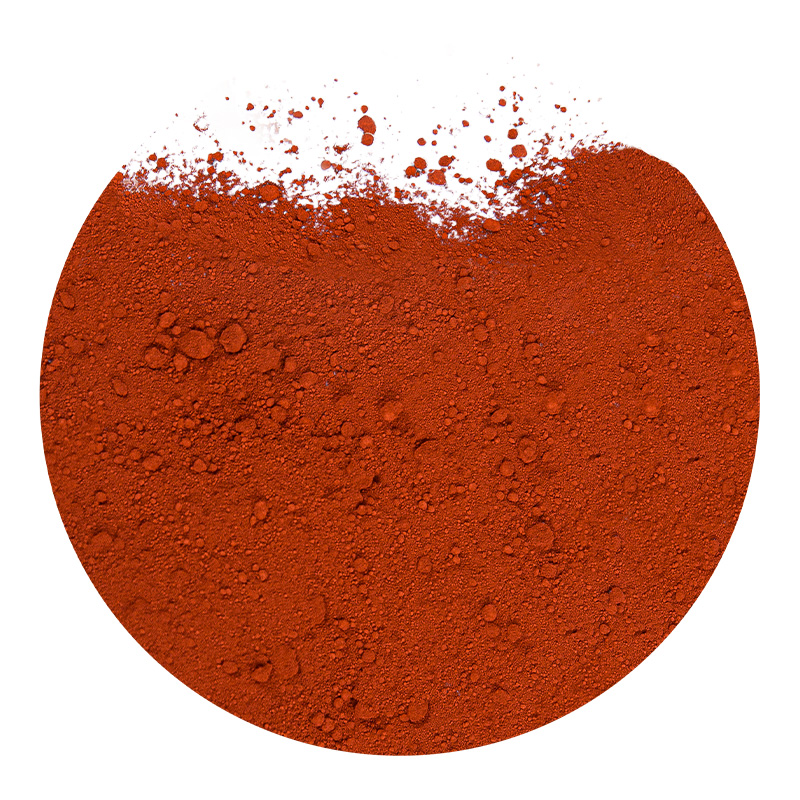 Red Iron Oxide Pigment Powder SeriesSynthetic red iron oxide grades with declared Fe2O3 range and batch-linked certificate support dosage calibration before five laboratory bench tests.View Product →
Five Tests to Verify Natural Red Oxide in 48 Hours
Five bench tests, moisture, sieve residue, tinting strength drawdown, XRF elemental screen, and laser diffraction particle size, can be completed inside 48 hours with a standard pigment laboratory and together catch the defects that surface downstream as rework, shade rejection, or a failed heavy metal declaration.
- Hours 0 to 4, moisture. Dry a 10 g sample at 105 degrees Celsius to constant mass per ISO 787-2; anything above 1.0 percent will cake in the silo and weigh light against the dosage calculation.
- Hours 4 to 8, sieve residue. Wet-sieve 100 g through a 45 micron screen per ISO 787-7. Natural pigments carry harder grit than synthetic grades, and above 0.5 percent residue the lot shows as specking in thin-film coatings.
- Hours 8 to 24, tinting strength and color. Disperse the sample with a fixed titanium dioxide white at a set ratio, draw down on a card, and read against the retained reference per ISO 787-24. Accept within +/- 5 percent on strength and 1.0 delta E in CIELAB.
- Hours 24 to 40, elemental screen. Run XRF on pressed powder for lead, cadmium, arsenic, chromium, and mercury, then compare against the limits for the end use, such as EN 71-3 for toys or EN 12878 for cement and lime bound building materials.
- Hours 40 to 48, particle size. Measure the distribution by laser diffraction per ISO 13320 and check both D50 and the coarse tail; a widened tail usually explains a color shift that tinting strength alone does not.
Three Supply-Chain Red Flags in Natural Red Oxide
Three supply patterns explain the natural red oxide failures that reach production: certificates not linked to a batch, Fe2O3 declared without sieve residue, and an origin or blend change that was never re-approved for color. Each one is visible before the purchase order is placed, not after the first drum is opened.
Reliable supply pattern
- Deposit and beneficiation route named and unchanged for 24 months or longer.
- Each certificate carries a batch number and cites the ISO 787 method behind every result.
- Moisture-controlled packing: lined 25 kg bags or lined bulk bags, with desiccant on humid routes.
- Heavy metal limits declared numerically and matched to the end application.
- Retained samples available for comparison on request.
High-risk supply pattern
- Fe2O3 minimum 90 percent quoted with no residue, moisture, or strength data.
- Identical certificates reused across shipments with only the date changed.
- Unlined bulk bags routed through humid ports, with no arrival moisture figure.
- Color approved by eye on one drawdown, with no tolerance recorded.
- Natural PR 102 topped up with synthetic PR 101 without disclosure.
Blending deserves its own clause in the purchase contract. When a supplier raises tinting strength by topping up a natural lot with synthetic PR 101, the Fe2O3 figure improves while hue, oil absorption, and particle size distribution all shift. Ask directly whether blending happens, and if it does, fix the blend ratio and require a fresh color approval for every change.
Plants running a blended earth palette, natural red alongside brown and yellow ochre, should hold a separate retained reference for each color, because a substitution in one grade moves the whole palette in the finished product.
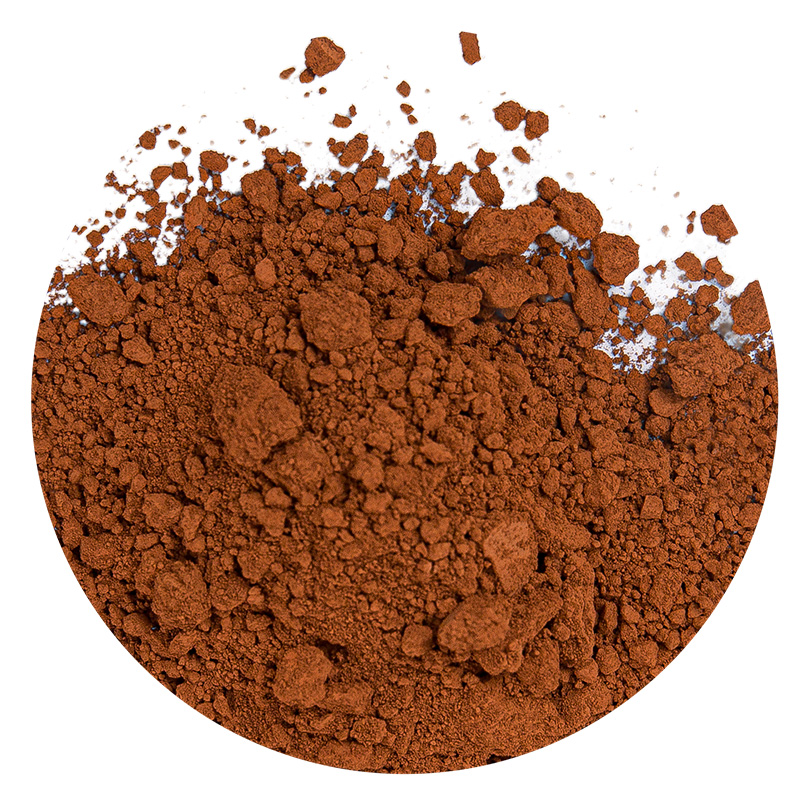 Iron Oxide Brown Powder Grades 610, 640, 686Brown iron oxide grades 610, 640, and 686 support blended earth palettes, with documented specifications for separate retained references and acceptance planning.View Product →
Building an Acceptance Plan You Can Enforce
An enforceable acceptance plan fixes five things before the first purchase order: sampling method, numeric limits, test methods, retention period, and disposition rule. Without all five, quality reduces to whatever the supplier's certificate says on the day of shipment.
- Sampling. Draw per ISO 842 from three positions in the consignment, top, middle, and base of the stack, and combine into a 1 kg composite.
- Limits. Write numbers, not adjectives: 1.0 percent moisture, 0.5 percent residue on 45 microns, +/- 5 percent strength, 1.0 delta E maximum.
- Methods. Name the standard beside each limit so the result cannot be argued: ISO 787-2, ISO 787-3, ISO 787-7, ISO 787-24, and ISO 13320.
- Retention. Keep 500 g of every approved lot for 24 months, sealed and stored away from sunlight.
- Disposition. Define three outcomes in advance. Release, conditional release with a dosage adjustment, and reject. A lot that fails moisture or residue is a reject, not a negotiation.
Ask for the batch record behind every certificate. Iron oxide pigment manufacturing documentation should name the processing route, whether washing, calcination, or micronization, so the variability in the next shipment is predictable rather than surprising.
The same plan transfers to neighbouring earth grades. A yellow iron oxide pigment grade used in lime plasters or decorative concrete follows identical moisture, sieve residue, and tinting strength windows, and the same retained sample discipline.
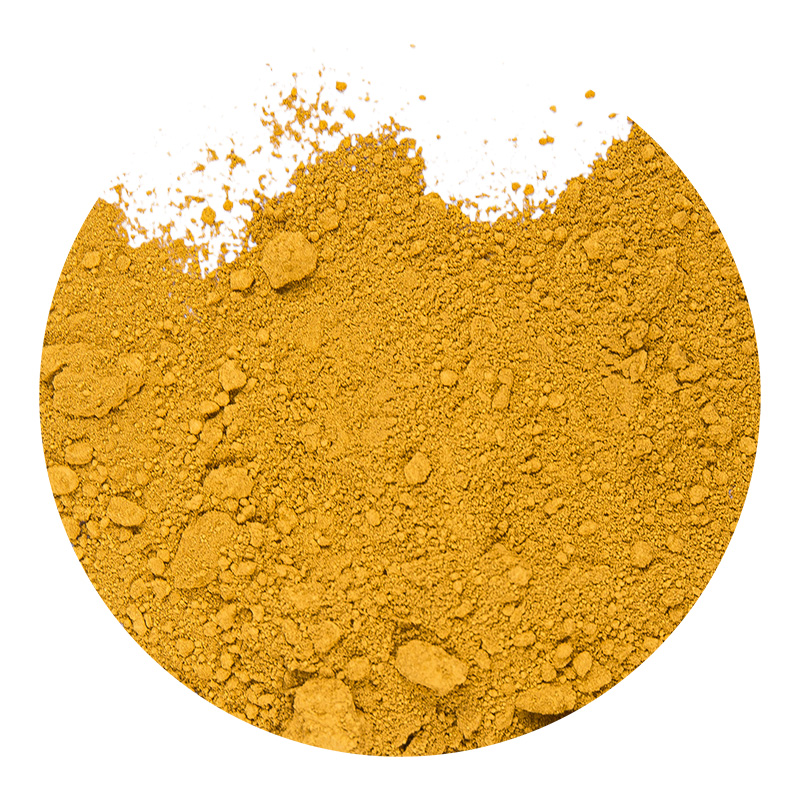 Iron Oxide Yellow Pigment Grades 313, 920, E172Inorganic Pigment Yellow 42 grades 313, 920, and E172 offer defined moisture, sieve residue, and tinting strength values for earth-tone and industrial applications.View Product →
Straight Answers for Procurement Teams
Four questions come up in every natural red oxide specification review. These answers are the ones that hold up in a supplier audit.
What is the minimum Fe2O3 content for industrial-grade natural red oxide?
For beneficiated PR 102 used in coatings, concrete, and mortar, require a minimum of 80 percent Fe2O3 with residue and tinting strength figures attached. Raw earth grades of 65 to 75 percent suit only applications where the end product locks the color, such as certain brick and paver bodies. ISO 1248 sets minimum Fe2O3 content by pigment type, so confirm the class a grade is sold under before the first shipment.
How can tinting strength be measured without a full laboratory?
Disperse a fixed ratio of pigment to titanium dioxide white, typically 1 to 10 by mass, on a glass plate or in a small bead mill, draw down on a card, and compare against the retained reference under D65 illumination. Three observers resolve differences of about 5 percent by eye; a bench spectrophotometer resolves 1 to 2 percent. Set the accept window at +/- 5 percent and record a reading for every lot.
Can natural red oxide replace synthetic red iron oxide?
Only where tinting strength and color tolerance allow it. Cement, lime, brick, and some primer applications accept natural PR 102 at 80 to 88 percent Fe2O3 without reformulation. High-strength systems such as powder coatings and plastic masterbatch, built on synthetic PR 101 at 96 percent Fe2O3 or above, need a full reformulation and a new color approval before substitution.
How often should an industrial buyer audit a natural red oxide supplier?
Audit once a year with a full batch trace, and re-approve color immediately whenever the deposit, beneficiation route, or blend ratio changes. Because retained samples are held for 24 months, one audit can compare 12 to 24 months of delivered material against the approved standard without relying on the supplier's own paperwork.