English
 عربى
 русский
 Español
Iron Oxide Yellow 313 vs Iron Oxide Yellow 920: Understanding Grade Differences
Content
An order that specifies only "iron oxide yellow, 5 metric tons" cannot be produced as written. Iron oxide yellow 313 and iron oxide yellow 920 are both classified as C.I. Pigment Yellow 42 (PY42), yet they deliver different shades, different tinting strengths and different processing behavior. Grade 313 is a clean, green-shade yellow with high tinting strength; grade 920 is a warmer, red-shade yellow with higher oil absorption. The grade on the purchase order decides whether the finished batch matches the customer's approved color standard.
Both pigments belong to the synthetic goethite family (alpha-FeOOH), produced by precipitation from iron salt solutions under controlled temperature, pH and oxidation conditions. The grade numbers 313 and 920 are commercial classifications that manufacturers use to standardize color, particle size and application performance. They are not quality rankings: 920 is not a "better" or "worse" pigment than 313. It is a differently tuned product for different color targets.
Key fact: A single-digit shift in tinting strength changes the pigment loading needed to hit one fixed color target. Replacing 313 with 920 at the same weight loading darkens the shade and moves it toward red-orange.
What Separates 313 and 920 at the Specification Level
The measurable differences between iron oxide yellow 313 and 920 are tinting strength, oil absorption, particle size and shade angle; these four parameters drive almost every formulation decision.
Tinting strength is the first value buyers compare. Grade 313 typically delivers 95-105% tinting strength against the industry reference standard, while 920 sits in the 85-95% range. A higher tinting strength means less pigment volume is required to reach the same shade, which directly lowers the pigment cost per ton of paint or masterbatch. Oil absorption separates the two grades even further: 313 absorbs 25-35 g of linseed oil per 100 g of pigment, whereas 920 absorbs 30-40 g per 100 g. Higher oil absorption increases binder demand, raises paste viscosity and forces adjustments in grinding and let-down stages.
| Parameter | Iron Oxide Yellow 313 | Iron Oxide Yellow 920 |
| Color index | Pigment Yellow 42 | Pigment Yellow 42 |
| Shade angle | Green-shade yellow | Red-shade yellow |
| Tinting strength | 95-105% | 85-95% |
| Oil absorption | 25-35 g/100g | 30-40 g/100g |
| pH (water slurry) | 3.5-7.0 | 3.5-7.0 |
| Median particle size D50 | 0.2-0.5 micron | 0.4-0.8 micron |
| Density | about 4.0 g/cm3 | about 4.0 g/cm3 |
Color Performance: How the Shade Difference Shows Up
In a side-by-side drawdown at equal pigment loading, 313 reads bright and clean with a green undertone, while 920 reads warm and deep with a red undertone.
The shade gap originates in particle size and crystal habit. The finer, more uniform particles of 313 scatter shorter wavelengths more effectively, producing a higher-chroma yellow. The coarser particles of 920 absorb more long-wavelength light, giving it an ochre-to-orange cast. When a formula built around 313 is switched to 920 without recipe changes, the color difference (Delta E) moves far beyond the tolerance that most coating and plastic customers accept.
Iron Oxide Yellow 313
- Clean green-shade yellow with high brightness
- Tinting strength 95-105%
- Finer particle size, faster dispersion
- Best for safety yellow and lemon shades
- Lower oil absorption, lower binder demand
Iron Oxide Yellow 920
- Warm red-shade yellow with earthy tone
- Tinting strength 85-95%
- Coarser particles, higher opacity at loading
- Best for beige, tan and ochre shades
- Higher oil absorption, more binder required
Relative performance index (313 = 100)
Where Each Grade Delivers Its Best Value
Use iron oxide yellow 313 for bright, high-chroma yellow products in plastics, traffic paint and decorative concrete; specify 920 for warm, earthy shades in architectural coatings, primers and tan-colored building materials.
- Plastics: 313 is the standard for polyolefin masterbatch because its high tinting strength keeps pigment cost low and the green-shade yellow survives melt processing in the 180-220 C range. A closer look at this behavior is available in our review of iron oxide yellow 313 performance in plastic coloring.
- Architectural coatings: 920 delivers warm facade tones that align with current beige and sand color trends, and its coarser particles contribute better hiding in one-coat systems. The full range of pigment application areas covered by this product family is described on our applications page.
- Concrete and pavers: 313 produces brighter yellow blocks and roof tiles; 920 produces darker, earth-toned concrete surfaces that mask cement gray more effectively.
- Industrial paints: 313 is the preferred choice for high-visibility safety yellow on floors and machinery; 920 is common in primers and wood stains where the yellow must harmonize with brown or orange components.
Both grades are part of standard production programs at pigment manufacturers such as Deqing Demei Pigment Technology Co., Ltd., an inorganic iron oxide pigment producer based in China.
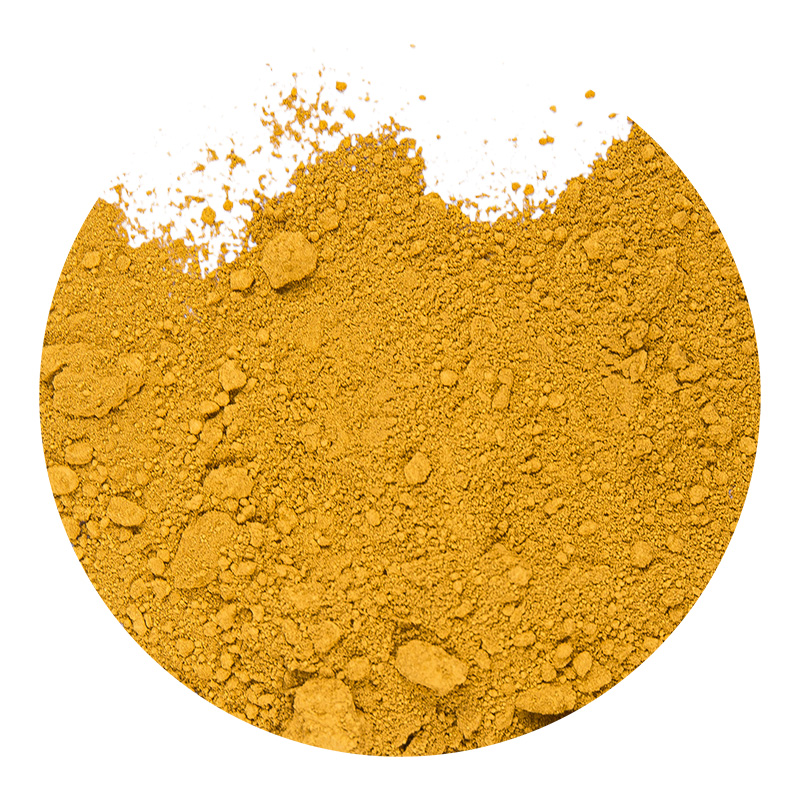 Iron Oxide Yellow Pigment Grades 313 and 920This listing covers standard and low-heavy-metal iron oxide yellow grades including 313 and 920, sourced from a single supply chain. It suits procurement teams consolidating pigment needs for concrete and building materials.View Product →
The company's iron oxide yellow range covers standard, micronized and low-heavy-metal variants of 313 and 920, so procurement teams can consolidate both grades from one supply chain.
Procurement Checklist for 313 and 920
Verify grade identity with certified data rather than the product name alone: confirm tinting strength, oil absorption, moisture content and batch color difference (Delta E) before the pigment enters production.
In dry powder form, 313 and 920 look almost identical; the differences only appear in a drawdown or a tinted mortar test. Batch-to-batch consistency matters as much as the grade number. In a typical 1,000 kg paint batch containing 200 kg of yellow oxide, a 5% shift in tinting strength will push the finished shade beyond the acceptance limit.
- Check the Certificate of Analysis for color index PY42 and the exact grade number, 313 or 920.
- Run a tint test in white paste at a 1:10 pigment-to-titanium-dioxide ratio and compare Delta E against your approved sample.
- Compare oil absorption values to adjust binder levels in solvent-based and water-based systems.
- Verify moisture content, normally below 1.0%, to avoid agglomeration during dispersion.
- Confirm heavy-metal limits when the pigment is destined for toys, food-contact packaging or cosmetic applications.
Color consistency and lightfastness routines are part of any serious supplier's quality system; ask for historical Delta E data across the last three production lots of the grade you intend to order.
Frequently Asked Questions
What is the difference between iron oxide yellow 313 and 920?
Iron oxide yellow 313 is a green-shade yellow with 95-105% tinting strength and a median particle size of 0.2-0.5 micron. Iron oxide yellow 920 is a red-shade yellow with 85-95% tinting strength and a median particle size of 0.4-0.8 micron. Both share the same chemistry, alpha-FeOOH under C.I. Pigment Yellow 42, but produce visibly different shades in paint, plastic and concrete.
Which grade is more weather-resistant?
Both grades offer equivalent weather resistance because they are synthetic goethite with a stable crystal structure. Accelerated weathering tests show no meaningful color change difference between 313 and 920 under normal exterior exposure. Select by shade target first; durability will not be the deciding factor.
Can 920 directly replace 313 in an existing formula?
Not without reformulation. The 10% tinting strength gap and the red-shade shift will move the final color, and matching the original target typically increases pigment demand by 5-12%. Oil absorption is also higher for 920, which raises binder demand. Always run a lab drawdown before committing a production batch.
How do I verify that a supplier's 313 or 920 grade is authentic?
Request the Certificate of Analysis showing tinting strength, oil absorption, moisture, pH and Delta E against the declared reference. Run an internal tint test against your approved sample, ideally at a 1:10 pigment-to-white-paste ratio. Ask whether the supplier manufactures the grade in-house or resells material from another source; in-house production usually means tighter batch control.
When in doubt, order a pre-production sample, compare it with your reference under standard D65 daylight, and lock the approved batch record into your supplier agreement before bulk ordering.