English
 عربى
عربى русский
 Español
Iron Oxide Red Powder: Properties, Benefits, Concrete Applications, and Color Stability
Content
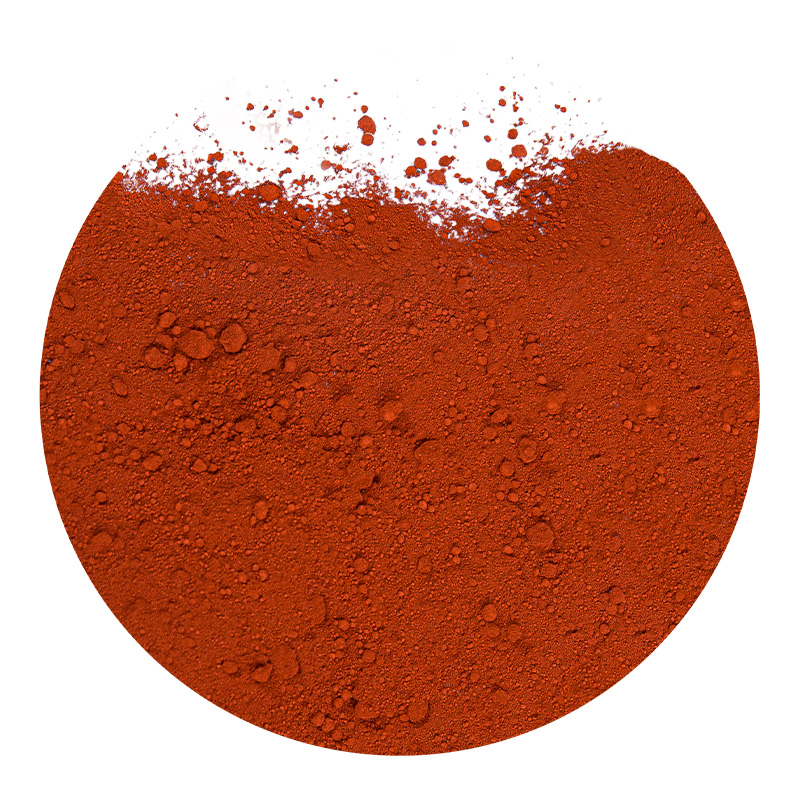
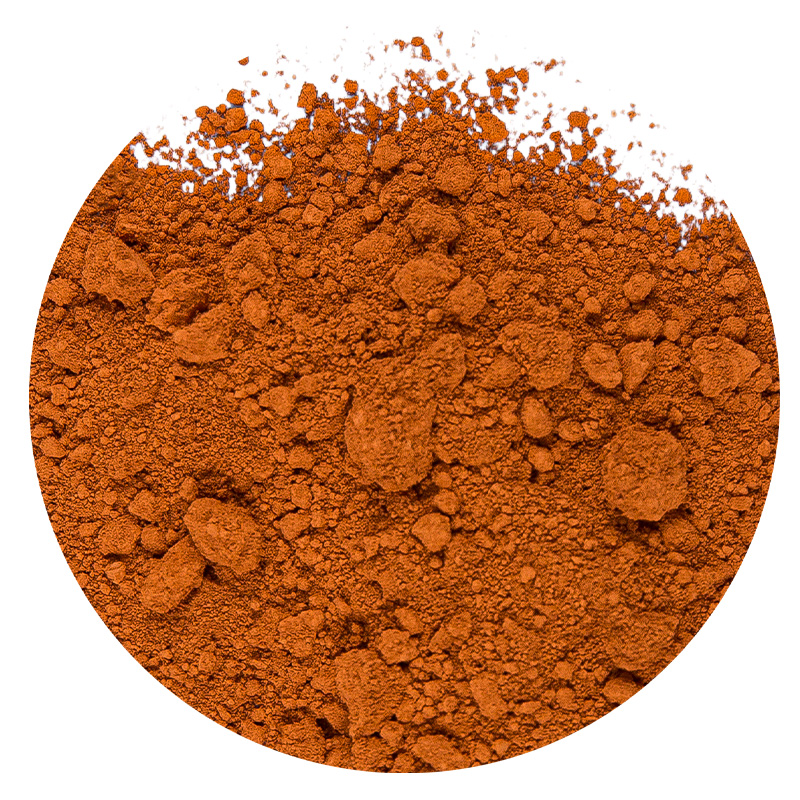
Iron oxide red powder is one of the most chemically stable, UV-resistant inorganic pigments available — but selecting the wrong grade, dosage, or dispersion method wastes both material and processing time. This guide answers the four questions that determine whether your application succeeds or fails, with specific numbers and grade references throughout.
Which Iron Oxide Grade Works for Your Application?
Iron oxide red grades are differentiated by particle size, Fe2O3 purity, and surface treatment. Selecting the right one depends on whether you are pigmenting concrete, coatings, plastics, or cosmetics.
Median particle size 0.3–0.5 microns. Designed for concrete, mortar, and paving blocks. High tinting strength at economical cost. Minimum Fe2O3 content 94%. The workhorse of construction pigmentation.
Particle size below 0.1 microns. Used in automotive basecoats, wood stains, and cosmetics where the substrate grain must remain visible. Delivers metallic-effect depth without opacity.
Fe2O3 above 97%, controlled particle morphology. Required for food-contact colorants, pharmaceutical coatings (E172 approved), and precision ceramic applications where batch-to-batch consistency is non-negotiable.
Organic or inorganic surface coating pre-applied. Designed for solvent-borne and waterborne industrial coatings where wetting is difficult. Reduces milling time by 30–50% versus untreated powder.
For most construction and infrastructure applications, the 130 or 190 series iron oxide red powder covers 80% of use cases. Transparent and high-purity grades command a 2–4x price premium and should be specified only when the application genuinely demands them.
How Much Pigment to Add: Dosage by Application
The correct dosage of iron oxide red powder is always expressed as a percentage of the primary binder or cementitious content — not total mix weight. Dosing by total weight consistently undercolors the final product.
| Application | Dosage (% of Binder / Cement) | Practical Limit |
| Concrete and Paving Blocks | 1.5 – 5% | 6% — beyond this, compressive strength drops |
| Cement Render / Plaster | 2 – 6% | 8% maximum for exterior grade |
| Solvent-Borne Industrial Coatings | 10 – 30% of total formula | Viscosity determines ceiling |
| Waterborne Architectural Paint | 5 – 20% of total formula | Fineness of grind governs opacity |
| Rubber and Plastics | 1 – 3% of polymer weight | Higher loadings reduce elongation |
| Cosmetics (lip, eye) | 0.1 – 2% | Regulatory limits apply per region |
Key Dosage Rule
In concrete, every 1% increase in pigment above 5% of cement weight reduces 28-day compressive strength by approximately 2–3%. Stick to the 3–5% sweet spot for structural applications requiring both color intensity and mechanical performance.
What Affects Pigment Dispersion Quality?
Dispersion is the single largest variable in color consistency. Poorly dispersed iron oxide red powder produces streaking, agglomerate specks, and batch-to-batch color drift even when the dosage is identical.
Finer grades (below 0.2 microns) have higher surface energy and agglomerate more readily. They require either a dispersant additive or high-shear milling — simple paddle mixing is insufficient for transparent grades.
Iron oxide surfaces are hydrophilic. In solvent systems, a polar dispersant (e.g. a polyamine or phosphate ester type) is needed to wet the pigment surface before dispersion. Skipping this step causes flooding and floating in the dried film.
In concrete, pre-slurrying the pigment in a portion of mix water before adding to the drum reduces dispersion time by 40% compared to dry addition. In paints, add pigment to the binder phase — never to water alone — to avoid clumping.
A high-speed dissolver (Cowles blade, 25–40 m/s tip speed) is the minimum equipment for coating applications. Ball milling achieves fineness of grind below 10 microns Hegman, required for gloss topcoats. Concrete mixers provide adequate shear for construction grades only.
Viscosity drops as temperature rises — dispersion at 40–50 degrees C improves pigment wetting in high-viscosity systems. However, exceeding 60 degrees C with water-soluble binders can cause premature cross-linking and irreversible aggregation.
Which Iron Oxide Red Grade Suits Outdoor Use?
Outdoor durability is where iron oxide red powder outperforms virtually every organic red pigment on the market. Synthetic alpha-Fe2O3 is inherently lightfast to ISO 105-B02 rating 7–8 (the maximum scale is 8), resists acid rain down to pH 4, and shows no measurable color shift after 2,000 hours of QUV accelerated weathering.
- Standard synthetic grade (130, 190, 686 series) — proven 50-year track record in colored concrete facades
- Surface-treated dispersible grade — additional hydrophobic treatment resists moisture-induced color bleed in render
- High-purity synthetic grade — used in industrial maintenance coatings on steel structures, excellent alkali resistance
- Natural (mined) iron oxide — variable Fe2O3 content, manganese impurities cause unpredictable weathering
- Transparent grade at high film thickness — may exhibit bronzing effect under intense UV when overloaded
- Micronized ultra-fine grade in unprotected paper or textile — surface area too high, bleaches faster without a UV-stabilized binder
For concrete infrastructure, facades, and paving exposed to freeze-thaw cycles, the 130 and 190 standard synthetic series deliver the best value per unit of color durability. Pair with a sulfate-resistant Portland cement to prevent pigment color shift caused by alkali bloom in the first 12 months after casting.
Frequently Asked Questions
Can iron oxide red powder be used in asphalt?
Yes, but with constraints. Iron oxide red is stable up to 300 degrees C, which covers standard asphalt mixing temperatures (140–180 degrees C). Use a granulated or pelletized form rather than loose powder to prevent dusting during hot-mix addition. Dosage is typically 0.5–2% of aggregate weight. Color saturation is lower than concrete due to asphalt's dark base tone.
What is the difference between synthetic and natural iron oxide red?
Synthetic iron oxide red is manufactured by controlled precipitation or calcination, delivering consistent particle size, high Fe2O3 purity (94–99%), and predictable color. Natural iron oxide (ochre, hematite) varies widely in impurity profile and particle size, producing duller, less reproducible color. All food-grade, pharmaceutical, and cosmetic applications require synthetic grades by regulation.
How do I prevent iron oxide red from staining concrete formwork?
The pigment itself does not penetrate sealed formwork, but bleed water carrying fine pigment particles can stain porous wood or absorbent surfaces. Apply a release agent to all formwork faces, minimize water-cement ratio to reduce bleed, and rinse formwork immediately after stripping. Steel and plastic formwork present no staining risk.
Is iron oxide red powder safe to handle?
Synthetic iron oxide red is classified as a nuisance dust, not a hazardous substance, under EU REACH and US OSHA standards. Prolonged inhalation of fine dust should be avoided — use an FFP2/N95 respirator during dry handling and powder transfer. No skin sensitization or carcinogenicity has been established for synthetic Fe2O3 at occupational exposure levels.