English
 عربى
عربى русский
 Español
Iron Oxide Powder: Uses, How It's Made, and How to Use It
Content
- 1 Iron Oxide Powder Types: Chemistry, Color, and Particle Size
- 2 How Iron Oxide Powder Is Made: Manufacturing Methods
- 3 What Iron Oxide Powder Is Used For: Major Application Areas
- 4 How to Use Iron Oxide Powder Correctly Across Different Applications
- 5 Selecting the Right Iron Oxide Powder Grade for Your Application
- 6 Frequently Asked Questions About Iron Oxide Powder
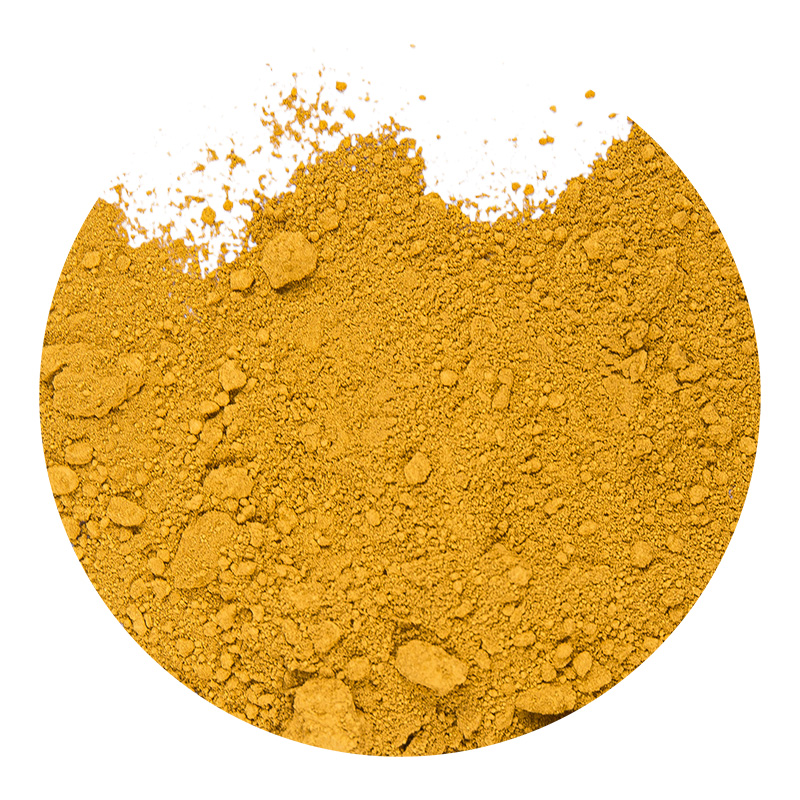
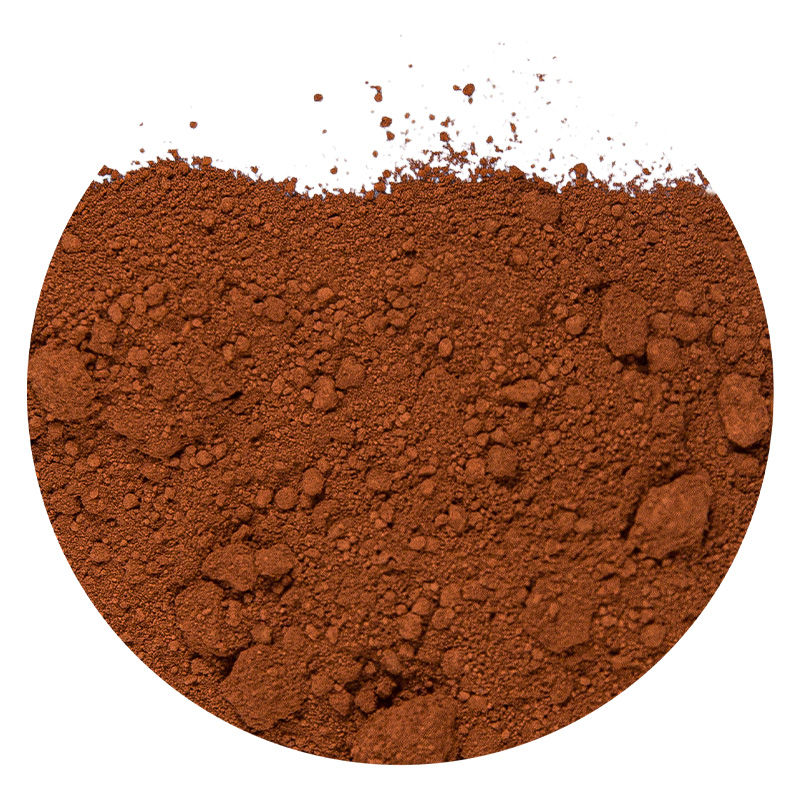
Iron oxide powder is a finely ground inorganic pigment composed of iron and oxygen, available in red (Fe₂O₃), yellow (FeOOH), black (Fe₃O₄), and other color variants. It is used primarily as a pigment in construction materials, coatings, plastics, and cosmetics, and is produced either by mining and processing natural ores or through controlled synthetic precipitation and calcination. It is one of the most widely used and cost-effective colorants in the world, with global production exceeding 1 million metric tons annually.
Iron Oxide Powder Types: Chemistry, Color, and Particle Size
Iron oxide powder is not a single compound — it is a family of related iron-oxygen compounds, each with a distinct crystal structure, particle morphology, and color. Understanding the differences is essential for selecting the correct grade for any application. The color of each type is determined by its crystal lattice structure and how it interacts with visible light, not by dye or organic pigments.
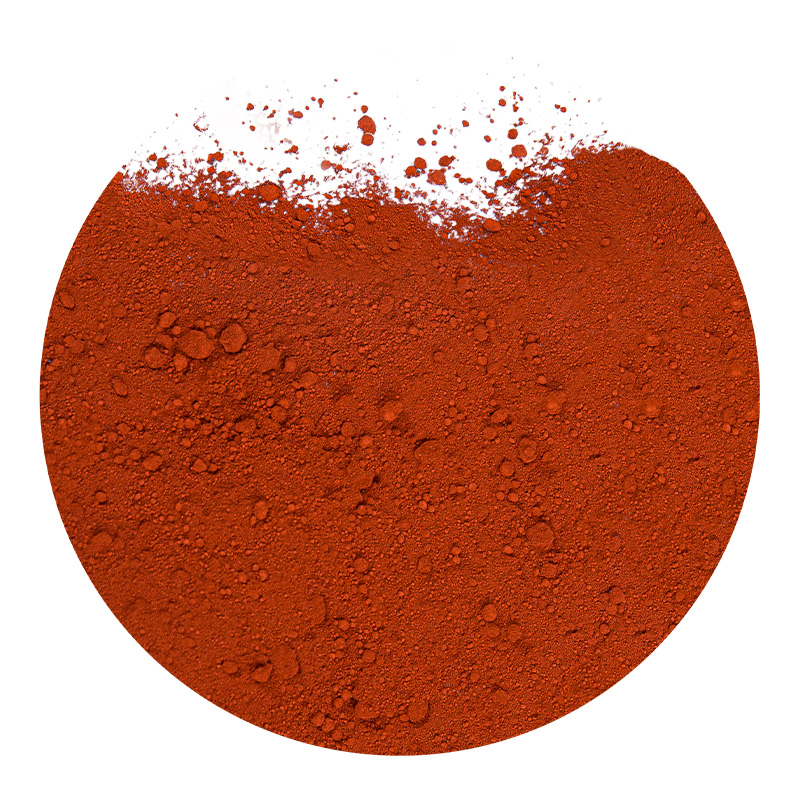
- Most abundant iron oxide in nature
- Particle size: 0.1–1.0 μm (synthetic); 1–50 μm (natural)
- Oil absorption: 15–25 g/100g
- Specific gravity: 4.9–5.3 g/cm³
- Temperature stability: up to 1,000°C
- Tinting strength: high
- Needle-shaped (acicular) particle morphology
- Particle size: 0.3–0.8 μm typical
- Oil absorption: 30–50 g/100g (higher than red)
- Converts to red Fe₂O₃ above 180°C
- Light fastness: excellent
- Used for warm, ochre-tone concrete colorants
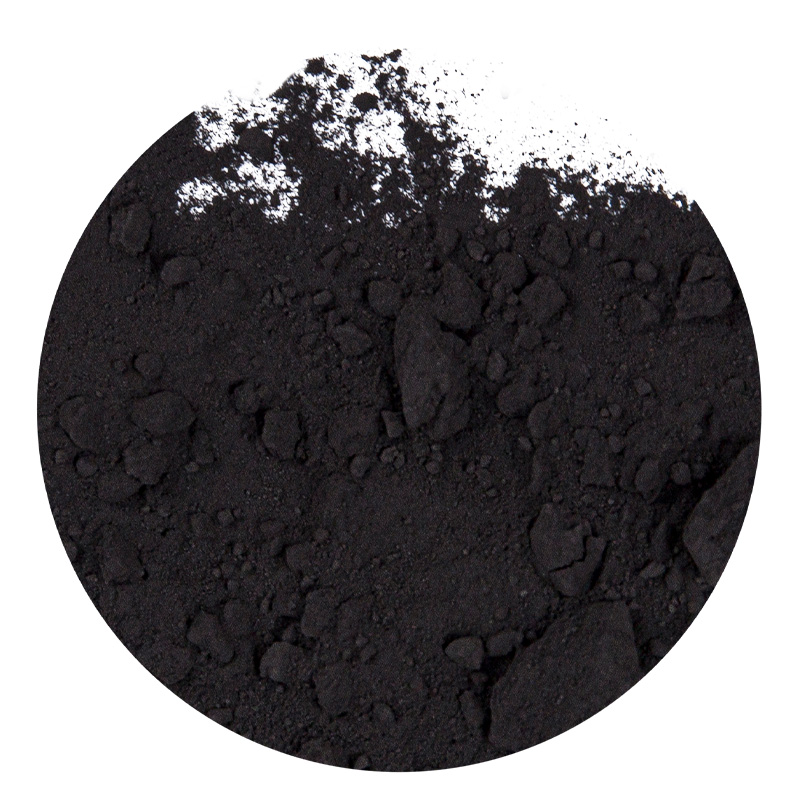
- Spinel crystal structure; strongly magnetic
- Particle size: 0.1–0.5 μm (synthetic)
- Oil absorption: 20–30 g/100g
- Specific gravity: 5.1–5.2 g/cm³
- Temperature stability: up to 300°C (oxidises above this)
- Used in ferrofluid, magnetic recording media, ink
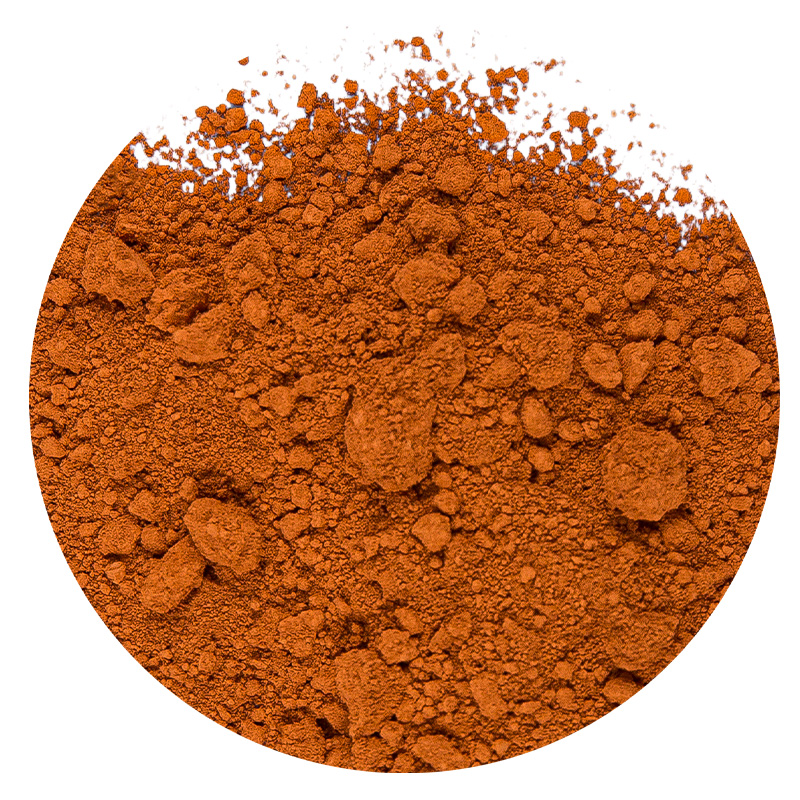
- Produced by blending red and yellow or by calcination of yellow
- Particle size: 0.2–2.0 μm
- Color tunable from warm orange to deep brown
- Higher temperature stability than yellow alone
- Widely used in brick, paver, and tile colorants
- Excellent weatherfastness in exterior applications
Synthetic vs Natural Iron Oxide: Performance Comparison
Both natural (mined) and synthetic iron oxides are commercially available, but they differ substantially in purity, particle size control, and consistency — factors that directly affect performance in precision applications:
| Property | Synthetic Iron Oxide | Natural Iron Oxide |
|---|---|---|
| Purity (Fe₂O₃ content) | 95–99% | 40–85% (highly variable) |
| Particle size uniformity | Excellent (controlled precipitation) | Poor (ore variability) |
| Color consistency | Batch-to-batch consistent | Varies by quarry and season |
| Tinting strength | High (controlled surface area) | Low to medium |
| Heavy metal contaminants | Controlled; cosmetic-grade available | May contain Mn, Pb, As, Cr |
| Cost | Medium to high | Low |
| Best for | Cosmetics, paints, precision pigment applications | Bulk concrete, heavy construction fill |
How Iron Oxide Powder Is Made: Manufacturing Methods
The production route for iron oxide powder determines its final particle morphology, surface area, purity, and application suitability. Three principal manufacturing methods dominate commercial production worldwide, each yielding products with distinct property profiles.
The dominant method for producing synthetic yellow and red iron oxide pigments. Iron scrap (mill scale, turnings) is dissolved in dilute sulfuric acid to produce ferrous sulfate (FeSO₄). Seed crystals of iron oxide are formed by partial oxidation with air, then the main crystal growth phase occurs by controlled addition of iron scrap and continued air oxidation in alkaline conditions. The resulting precipitate is filtered, washed, and dried to yield yellow FeOOH. Calcination of yellow FeOOH at 500–900°C dehydrates it to produce red Fe₂O₃. This process produces particles with very controlled morphology and size distribution — the gold standard for high-performance pigment grades.
A co-production process in which aniline (C₆H₅NH₂) is produced by reduction of nitrobenzene using iron powder in dilute hydrochloric acid. The iron is oxidised to magnetite (Fe₃O₄) as a byproduct. The magnetite is filtered off, washed, and processed into black iron oxide pigment, or further oxidised and calcined to produce red or brown pigments. This process is highly efficient because the pigment is a co-product of a valuable organic chemical intermediate. The resulting black iron oxide has very fine, uniform particle size (0.1–0.3 μm) and is well-suited for paints, inks, and ferrite production.
Natural hematite or limonite ore is crushed, wet-milled, classified by particle size (using hydrocyclones or air classifiers), dried, and packaged. Beneficiation steps (magnetic separation, flotation) may be applied to increase iron oxide content. The resulting powder has lower purity and wider particle size distribution than synthetic grades, but is produced at significantly lower cost. Widely used for bulk pigmenting of concrete products, asphalt, and low-cost industrial coatings where batch-to-batch color variation is acceptable. Natural pigments processed this way may be labelled "ochre," "sienna," or "umber" depending on composition and color.
What Iron Oxide Powder Is Used For: Major Application Areas
Iron oxide powder's combination of color stability, chemical inertness, low toxicity, and low cost makes it the workhorse pigment across a remarkably broad range of industries. The following breakdown covers the primary sectors by consumption volume and technical importance.
Construction and Concrete Colorants
The largest single application for iron oxide pigments globally, accounting for approximately 60–70% of total consumption. Iron oxide powder is mixed directly into concrete, mortar, paving blocks, roof tiles, and masonry products to produce permanent, weatherfast coloration without affecting structural properties. Key advantages in this application:
- Dosage rate: typically 1–5% by weight of cement for standard colors; up to 10% for deep shades
- Concrete compressive strength is unaffected at dosages below 5% (confirmed by EN 12878 testing)
- UV and weather stability: essentially permanent in exterior concrete — iron oxide is itself a mineral, as stable as the concrete matrix
- Alkali stability: fully stable in the high-pH environment of fresh cement (pH 12–13)
- Colors available: red, yellow, black, brown — blended to produce orange, buff, and grey tones
- Forms available: powder, granules (dust-free), liquid slurry (for automated dosing systems)
Paints, Coatings, and Primers
Iron oxide pigments are fundamental to architectural, industrial, and marine protective coatings. Red iron oxide in particular has long been used in anti-corrosion primers because it provides both color and genuine corrosion inhibition — Fe₂O₃ passivates the steel substrate and provides a physical barrier against moisture ingress. Key coating applications include:
- Red oxide primers: the original industrial anti-corrosion primer formulation; still widely used for steel structures, bridges, and pipelines
- Architectural exterior paints: iron oxide provides UV-stable earth tones that outperform organic pigments in exterior weathering by a factor of 3–5x in lightfastness testing
- Marine coatings: iron oxide in anti-corrosion and anti-fouling systems; alkali-stable and compatible with all binder types
- Powder coatings: iron oxide withstands the 180–200°C curing temperatures of powder coating systems — organic pigments typically cannot
- Typical PVC (pigment volume concentration) in coatings: 10–40% depending on application
Cosmetics and Personal Care
Cosmetic-grade iron oxide powders are regulated colorants approved for use in foundations, eyeshadows, blushers, lipsticks, and mascaras. Regulatory approval is strict: iron oxides for cosmetic use must meet heavy metal limits specified by FDA (21 CFR 73.2250), EU Cosmetics Regulation (EC 1223/2009 Annex IV), and ISO 12085. Cosmetic-grade iron oxide differs from industrial grade primarily in its heavy metal content specification:
| Heavy Metal | FDA Limit (cosmetic grade) | EU Limit (cosmetic grade) |
|---|---|---|
| Lead (Pb) | 10 ppm max | 10 ppm max |
| Arsenic (As) | 3 ppm max | 5 ppm max |
| Mercury (Hg) | 1 ppm max | 1 ppm max |
| Antimony (Sb) | Not specified | 10 ppm max |
Cosmetic iron oxides are also surface-treated with silicone, silica, or alumina coatings to improve skin feel, dispersibility in formulations, and waterproof performance in long-wear cosmetics.
Rubber and Plastics Coloring
Iron oxide is one of the few inorganic pigments compatible with the high processing temperatures encountered in engineering plastics compounding (200–320°C) and rubber vulcanization. Organic pigments degrade or bleed at these temperatures, while iron oxides remain fully stable and non-migrating. Applications include:
- PVC flooring, profiles, and window frames — red and brown iron oxide for terracotta and wood-tone aesthetics
- Polyolefin compounds (PP, PE) for outdoor products — iron oxide's UV stability prevents color fading under prolonged sunlight exposure
- Rubber gaskets, seals, and automotive parts — black iron oxide used as a reinforcing and coloring agent
- Typical loading: 1–5% by weight of polymer; oil absorption value determines loading ceiling before impact on mechanical properties
Ferrites and Magnetic Applications
High-purity iron oxide powder (specifically Fe₂O₃ and Fe₃O₄) is the primary raw material for manufacturing ferrite ceramics — the magnetic materials used in transformers, inductors, antenna rods, permanent magnets, and magnetic recording media. The iron oxide reacts with metal oxides (zinc oxide, manganese oxide, nickel oxide, barium carbonate) at high temperature to form spinel or hexagonal ferrite structures. Ferrite production demands iron oxide with purity above 99.5%, controlled particle size (typically 0.5–2 μm), and very low levels of silica and sulfur contaminants that would disrupt the magnetic properties of the sintered ferrite body.
How to Use Iron Oxide Powder Correctly Across Different Applications
The practical questions around how to use iron oxide powder correctly are application-specific. Improper dispersion, incorrect dosage, or use of the wrong grade are the most common causes of color unevenness, reduced tinting strength, and performance failure. The following covers the key best practices by end use.
Pre-disperse powder in a small amount of water before addition to the mixer. Direct addition of dry powder to a full concrete mix results in uneven color distribution and requires significantly longer mixing time.
Add the iron oxide dispersion at the same point in every batch — typically with the mixing water — to ensure consistent color between pours.
Mix for at least 3 minutes after all ingredients are added. Under-mixing by even 60 seconds can produce visible streaking in finished concrete.
Keep water-to-cement ratio constant between batches. More water lightens the apparent color of hardened concrete by increasing porosity — this is the most common cause of unexplained color variation on site.
For granule forms: add directly to the mixer with aggregates at the start of the mixing cycle — granules disperse more slowly than powder and require longer mixing time.
Disperse iron oxide powder into the binder or grind-base using a high-shear mixer, bead mill, or three-roll mill. Iron oxide typically requires a Hegman fineness of 4–6 for smooth, uniform paints — coarser dispersion causes graininess and reduced color development.
Use a dispersant (e.g., BYK-190, Disperbyk-2010) at 0.5–2% on pigment weight to stabilise the dispersion and prevent flocculation in water-based systems.
For direct-to-metal primers: red iron oxide at 30–40% PVC provides both color and corrosion inhibition. Ensure oil absorption value of the chosen grade is compatible with the binder's critical PVC (CPVC) to maintain film integrity.
Verify regulatory compliance before use: confirm the supplier provides a Certificate of Analysis showing heavy metal levels within FDA 21 CFR 73.2250 and EU 1223/2009 limits for the specific color index (CI 77491 for red, CI 77492 for yellow, CI 77499 for black).
For powder cosmetics (loose powder, eyeshadow): blend iron oxide with mica and other fillers in a ribbon blender or Henschel mixer. Over-milling can reduce particle size below 0.1 μm, causing color shift toward orange in red pigments.
For liquid foundations and creams: mill iron oxide into the oil phase using a three-roll mill or bead mill to achieve a smooth, lump-free dispersion before combining with water phase.
Use surface-treated (silicone or silica coated) grades for waterproof and long-wear formulations — untreated iron oxide has higher water wettability and may give poor skin adhesion in high-humidity conditions.
Iron oxide powder is classified as a nuisance dust, not a toxic substance, at the concentrations encountered in normal handling. However, the respirable fraction (particles below 10 μm) requires dust-control measures: wear a P2/N95 respirator and use local exhaust ventilation when handling in bulk.
Store in sealed containers away from moisture. Although iron oxide itself does not absorb water significantly, caking under humid conditions can occur with fine-particle grades, requiring sieving before use.
Yellow iron oxide (FeOOH) is temperature-sensitive: do not expose to temperatures above 180°C during processing or storage, as it irreversibly converts to red Fe₂O₃. This is exploited intentionally for color conversion but is a contamination risk in mixed-color production.
Iron oxide is not flammable and poses no explosion risk as a bulk powder — it is non-combustible. However, as with any fine dust, extremely high airborne concentrations in enclosed spaces should be avoided as a general industrial hygiene principle.
Selecting the Right Iron Oxide Powder Grade for Your Application
Not all iron oxide powders are interchangeable. The following table provides a practical selection guide based on application requirements:
| Application | Recommended Color | Key Spec Requirement | Typical Form | Synthetic or Natural |
|---|---|---|---|---|
| Concrete blocks / pavers | Red, Yellow, Black, Brown | EN 12878 compliance; alkali stability | Powder or granule | Either; synthetic preferred for dark colors |
| Industrial anti-corrosion primer | Red (Fe₂O₃) | Oil absorption below 25; low soluble salts | Powder | Synthetic |
| Cosmetic foundation / eyeshadow | Red, Yellow, Black | FDA/EU compliant; heavy metal below limits; surface treated | Micronized powder | Synthetic (mandatory) |
| Ferrite magnet production | Red (Fe₂O₃) | Purity above 99.5%; controlled particle size 0.5–2 μm; low SiO₂ | Fine powder | Synthetic (high purity grade) |
| Architectural exterior paint | Red, Brown, Yellow | High tinting strength; oil absorption 15–30 | Powder or predispersed paste | Synthetic |
| Rubber seals and automotive parts | Red, Black, Brown | Heat stability above 200°C; low moisture content | Powder | Synthetic |
| Bulk concrete fill / mass coloring | Red, Brown, Yellow | Low cost; minimum 70% Fe₂O₃ | Coarse powder | Natural acceptable |