English
 عربى
عربى русский
 Español
What are the Key Chemical Properties of Pigment Red 101 That Ensure Its High Heat Stability in Industrial Coatings?
Content
- 1 1. The Alpha-Phase Crystal Structure of Pigment Red 101
- 2 2. Chemical Inertness and Resistance to Oxidation
- 3 3. Particle Size Distribution and Heat Transfer
- 4 4. Refractive Index and UV Shielding Properties
- 5 5. Conclusion: The Engineer's Choice for Extreme Conditions
- 6 Frequently Asked Questions (FAQ)
- 6.1 1. At what temperature does Pigment Red 101 start to change color?
- 6.2 2. How to improve pigment red 101 dispersion in coatings for high-speed production?
- 6.3 3. What is the pigment red 101 vs synthetic red iron oxide difference in quality?
- 6.4 4. What are the best binders for pigment red 101 in high-heat applications?
- 6.5 5. What are the benefits of using natural vs synthetic pigment red 101?
- 7 Industry References
In the world of high-performance industrial coatings, thermal resilience is a non-negotiable requirement. Whether for automotive parts, coil coatings, or powder finishes, the pigment must maintain its chromatic integrity under extreme temperatures. Pigment Red 101, chemically known as anhydrous Ferric Oxide (Fe2O3), stands as the gold standard for heat-stable inorganic coloration. Deqing Demi Pigment Technology Co., Ltd., a specialist in the research and development of inorganic iron oxide pigments, provides high-stability solutions across standard, micronized, and low heavy metal series. By leveraging advanced production techniques, Demi Pigment ensures that its Pigment Red 101 products meet the rigorous demands of engineers worldwide while fulfilling ecological and social responsibilities through our trade arm, Deqing Hele New Material Technology Co Ltd.
1. The Alpha-Phase Crystal Structure of Pigment Red 101
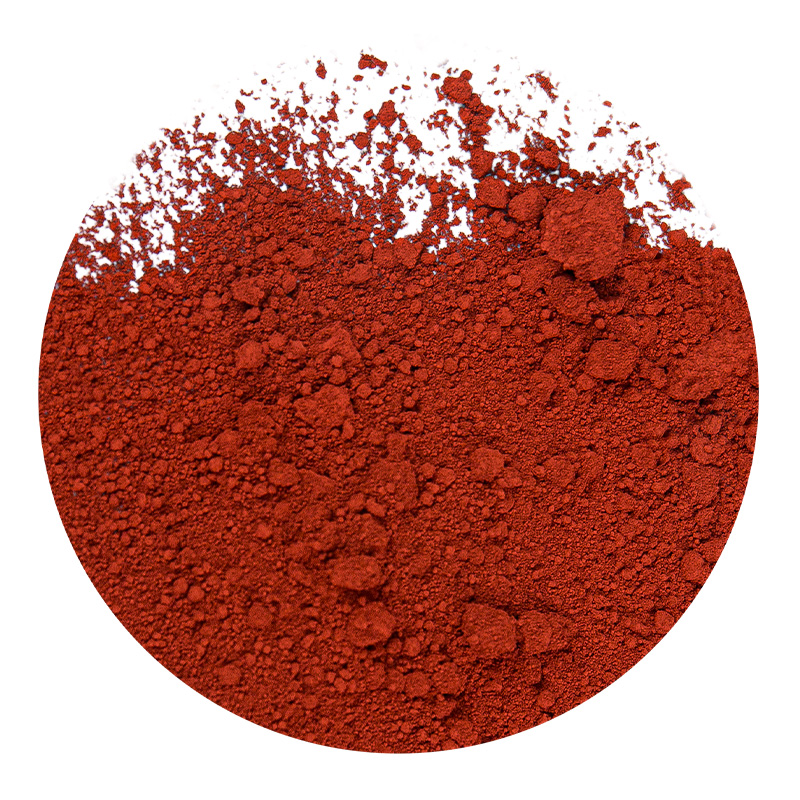
The exceptional thermal endurance of Pigment Red 101 is primarily derived from its rhombohedral alpha-Fe2O3 (hematite) crystal structure. Unlike other organic reds that degrade through carbonization or yellow iron oxides that dehydrate at 180°C, Pigment Red 101 remains structurally stable up to 1000°C. One common technical question is how to improve pigment red 101 dispersion in coatings; the answer often lies in understanding this rigid crystal lattice. While organic pigments offer high brightness, they lack the lattice energy to resist thermal molecular agitation, whereas Pigment Red 101 provides a robust inorganic framework that preserves color even during prolonged heat exposure.
Comparison: Thermal Stability of Pigment Categories
Inorganic pigments like Pigment Red 101 offer significantly higher temperature resistance compared to organic counterparts, making them essential for stoving enamels and powder coatings.
| Pigment Type | Typical Heat Resistance Limit | Color Change Mechanism |
| Organic Red (e.g., Azo) | 150°C - 200°C | Chemical Decomposition |
| Iron Oxide Yellow (P.Y. 42) | 180°C - 200°C | Loss of Crystal Water (Dehydration) |
| Pigment Red 101 (Fe2O3) | 800°C - 1000°C | Stable Crystal Phase |
2. Chemical Inertness and Resistance to Oxidation
As a fully oxidized state of iron, Pigment Red 101 is chemically inert and does not react with the resins or additives typically found in industrial coatings. When evaluating pigment red 101 vs synthetic red iron oxide for chemical durability, the high-purity anhydrous form ensures there are no reactive hydroxyl groups that could catalyze resin degradation at high temperatures. This inertness is vital for anti-corrosive primers. Compared to lead-based or chromate-based pigments, Pigment Red 101 provides a non-toxic, highly stable alternative that aligns with modern environmental safety standards.
Comparison: Chemical Stability and Environmental Impact
Iron oxide pigments offer an environmentally friendly profile while maintaining higher chemical resistance than many heavy-metal-based traditional pigments.
| Criteria | Lead/Chrome Based Pigments | Pigment Red 101 |
| Chemical Reactivity | Potentially Reactive with Acid/Alkali | Highly Inert |
| Oxidation State | Variable | Fully Oxidized (Stable) |
| Environmental Safety | Hazardous (Heavy Metals) | Safe (Low Heavy Metal Series Available) |
3. Particle Size Distribution and Heat Transfer
Thermal stability is also a function of particle surface area. Micronized iron oxide red for industrial coatings offers a narrower particle size distribution, which optimizes light scattering and heat dissipation throughout the coating film. At Deqing Demi Pigment Technology Co., Ltd., our micronized series reduces the risk of "hot spots" within the coating layer. Large, irregular particles can trap heat, whereas a fine, uniform Pigment Red 101 distribution ensures that thermal energy is conducted evenly through the matrix, preventing localized resin scorching and maintaining gloss retention at high temperatures.
Advantages of Demi Micronized Pigment Red 101:
- Increased Hiding Power: Requires lower pigment loading for the same opacity.
- Superior Dispersion: Reduced milling time in industrial high-speed dissolvers.
- Enhanced Gloss: Smoother surface finish for automotive-grade applications.
4. Refractive Index and UV Shielding Properties
Heat stability is inextricably linked to light stability. Pigment Red 101 has a high refractive index (approx. 3.0), which allows it to absorb and scatter UV radiation effectively. By shielding the binder from UV degradation, the pigment indirectly prevents the thermal breakdown of the polymer matrix itself. For engineers researching what are the best binders for pigment red 101, it is found that silicone-modified polyesters or fluorocarbons paired with Fe2O3 create the most durable heat-resistant systems. This synergy is a key benefit of using natural vs synthetic pigment red 101, as the high-purity synthetic variants produced by Demi allow for precise color matching and predictable UV-shielding behavior.
5. Conclusion: The Engineer's Choice for Extreme Conditions
The heat stability of Pigment Red 101 is not a single feature but a combination of its alpha-phase crystal lattice, chemical oxidation state, and optimized particle morphology. Deqing Demi Pigment Technology Co., Ltd. continues to innovate in the field of inorganic iron oxide pigments, ensuring that our products serve as reliable components for the world's most demanding coating applications. Through the collaborative efforts of our R&D teams and our trade company, Deqing Hele New Material Technology Co Ltd., we deliver pigments that are as stable as they are sustainable.
Frequently Asked Questions (FAQ)
1. At what temperature does Pigment Red 101 start to change color?
Standard Pigment Red 101 is stable up to 800°C. However, in industrial coatings, the limitation is usually the resin binder. The pigment itself will only undergo a minor shade shift toward a darker, bluer red above 1000°C due to particle sintering.
2. How to improve pigment red 101 dispersion in coatings for high-speed production?
Using the micronized series from Demi Pigment significantly improves dispersion. Additionally, using specific wetting and dispersing agents designed for inorganic pigments can reduce flocculation and ensure a uniform color strength.
3. What is the pigment red 101 vs synthetic red iron oxide difference in quality?
Pigment Red 101 is the Color Index name for red iron oxide. Synthetic versions are preferred in industrial coatings because they offer higher purity, more consistent particle size, and better color saturation than natural ores.
4. What are the best binders for pigment red 101 in high-heat applications?
For temperatures up to 250°C, epoxy and certain polyesters are suitable. For extreme heat (400°C+), silicone resins are the best binders to pair with the thermal stability of Pigment Red 101.
5. What are the benefits of using natural vs synthetic pigment red 101?
Natural iron oxides are cost-effective but contain impurities (like silica or manganese). Synthetic Pigment Red 101 is superior for coatings because it lacks these impurities, offering better stability, predictable chemical behavior, and superior brightness.
Industry References
- ASTM D3722 - Standard Specification for Natural Red and Brown Iron Oxide Pigments.
- ISO 1248 - Iron oxide pigments — Specifications and methods of test.
- "Inorganic Pigments for High-Temperature Coatings," Journal of Coatings Technology and Research.
- Demi Pigment Technical Laboratory: "Thermal Analysis of Alpha-Fe2O3 in Silicone Resin Matrices."